Full article about Angeja: Where Salt Air Kisses Mint-Fields
Flat as a prayer mat, the Bairrada plain exhales mist into eucalyptus groves.
Hide article Read full article
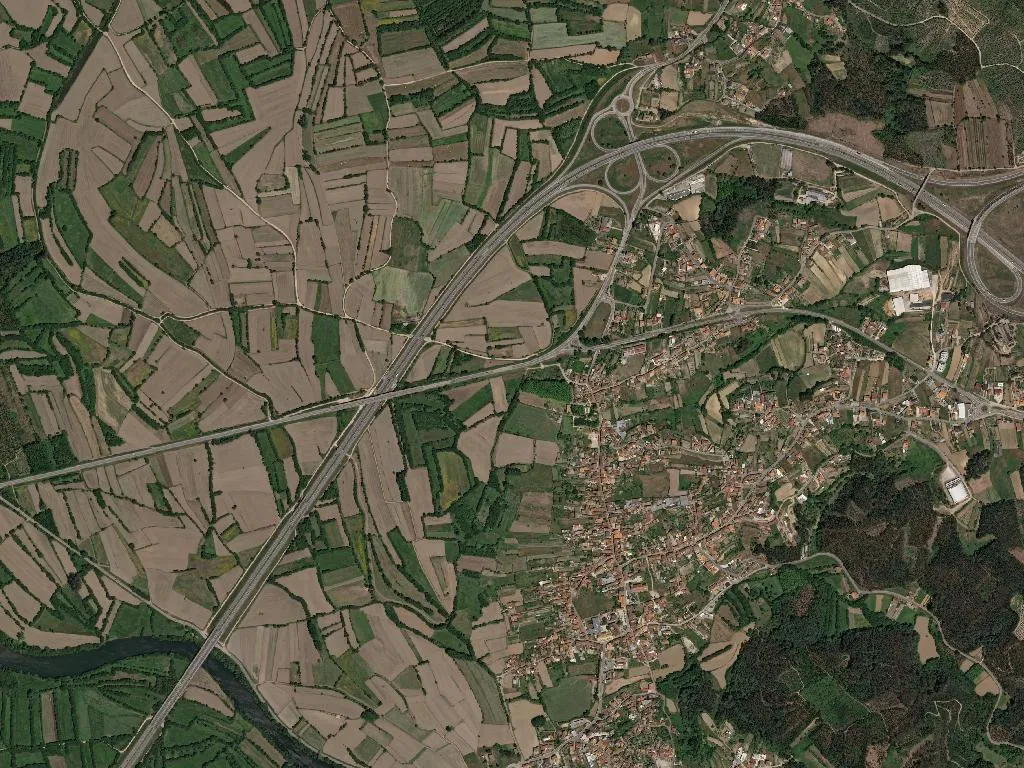
Three metres above sea level is barely enough to keep your shoes dry. In Angeja the tarmac glides just above the water table, so every furrow exhales vapour and the twenty-one square kilometres of parish stay the colour of fresh mint. This is where the Bairrada plain unbuttons into the Ria de Aveiro, letting salt air slip inland until it grazes the trunks of the eucalyptus groves.
Sound carries. The bell of Igreja de São Sebastião—erected in 1891 over an eighteenth-century chapel—measures the day in bronze, answered only by the leisurely gossip of women outside single-storey houses and the diesel cough of the occasional tractor. With 88 residents per square kilometre, distance is polite rather than lonely; neighbours are far enough apart for greetings to matter, close enough to know who still lights a wood stove before dusk. Of the 1,875 inhabitants, almost five hundred have passed the 65-year mark. They read the weather in the clouds and can date a change of season by the smell of the wind.
Yolk and sugar
Angeja falls inside the demarcated territory of Ovos Moles de Aveiro, the golden-sheathed nuns’ confection granted PGI status in 2008. No one here still pipes the delicate wafers—those workshops are closer to the lagoon—but the parish shares the story: leftover yolks from starching habits at the Mosteiro de Jesus, Aveiro, transformed into silk-smooth custard bright as saffron. The flavour has become shorthand for this liminal strip of land between vineyards and tidal marsh.
Stone remembers more quietly. The chapel of Nossa Senhora da Boa Viagem, raised in 1742 beside the old National Road 1, is classified as a Monument of Public Interest. Its granite walls rise without flourish, favouring function over ornament—the architectural signature of a landscape wealth built slowly through dairy, maize and small-plot commerce.
Pilgrims and cobblestones
Since 2017 the Central Portuguese Way of St James has threaded through the parish, way-marked in yellow for three kilometres. Fewer than a thousand walkers a year, according to Albergaria-a-Velha town hall, exchange glances with the cattle. Eight spare guest flats—scrupulously clean, ceremony-free—offer beds for those who arrive after the cornfields turn amber. At dawn they leave again, boots clacking on uneven cobbles, rucksack buckles singing against the morning mist.
Late light stretches shadows over potato ridges and the last stands of maize. A dog barks beyond the eucalyptus line; wood-smoke drifts out of rhythm with the season, depending on whose calendar you keep. Angeja lodges in the traveller’s mind not through spectacle but through scale: a horizon so wide the sky feels propped open, forcing you to breathe twice as deep.