Full article about Avelãs de Caminho: ochre lane, oak shade, silent plains
Whitewashed pockets, 1950s trim, menthol eucalyptus smoke curl over Bairrada’s clay vineyards
Hide article Read full article
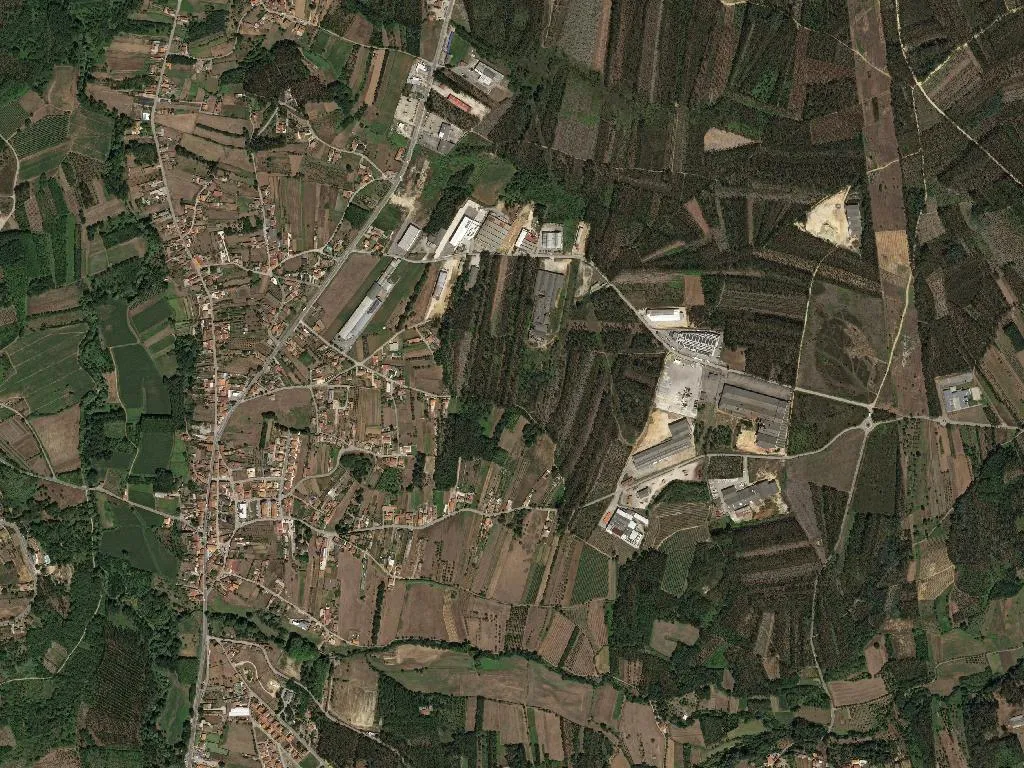
The tarmac gives way to compacted earth on a lane that slices through Avelãs de Caminho like a vein of ochre. By the time you pass the last house, the horizon has levelled into the open canvas of the Bairrada plain, 54 m above sea-level and dead-flat except for the low swell of vineyards stitched onto clay. Oaks throw moving shadows across the fields; their colour shifts from malachite to moss depending on how the Atlantic light hits the canopy.
Fewer than 1,300 people occupy these 6 km², enough to keep the soil worked and the church bells relevant. Dwellings huddle in pockets: whitewashed volumes with 1950s concrete trim, each trailing a vegetable plot where winter cabbages still grow in soldierly rows. On chill mornings, eucalyptus smoke rises straight up, scenting the damp air with a note that reminds visiting Australians of home and everyone else of mentholated bath oil.
Stone with a memory
The parish church of São Tiago, rebuilt in 1710 over a 1596 chapel, is the only state-listed structure. Inside, gilt-carved wood glints above a high altar attributed to José de Sousa—Anadia’s answer to the better-known Aleijadinho of Minas Gerais. A 1734 azulejo strip narrates the apostle’s martyrdom in Wedgwood blues. In the churchyard, the Faria e Sousa coat-of-arms—three Moorish heads and a five-point star—has been let into the wall since the 1600s; the same device is repeated on the gateposts of the Barbosas’ farmhouse down Rua do Cemitério, a quiet assertion of lineage that predates the Portuguese republic.
Beef, beans and Baga
Avelãs eats what surrounds it. Carne Marinhoa DOP, from cattle that graze the wetlands of Chamusca and Quinta do Outeiro, is roasted over oak embers with olive-oil-slicked potatoes. The Baga grape, trained low to hug the clay, once fermented in talha de barro—bulbous clay amphorae—until 1995; today 23 small growers still deliver their harvest to the cooperative at nearby Sangalhos. In domestic kitchens, soffritto of onion, garlic and paprika meets a splash of red that reduces in cast-iron until it lacques the beef. Dessert is the pastel de feijão invented by nuns in Anadia’s Convento do Salvador around 1900, though here Dona Guida rolls her own puff pastry and folds in home-grown black-eyed beans.
Unscripted days
Life proceeds outside any itinerary. The primary school enrols 128 pupils; its library occupies a former grain loft with pigeon-hole vents still intact. Pensioners—more than a quarter of the population—gather at Café O Caminho, open at 6:30 a.m. so tractor drivers can down an espresso before heading to the vines. The sole place to stay is Casa do Tanque, a labourers’ cottage on Quinta do Outeiro turned into three guest rooms; Sunday guests can bake bread in the wood-fired oven that once fed fieldworkers. Nightlife is the Milky Way reflected in the irrigation channel dug in 1852 to supply the church troughs.
Clay clings to boot tread after rain; spring carries the green bite of vine flowers, autumn the caramel scent of ripe Baga. Avelãs de Caminho does not perform for visitors—it simply continues, at the same deliberate cadence locals have walked since the 1514 charter of Manuel I granted this place its unlikely name, “Village of the Hazels”, even though no hazel groves remain. Stay long enough to notice the moss-softened roof tiles, the way plaster flakes in cartographic curls, the hush that settled here in 1974 when troops from the nearby artillery regiment blocked the N234 to slow the last convoys of the Carnation Revolution. Only then does the parish reveal itself: a working clause in the landscape of Bairrada, commaed by vineyards and full-stopped by the Atlantic sky.