Full article about Avelãs de Cima: Santiago’s bell rings over 32 granite granar
Morning bronze echoes past espigueiros, baroque tiles and woodsmoke-scented lanes
Hide article Read full article
The bell that measures the day
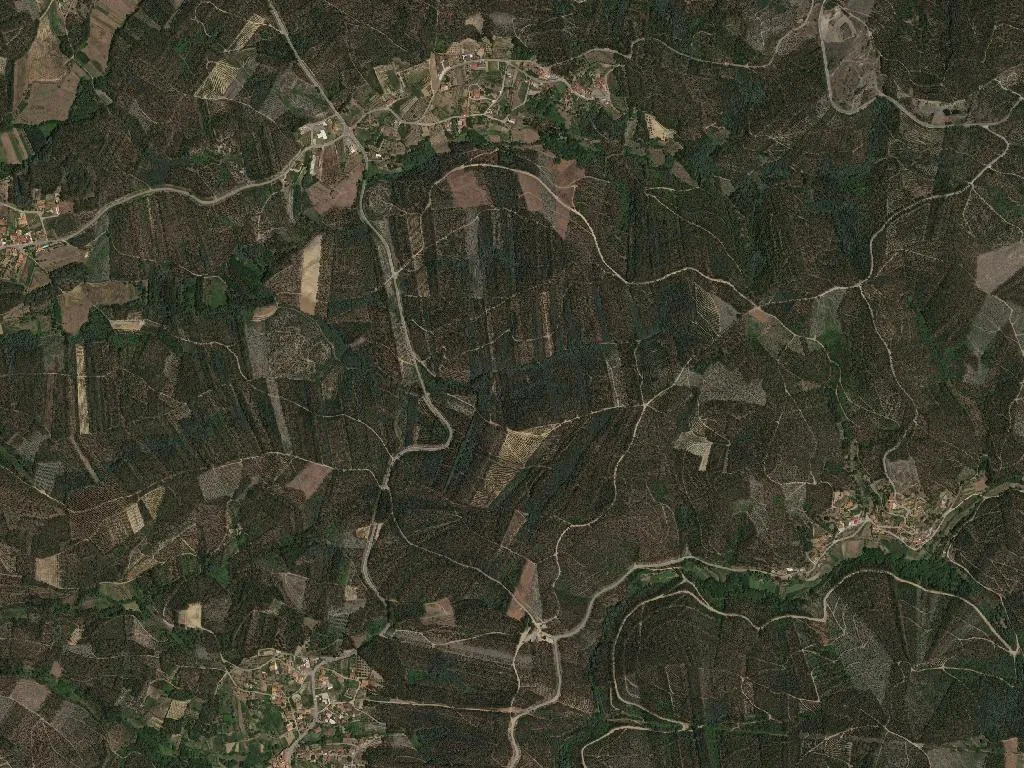
The Santiago bell snaps the morning in two. Its bronze note ricochets across red pantiles and settles on thirty-two granite-stilted granaries, the highest concentration in Anadia council. Woodsmoke from the leitão ovens drifts uphill; the Avelãs stream, swollen by Atlantic dew, smells of wet basalt and fermenting vines. By 07:30 the sun has laid a low blade of light across the pergolas—leaves already turning the colour of Madeira mid-palate—and the village’s 1,953 inhabitants move between house, plot and café as if choreographed by centuries of identical dawns.
Granite chests above the soil
Every family once needed a place where maize and rye could breathe yet remain unreachable to rats. The answer was the espigueiro: pine body, schist legs, air-slits cut like Gothic tracery. The oldest, at Quinta do Casal, still carries “1783” chiselled into its master beam. Walk the narrow lanes at dusk and you pass a silent grammar of storage—some freshly limed, others warped into twisting spines—each one a paragraph in a story that begins with the medieval “Avelães” (named for the hazel that once cloaked the slope) and ends with the drone of a passing quad-bike laden with spraying kit.
Baroque bling and village lace
Push the heavy door of Santiago Maior and candlelight flares on gilt. José de Almeida’s 1743 high altar frames forty-two pombaline tiles that narrate the martyrdom of St James in cobalt comic-strip. The priest who commissioned them, Manuel de Matos Coelho, left his coat-of-arms in the sacristy like a billing footnote. Fifty metres away, the chapel of Nossa Senhora dos Aflitos is smaller, lower, louder: wax tears on the Virgin, ex-votos tied with red ribbon, women reciting litanies in the accent that Portuguese linguists call “beirão achocolatado”. Outside, the 1782 stone cross—its inscription still legible—acts as annual terminus for the July procession when rockets scratch white lines across the sky and the square smells of grilled pepper and sugar-cinnamon.
From harvest to mock-funeral
Labour and liturgy share the same diary. During the September Grape & Wine Festival, started in 1993, the first bunch is cut with a concertina soundtrack and the must is ladled into neighbours’ cups before noon. In Lent, the Enterro do Bacalhau sees masked youths carry a cardboard cod in a satirical funeral—irreverence as preparation for forty meatless days. On Epiphany eve, thirty voices divide into three groups for the Cantar dos Reis, trading traditional January carols for honey fritters and a glass of agua-pé, the lightly alcoholic wash of the wine press.
Crackling skin, clay pots and DOP beef
Order leitão da Bairrada and the waiter brings a wooden board: pork belly blistered to bronze, a clove-garlic perfume, chips fried in lard and cucumber sharp enough to reset the palate. Winter demands chanfana—kid stewed in Bairrada red with plenty of colourau—served from a black clay bowl that keeps its heat like a hand-warmer. The beef is Carne Marinhoa DOP, reared on the flood meadows towards Cantanhede; the sparkling wine poured alongside comes from the same cooperative, five kilometres west. Finish with pastéis de Avelãs, invented in 1968 by Maria dos Anjos Ferreira: puff paste, egg-yolk jam, cracked local hazelnut, a whisper of cinnamon.
Waterwheels, alders and a 45-hectare viewpoint
The PR1 footpath strings together seven abandoned watermills along six kilometres of stream valley. Only the wheel of Moinho do Arelho survives intact, though it last turned in 1957 when wheat shortages shuttered the stones. Alder and willow still drink from the same race; wild boar prints overlap those of weekend cyclists. Climb through the Maritime-pine and eucalyptus of Mata da Escarpa and you emerge at the Miradouro do Cruzeiro de Santo António, 340 m above sea level, where—on a day rinsed clear by Atlantic fronts—you can sight the Caramulo and Buçaco ranges, the vine quilt of Bairrada running like corduroy between them.
Evening folds the village inward. Oak smoke lifts from chimneys, carrying the scent of chouriça curing in the eaves. The bell rings once more—not to tell time, but to remind whoever is listening that life here is still measured in bread cycles, grape sugar and the slow swing of a procession banner.