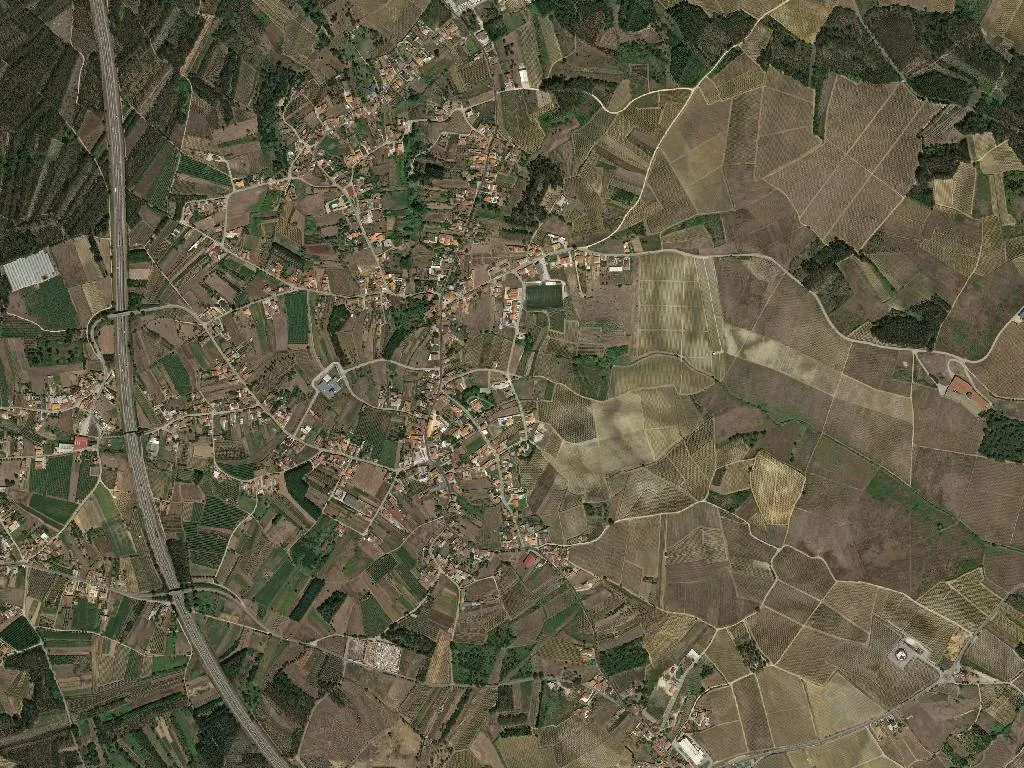
Full article about São Lourenço do Bairro: Dawn Cobbles & Bairrada Bubbles
A village where wood-smoke drifts over vineyard rows and every café knows your grandparents’ names.
Hide article Read full article
The cobbles still carry the dawn chill when the first footsteps ring past the parish church. A faint smell of damp earth drifts up from the surrounding vineyards, braiding with the wood-smoke curling from Sr Armando’s chimney—the cobbler whose workshop angles onto Rua Principal. São Lourenço do Bairro wakes slowly, without urgency, like a neighbour who only appears on the café terrace after his third bica. Only the distant hum of the EN1 reminds you that the world of long-haul lorries between Águeda and Oliveira do Bairro exists at all.
This single parish in Anadia covers barely fifteen square kilometres of low-lying land that averages seventy-seven metres above sea level—just high enough for the coastal plain to begin flexing into the gentle rises of Bairrada. Twenty-two hundred souls are registered here, the demographic equivalent of three full coaches whose passengers have known one another’s business since baptism. Space is generous; everyone can name the person next door yet still retire at dusk to a hush deep enough to hear the cork pop from last year’s sparkling Bairrada.
Stone that outwaits us
Two monuments enjoy official protection, though neither shouts for attention. The sixteenth-century pillory and the tiny Chapel of São Sebastião stand with the modest confidence of Zé Carvalho, the former parish-council president who used to doff his cap outside Café Central. Their stone, cut by hands long gone, absorbs winter rain and summer glare with the same patient indifference shown by Sr António, who for fifty years has climbed the church tower every Friday to wind the clock and has yet to let it lose a minute.
Meat, wine and who you are
Bairrada is more than a wine region; it is an identity that seeps into the tablecloth like the stain from a spilled glass of Quinta do Encontro Baga. Order the Carne Marinhoa DOP—beef from the caramel-coloured cattle that once grazed these same fields—and the waiter will not ask how you want it cooked; tempo is understood. Conversation meanders from the latest cooperative harvest to whether Luís Pato’s new espumante is worth the markup. Sr Albino, a retired agricultural engineer, pours a second glass the old way: no measure, just a steady hand and a drop of generosity.
The generational ledger
Official figures read like a quiet warning: 253 children under fourteen, 711 residents over sixty-five. Open the metal shutters of “O Pingo Doce” grocery at half-past eight and you feel the imbalance—Dona Alice has already kneaded the broa de milho her Lisbon grandchildren demand each weekend, yet the playground beyond the wall holds only a burst of voices too small to fill it. Still, the tractor driven by Sr Domingos still trundles to Sangalhos market every Wednesday, proof that some routines refuse to retire.
Discretion as standard
There are no viewpoints calibrated for sunset selfies, no gift shops flogging cork key-rings. What exists is Casa da Eira, a schist house converted by Cátia and Miguel after they fled Portimão’s condo crush. Guests wake to the actual soundtrack of the village: the postman’s scooter, Bobi—certifiably the region’s oldest dog—barking at shadows, neighbours swapping recipes for filhós dough over a front gate. Crowds appear only during the Festas de São Lourenço in August, when a string of lights over the main square lures even the sceptics from Aguada de Cima for grilled sardines and midnight fireworks.
Late sunlight strikes the church façade—whitewashed on the orders of Fr Américo after Vatican II—and throws a long shadow across the porch where Zé Manel hoards bottle tops for a game of quoits. A mongrel crosses the square without destination, nails scuffing the loose gravel the council has promised to tarmac since 1998. From the bell-tower the hour strikes—not to hurry anyone, simply to note that time, patient as ever, is still being counted in bronze waves that roll across the vineyards until they dissolve into the Bairrada night, like the final sip of espumante left in the glass.