Full article about Vila Nova de Monsarros: dawn chorus & slow-roast Sundays
Walk ridges where 65 souls per km² leave silence between chimneys, vines and wood-oven beef.
Hide article Read full article
The morning takes its time
Sunlight enters the low-set houses at a shallow angle, printing golden rectangles on the polished concrete floors. In Vila Nova de Monsarros, no-one is in a hurry to switch off the dawn chorus. José Manel’s tractor coughs awake, ready for the short drive to the vines; the iron gate of Dona Rosa’s vegetable plot scrapes open while the dew is still on the grass. There are no monuments to tick off, only a geometry of lanes where everyone knows that loquat trees blossom three weeks after the almonds, and the sudden smell of manure means the soil is warm enough for planting potatoes.
The quiet mathematics of the territory
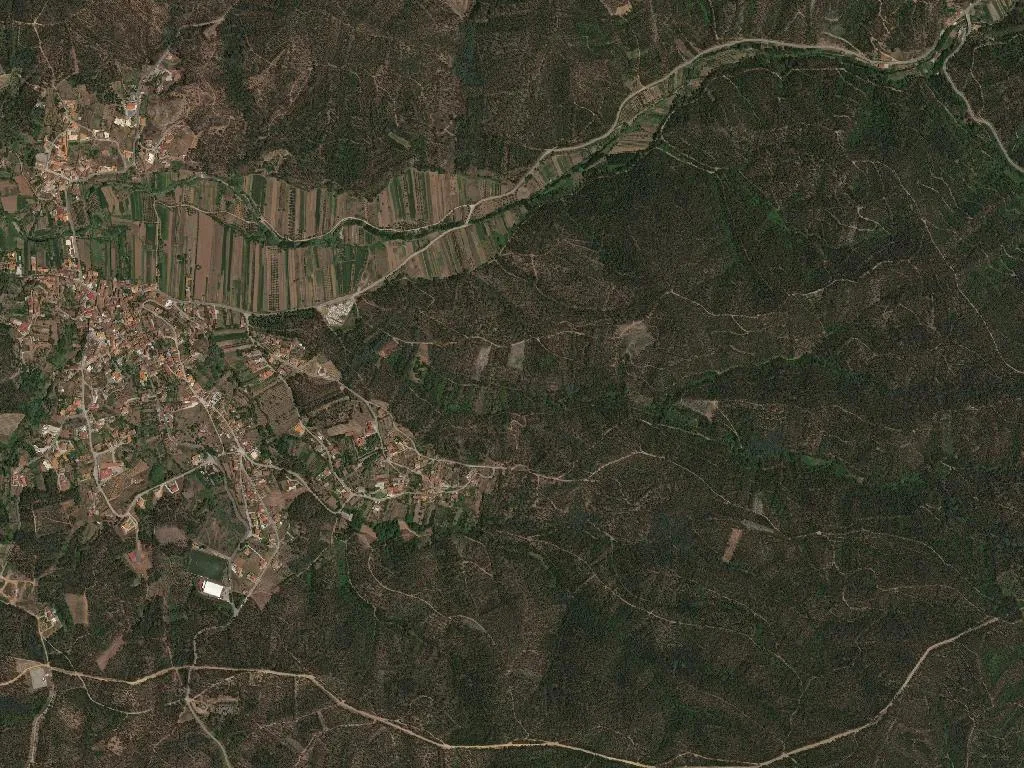
Twenty-three square kilometres begin at the old EN-234 and stop where gorse blocks the track. At barely 112 m above sea level the land is open to being walked on—there is no drama of cliffs or summits, only long ridges that let the eye run free. With 65 inhabitants per square kilometre, silence has room to settle between people. Stand on the Curva do Cerrado and you can read the village by its chimneys: Adelino’s still puffing acacia logs, Dona Ilda’s capped with a modern cowl though she refuses to abandon her wood-fired stove.
The demographic chart is blunt: 500 residents over 65, fewer than 200 under 25. Yet at four o’clock, when the yellow school bus from Anadia wheezes into the Celeirós stop, the place inflates with rucksacks and chocolate-milk moustaches bought from the local Minipreço. Life is not a performance; it is the fabric of back doors left ajar in case a neighbour needs a cup of sugar or help lifting a sick calf.
Beef, vines and belonging
Carne Marinhoa is not a supermarket label; it is the steer António of Lameira keeps on the meadow until the first autumn mists, because “decent beef refuses to be hurried”. On Sunday dawn the joint goes into a wood oven so it can surrender slowly while the family is still out pruning. When September arrives the calendar flips to vindima: even Porto-based grandchildren book the weekend off to haul baskets of white grapes to the Junqueiral press house. Fermenting must drifts through the streets like a tipsy ghost, sweet and yeasty, impossible to photograph.
There are no restaurants, only Carlos’s tasca that opens on Saturdays if he drove to Cantanhede market the day before, and three spare bedrooms registered on Airbnb for travellers who have mislaid the rhythm of modernity and want to remember what traffic-free darkness sounds like. This is geography for people who no longer need to be impressed—only to feel the weight of hand-loomed blankets and the solitary crow of a cockerel that has never heard of push notifications.
What stays in the body
At day’s end, when the light sits on the whitewashed steps like a tired cat, Vila Nova de Monsarros keeps its counsel. It stores the hush that arrives after ten, when even Xico’s dog gives up barking. It stores the thyme-scented steam that rises when women water cabbages at dusk, the creak of the ecological-park swing, the low hum of the restored water-mill demonstrating how wheat was once crushed beside the Rio da Serra. There is no Instagram moment—only the physical memory of a place that exists for itself, indifferent to the visitor’s gaze, and which, precisely because of that, lingers in the body like the ridged imprint of woollen tights after a long sit on the stone bench outside the 18th-century chapel.