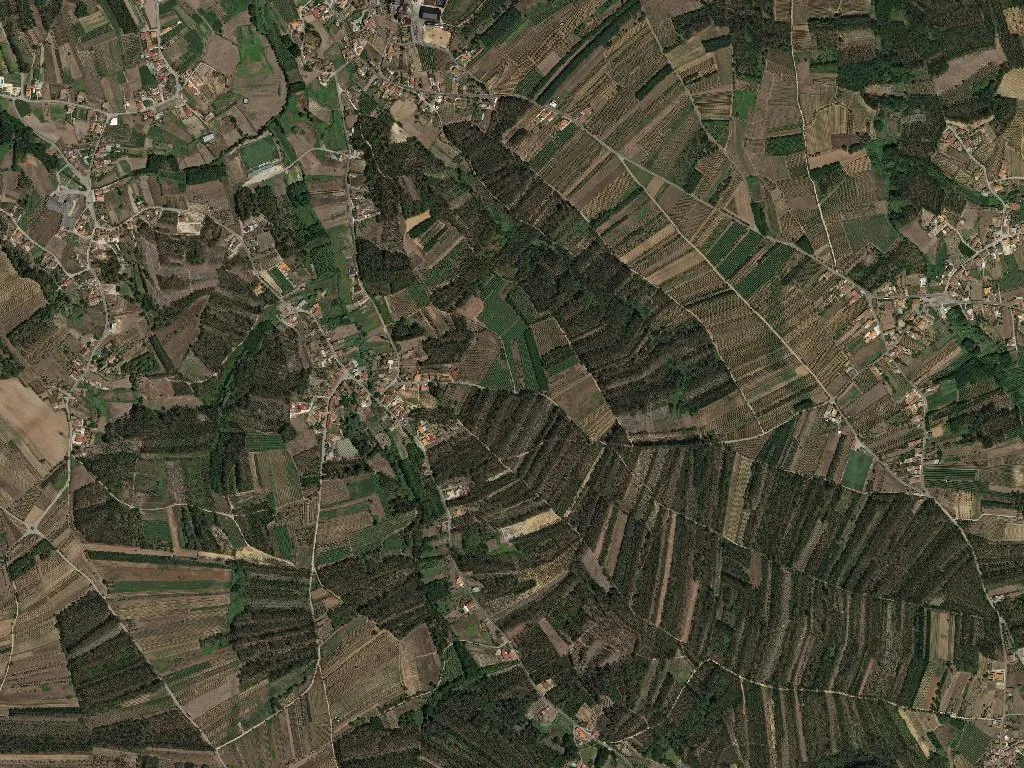
Full article about Vilarinho do Bairro: Roman Baths, Goat Stew & 13 Chapels
Vilarinho do Bairro tempts with roadside Roman baths, 13 chapels opened by need, wood-oven chanfana and local Bairrada fizz.
Hide article Read full article
What’s left of the spa
Two granite troughs, each the length of a bathtub, are scooped out of the roadside rock beside the EN235. No ticket booth, no interpretation board – just a pair of dog bowls that fill when it rains. Local lore insists they are Roman baths; the council’s own leaflet admits no trowel has ever tested the claim. Archaeology by hearsay.
When it was a county seat
From 1515 to 1836, Vilarinho insisted on being a town in its own right. It had a Manueline charter, a proper town hall on Rua Direita – the stone coat-of-arms still projects over the door – and 385 households, more than the parish claims today. Anadia swallowed it in 1855, yet older residents still say “I’m going down to the vila” when they head for the spa resort of Curia six kilometres away.
Thirteen chapels
Exactly thirteen. Santa Maria Madalena in Poutena opens only on 22 July for the Magdalene’s single annual mass. The rest unlock by promise: São Geraldo if a child’s fever spikes, São Gregório when the grapes need sun. Keys hang in the nearest kitchen; knock and they appear.
What arrives on the table
Friday is chanfana day at O Cantinho in Poutena – kid goat braised in anise-blackened red wine inside a wood oven fuelled with pruned vine stumps. Saturday brings rancho, a mountain of beans, chouriço and winter cabbage. The suckling pig is Bairrada IGP, the Carne Marinhoa beef comes from Oliveira do Bairro eight kilometres west, and the fizz poured into water glasses is Quinta do Encontro Bruto, made five minutes up the road. Ask for “white or red”; there is no list.
How to reach it
Leave the A1 at Aveiro, follow the IC2 to Águeda, then the N235 towards Vilarinho. The granite tanks lie two kilometres before the village sign – no brown heritage arrow, just a gravel lay-by. GPS: 40.4833, -8.4833. The neighbouring Roman site of Porto da Pipa is somebody’s back garden; ring the bell of the yellow house opposite and the owner will admit you for €2 to look at a few mossy bricks.
When to come
Mid-September: Bairrada estates open their quintas for the vintage, letting visitors snip grapes and taste must. Early October: the three-day Feira de São Miguel fills the Filarmónica’s hall with a blind-tasting shoot-out between local espumantes. August is pointless – even the bakery shuts.