Full article about Chave: Where Granite Walls Smoke with Chouriço
Arouca’s last parish before the Douro folds into sky, scented by oak-roast kid & heather honey
Hide article Read full article
The granite holds the heat
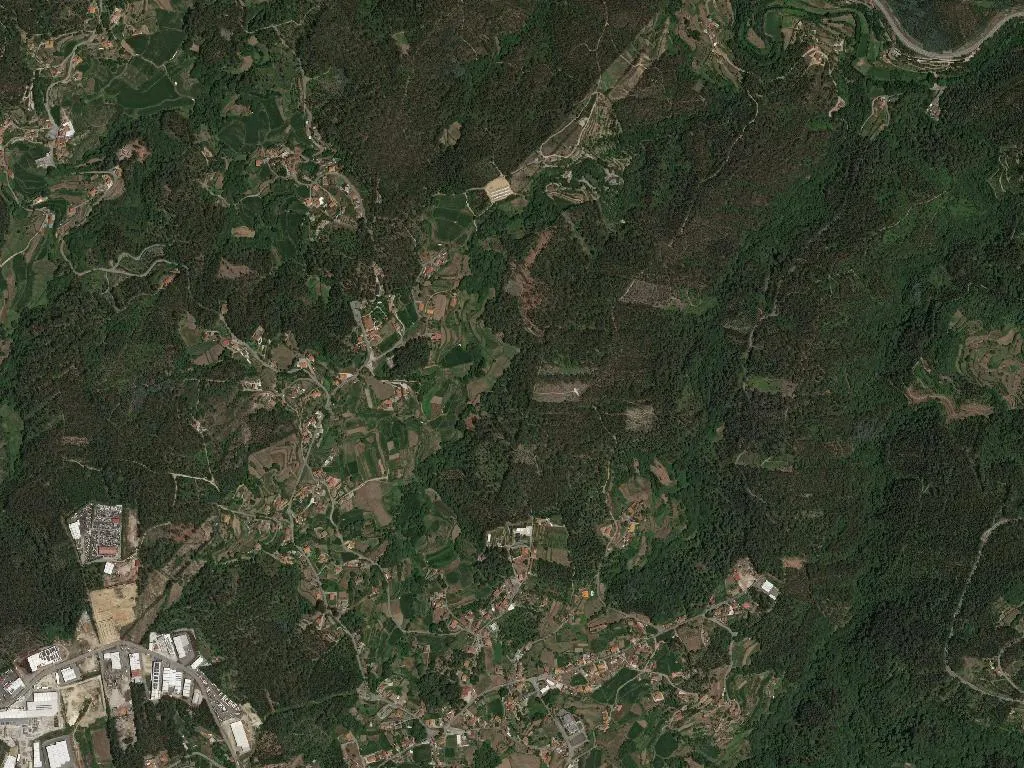
By four o’clock the west-facing stone is too hot to touch. Terraces of grey granite rise 379 m above sea level, knitting the scatter of houses to the slope like buttons on a tweed sleeve. Between pasture and sky, the only interruption is the chalk-white rectangle of a chapel or a seam of slate breaking the soil. This is Chave, the last parish before the Arouca massif folds into the Douro uplands: half pasture, half prayer ground.
Three feast days, three statues
The liturgical calendar still rules. In May the procession of Queen Saint Mafalda – daughter of King Sancho I, remembered locally for resting here on her way to the convent at Arouca – turns the lane into a tunnel of coloured paper petals. July belongs to Nossa Senhora da Laje, September to Nossa Senhora da Mó. Each statue has its own chapel, each chapel a stone terrace where women lower fritters into sizzling oil and men turn chouriço over makeshift braziers. The smoke drifts uphill, carrying eucalyptus and newly-cut hay.
What the plateau tastes like
UNESCO lists the entire Arouca Geopark, but the short version is 500 million years under your boots. Shepherds know every fissure and spring; their cattle, the Arouquesa DOP breed, graze the inclines in silver-grey coats. The kid that reaches the table as Cabrito da Gralheira IGP is reared a few ridges away, then roasted for four hours over oak. Breakfast honey carries the tang of heather and chestnut blossom; lunch might be beef seared on bay leaves, served with rice baked in the same wood oven. What you eat is what you see grazing outside the window – no tasting menu required.
The mathematics of staying put
Census night 2021 counted 1,270 souls: 158 under fourteen, 334 over sixty-five. Population density is 116 per km² – enough for a village grocery, too few for a cash machine. On winter mornings the school bus looms out of valley fog; by late afternoon the elderly reclaim the stone bench beside the fountain where water runs at 8 °C even in August. The phone box still works, the church key hangs on a nail.
One key, one room
Only one place offers a bed: a granite house with green shutters where the host brings coffee at dawn, a loaf still warm from the bread oven and pumpkin jam the colour of late-afternoon light. From the gate a dirt lane climbs between broom and gorse; you can walk for two hours and meet no one except the farmer who calls each cow by name as they file towards the byre. When the bells ring for Ave Maria the sound rolls down the valley, ricochets off the opposite scarp and dissolves into the dark, leaving only the smell of woodsmoke and the slow, granular weight of granite underfoot.