Full article about Mansores
Hear Mansores' 1882 bell ring across the Arouca Geopark, where earthquake-rebuilt Santa Cristina church towers above eucalyptus-darkened slopes and a whisp
Hide article Read full article
The bell-tower of Santa Cristina cleaves the sky above Mansores, its stone the colour of weathered linen against a backdrop of eucalyptus that darkens the slopes like spilled ink. Two storeys below, the Mansores stream keeps up a low, metallic whisper; every half-hour the 180 kg bell cast in 1882 answers in A-flat, the note carrying 318 m down the valley and dissolving among the folds of the Arouca Geopark. It is mid-morning; night’s chill still clings to the granite, and the cart-track that doubles as the village’s main street smells of oak leaves mulching quietly into soil.
Built on the ruins
The present parish church is a child of the 1858 earthquake that shook the Douro littoral. When the medieval hermitage of Santa Cristina collapsed, master-mason António Ferreira de Fermêdo spent the next fifteen years raising its replacement from the same mountain: wall-stone 80 cm thick to blunt the Minho winter, lime slaked in the communal kiln at Agras. The tower was finished in 1874; the bell, poured eight years later at the Felgueiras foundry in Penafiel, still swings for António Marques, who has climbed the 37 worn steps every Sunday since 1978.
Beside it, the Chapel of Nossa Senhora do Rosário is impossible to overlook. Commissioned in 1890 by Joaquim Moreira das Agras after he returned from the coffee fields of São Paulo, its curved pediment is an anomaly in vernacular Beira architecture. A 2008 restoration by Arouca town hall stripped off the original render but added a door of air-dried oak, re-oiled with linseed every three years by the sacristan to keep the mountain damp at bay.
Mansores first appears in a 1059 charter as “Mansores de Urgueira”, a holding of Countess Mumadona Dias. The plural form is late: until 1758 it was simply “Mansor”. The 1855 administrative reform transferred the village from Fermêdo to Arouca – a move locals fought, objecting to “more than seven leagues of precipitous road” to the new council seat, a complaint still filed in Aveiro district archives.
Marian devotion and Brazilian money
The procession of Santa Mafalda has set out every 2 May since 1963, when parish priest Manuel Pinto imported the saint’s image from a Lisbon devotional shop. At 9 a.m. sharp the brass band of Fermêdo strikes up a hymn composed in 1954; 22 minutes later the 450-metre circuit – church to riverside cross, across the stone bridge and back – is complete, timed to the beat.
Emigration turned devotion into geography. In 1967 Joaquim Augusto Marques, born 1921 in the Casa do Penedo, laid out “Rua Mansores” in São Paulo’s Jardim das Acácias after paying 12 contos for the plot. The money he posted home financed the first granite-and-cement houses you see in 1970s photographs, replacing timber shacks and dry-stone walls. Four primary schools – Serra da Vila, Agras, Forcada, Póvoa – once taught 180 pupils; today only the shell of Serra da Vila survives, its gate still reading “Escola Primária n.º 7 – 1963”, tractors parked where desks once stood.
Geopark territory
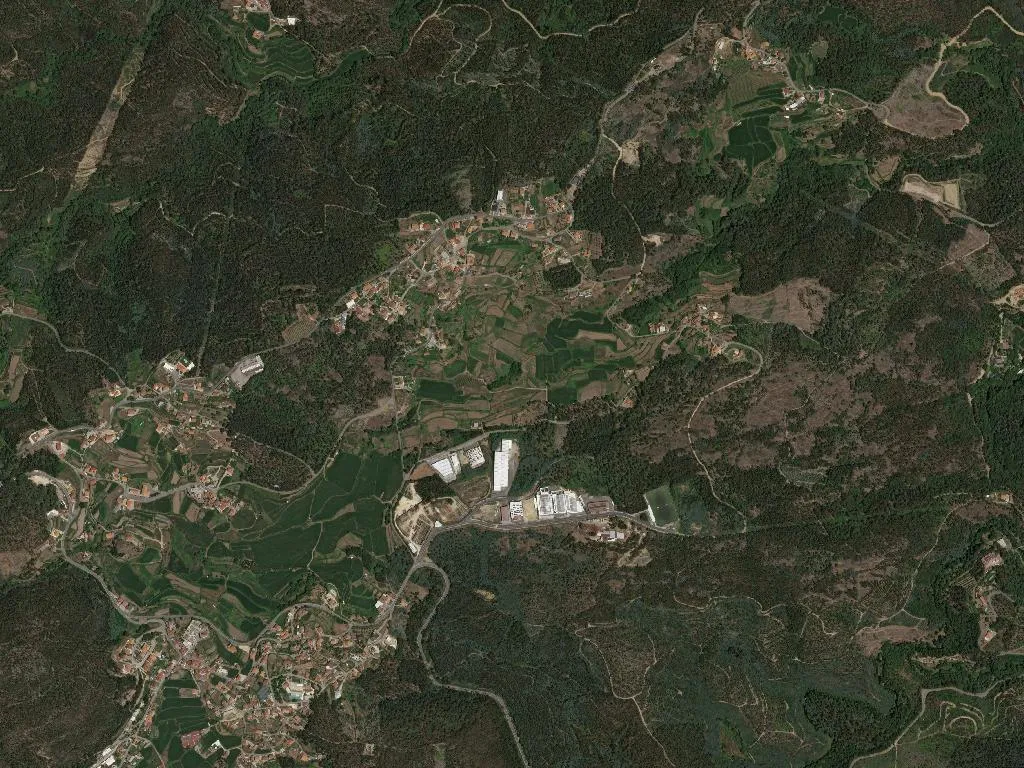
Mansores spreads across 1,407 ha, but barely 18 % can be ploughed. The rest is common woodland and grazing, parcelled out as baldios since 1934. Eucalyptus arrived in 1962, contracted by Celbi to feed the Figueira da Foz pulp mills; after the fires of 2005 and 2017 the plantation has shrunk from 340 to 220 ha. Chestnut tells a quieter story: 80 centenarians on the Serra da Vila once yielded 15 t a year in the 1980s; now the haul is 4 t, sold straight to the Cacia factory for €1.20 kg−1.
The PR4 “Mansores Trail” threads 7.3 km through this mosaic, gaining 280 m in two and a half hours. It skirts an antimony mine abandoned in 1953 where 28 miners gouged out 450 t of stibnite between 1942 and 1951, ore that sailed up the Rhine for military pigments. Today only a grille across the adit and a glittering slag heap remain, sparkling like broken glass on sunny days.
Kid and cast-iron
On the table, Gralheira kid really does come from Mansores: 300 breeders in the municipality, 12 in the parish itself. José Manuel Pereira’s Quinta do Ribeiro fattens 120 animals a year, selling direct to village taverns at €9 kg−1. The method is non-negotiable: kid split at midday, rubbed with sweet paprika, garlic and bay, then into the wood oven at 4 a.m. It must emerge at 12.30 so tender that the meat surrenders to a fork. The accompaniment is local chestnut-coloured potato, the same variety his mother stored in wooden silos beneath the hearth.
When light begins to drain from the valley, the bell tolls seven times: three for the Ave Maria, three for the dead, one for the living – a code António Marques learnt from his father. The sound takes 11 seconds to reach the Agras cross and returns as a softer echo off the Viso slope. In that interval traffic ceases; even the russet dog at the ferrer’s gate suspends its bark. Then silence settles again, the way it always has, the way you suspect it always will.