Full article about Tropeço: Arouca’s Ridge Where Gravity Plays
Stone-walled terraces, queenly processions and tunnel-aged beef above the Atlantic
Hide article Read full article
The churchyard at half-eleven
The bell tinkles against its bronze casing as wind scuds up the slope. Moisture still clings to the granite façade, and copper-green moss threads the joints. Tropeço sits 351 m above the Atlantic, on a ridge that folds into terraces so abruptly the parish name—Latin trupacium, “place of stumbles”—remains physiologically true. One mis-placed boot on the loose schist and gravity reminds you who is boss.
A landscape that trips the eye
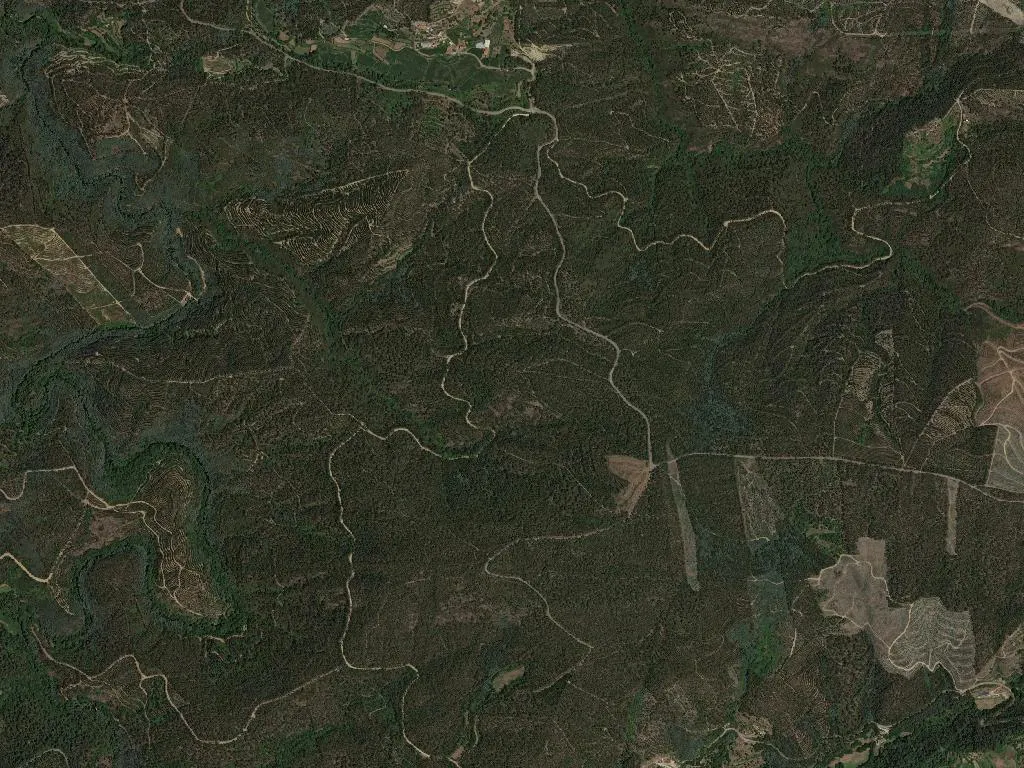
Founded in the tenth century, the parish is one of the oldest pockets of the Arouca massif. The topography reads like sheet music: crescendo of knolls, sudden rests of flat ground. Dry-stone walls wriggle uphill, penning cows of the protected Arouquesa breed, their coat the same burnt umber as the local Barroso wine. Every usable scrap is cultivated—rye narrower than a tennis court, kale lines sharp as ruler edges—yet nothing feels manicured, only relentlessly negotiated.
At the settlement’s centre stands the Igreja da Assunção. Three annual processions still depart from its portico: Queen Saint Mafalda in May (the only place in Portugal to honour the queen who retired to nearby Arouca convent), Nossa Senhora da Laje in August, and Nossa Senhora da Mó in October. Locals call them “the compass dates”; even the village’s atheists know when bread and cod are handed out at the church door.
Beef, kid and honey with altitude
Tropeço’s kitchen is altitude-specific. Arouquesa DOP beef arrives from pastures you can see from the church steps; the dark, short-fibred meat spends fourteen days dry-ageing in a converted railway tunnel at nearby Loriga. Cabrito da Gralheira IGP is pit-roasted over holly oak, the crackling judged ready only when it shatters like thin ice. Dessert is less theatrical: honey from the Terras Altas do Minho, spooned over fresh ewe’s cheese or simply onto yesterday’s rye, the comb still intact. The cooking style is low-intervention—salt, smoke, time—because anything flash would feel like shouting in a library.
Inside the UNESCO geopark
The parish lies wholly within the Arouca Geopark, 328 km² of Ordovician quartzite and 400-million-year-old fossils. Interpretation panels are scarce; instead you read the terrain directly. Hike the Tropeço–Canelas ridge and the rock itself explains why the ancients believed stone could bleed: iron oxides seep like rusted tears. Pause at a cattle grid and the silence has weight—1,086 inhabitants across 1,800 hectares means 0.6 people per football pitch. Echoes travel faster than cars.
Demographics tilt elderly—234 residents over sixty-five, only 149 under eighteen—yet two granite cottages have been converted into stylish guest houses, wood-burners imported from Denmark, linen from Guimarães. The owners, both returned emigrés, offer neither minibars nor television. Instead they lend guests a pair of rubber boots and a hand-drawn map titled “Places to Do Nothing”.
When the sun rakes the stone
Late afternoon, oblique light ignites the whitewash and the village’s name stops sounding like a warning. You stumble not on rocks but on time: a conversation about rain that lasts forty minutes, a grandmother who insists you taste the new-season honey straight from the spoon, the realisation that dusk arrives forty minutes later than on the coast because the mountains hold the light. At six o’clock the bell tolls; the note rolls downhill, slows, trips over its own echo, and finally vanishes—proof that even sound respects the lay of this land.