Full article about Bells & Bones in Várzea, Arouca
Talaminho meadows, saint’s relics and goat-scented auctions
Hide article Read full article
Bells, bones and goat smoke
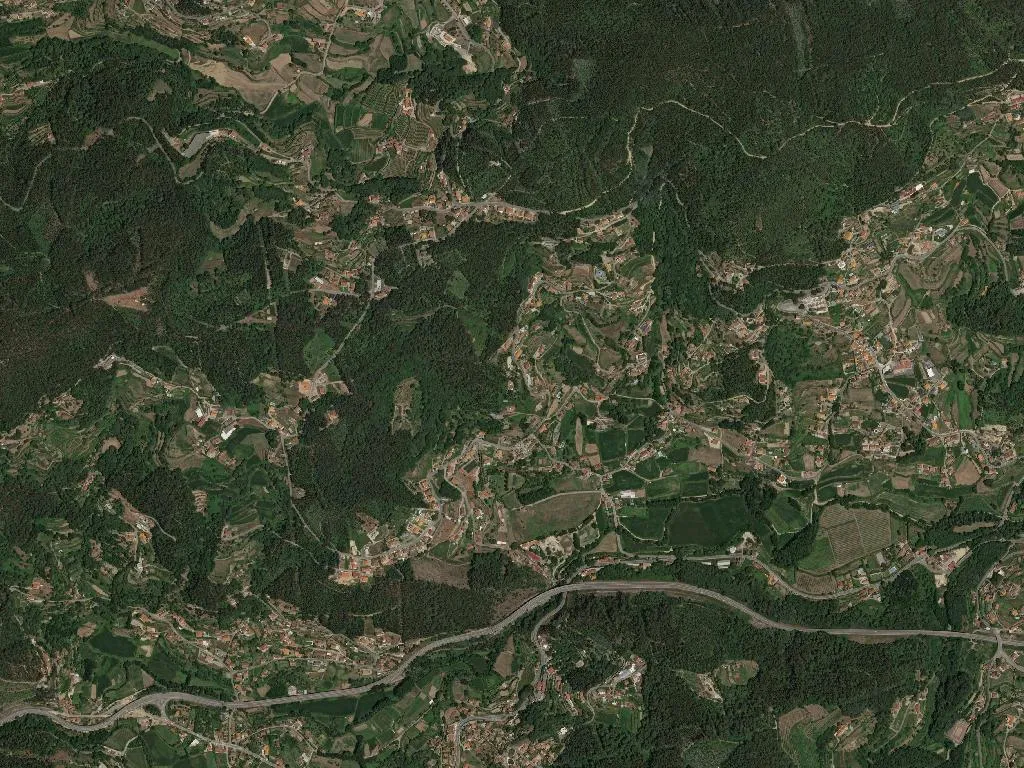
The church bell strikes at seven-thirty—first the deep toll, then the lighter note—rolling across the water-meadows like a reminder that the baker has already stacked the morning loaves. Várzea is the green rectangle left over on the map of Arouca: 179 hectares, 534 inhabitants, half-a-dozen dogs that memorise every passing number plate. The river here is called the Talaminho and doubles as a calendar: when it swells it must be Monday, when it drops it’s Friday. The rest of the week it drifts, watering cabbages and the memory of a mill that stopped grinding twenty years ago and became a holiday cottage for a Portuguese restaurateur returning from Paris.
Church, relics and bargains with God
The parish church is whitewashed outside, gilt-wood inside. On the baroque retable, plump cherubs perform chin-ups over Saint Mafalda—or what remains of her, which isn’t much: a sliver of bone brought from Guimarães in a felt-lined box. Touch it, they say, and a sore throat disappears; it certainly calms the cleaner, who never misses the nine-o’clock Mass. The eighteenth-century tiles are shedding their glaze—not through lack of faith but through rain and sheer duration. The side door groans like an old man getting out of chair; that’s the way in if you want to dodge the sun or light a candle for someone who isn’t dead yet.
The medieval bridge downstream is used for two things: moving cows and reminding grandchildren that grandad once carried a piano across it before the road arrived. The stone arch is polished by time and by Nike trainers: local kids use it as a springboard into the Talaminho, where trout play dead until the first crust of bread hits the current.
Cake auctions and the scent of roasting kid
May is the month of fund-raising on the church steps. After the procession the cake auction begins: the priest taps the microphone, Zé from the café shouts “five euros!”, Toninho’s wife counters “ten!” until the sponge cake ends up with the family that least needs it. Proceeds go to the roof—or to the wine fund, depending who’s on the committee.
On the Sunday before school resumes everyone drives up to the Laje. The chapel is doll-house tiny, but the surrounding woodland is large enough to hide bottles of bagaceira firewater. Kids turn on a spit over scrap-iron trestles; the smoke rises straight, the priest blesses the livestock, and the youngest child falls asleep on a car bonnet. Bring a napkin or the scarlet pimentão will leave souvenir stains on your shirt.
What you eat (and drink to forget)
Gralheira kid needs nothing beyond salt, garlic and oak logs that make the skin blister and sing. It arrives on a single platter, torn by hand—no knife competes with a snapped bone. Chanfana is for misty days: chunks of Arouquesa beef buried overnight in red wine, layered with onion and stained with paprika that makes your eyes water and your stomach laugh. When the bread runs out you tilt the bowl—bad manners nowhere, good sense everywhere.
The honey comes from the neighbour’s chestnut hives, the cheese from Cabreira, the aguardente from someone’s cousin—three sips and you’re fluent in French. After dinner grandad fetches a wine-smoked chouriço from the smokehouse: slit, skewered on a fork and spun over the salamander coals. The child gets the crackling, the adult the rest. Dessert is toucinho-do-céu, a saffron-yellow yolk-and-almond slice that collapses on the tongue and expands on the conscience.
Walk, sweat and find the whole village at the viewpoint
The loop is short—five kilometres—but steep enough for local women to claim it “cures varicose veins”. It starts at the bridge, passes the meadow where Charuto the donkey eyes you as if asking whether you’ve brought sugar, then climbs through chestnut woods. In October the spiky cases pop under trainers; in July the shade is so dense the phone loses signal.
At the Pilar lookout the valley appears complete: white church, silver river, four-pitch roofs and, on the horizon, the saw-tooth ridge of the Arouca hills. Sit on the wooden bench, wipe your forehead with your jacket and, unless you’re quick, the village elder will settle beside you—emigration stories, African war service, the granddaughter studying nursing in Porto. When the sun drops you descend fast: dinner is at nine in the tasca and the hunter’s rabbit runs out when it runs out.
Várzea has no ticketed monuments, no souvenir shops. It offers a silence you can actually hear, a smokehouse scent you can follow, and a bell at seven-thirty that tells you the bread is still warm. If you drive through, pull over. Breathe. And pocket a napkin: the paprika never forgives.