Full article about Cacia: Rice Steam, Salt Haze & Silent Wings
Breathe the briny dawn over Aveiro’s paddies, herons rowing above mirrored ponds
Hide article Read full article
The air has weight. By seven in the morning it settles on your shoulders like a wet jumper, salt-laden, impossible to shake off. Sound behaves differently here: not the echoing hush of mountain villages, but a low, horizontal quiet broken only by the slow clap of a heron’s wings. Twenty metres above sea-level, Cacia unfurls across the southern lip of the Ria de Aveiro—3,575 hectares of paddies, salt-marsh and mirror-bright ponds where land and water have been negotiating borders for centuries. Neither side has yet won.
A name that began with roofs
Medieval scribes wrote “Casa” or “Casal” on the first royal ledgers; by the twelfth century the place was simply “the cluster of houses”. It grew south-west of the early-Gothic church of São Vicente and never bothered to change gait: mud on boots, tide in the veins, hands permanently in paddy water. A royal charter in 1836 made the parish official, but Cacia had already decided what it was—flat, wet and allergic to fuss.
Useful trivia: while the rest of Portugal still read by paraffin in 1923, Cacia’s windows glowed with electric bulbs. The recently built thermal power station at nearby Aveiro wired the village in first, and the eighteenth- and nineteenth-century manor houses still carry themselves with the slight smirk of early adopters.
Stone, lime and a pillory that isn’t original
The parish church dates from the mid-1500s, yet the reason to step inside is climatic: the nave holds a cave-cool 18 °C even when the paddies outside shimmer. Beside it, the tiny Chapel of the Conception and the granite Calvary cross form a three-minute stroll—wear soft soles; the flagstones are scooped out by four centuries of footfall.
The pillory standing in the main square is a 1932 reproduction, installed more as civic reminder than penal threat. Local children treat it as a maypole during festivals; tourists use it as a meeting point before heading for the rice museums in nearby Torreira.
Eel stew and convent yolks
Cacia keeps two larders: the estuary and the cloister. From the water comes caldeirada de enguia—eels simmered in their own black broth, tasting of iodine and silt. Outsiders hesitate; locals add an extra slice of crusty corn bread and call it lunch. The simpler ensopado uses the same fish but skips the theatrics. Afterwards, order arroz de marisco, shellfish rice that borrows whatever escapes the Ria’s fish-farming racks.
Convent sweets arrived with the Augustinians. The pastel de Cacia is an ovos-mole in disguise—same egg-yolk armour, same sugar sigh, only the paper wrapper shows a different saint. Eat them warm at the counter, gossip optional. The first-Sunday market is the place for rye-honey loaves and maize buns: arrive before nine, bring coins, never question the queue. Resident population is 6,830; on market Sunday it doubles.
Rails that became bird hides
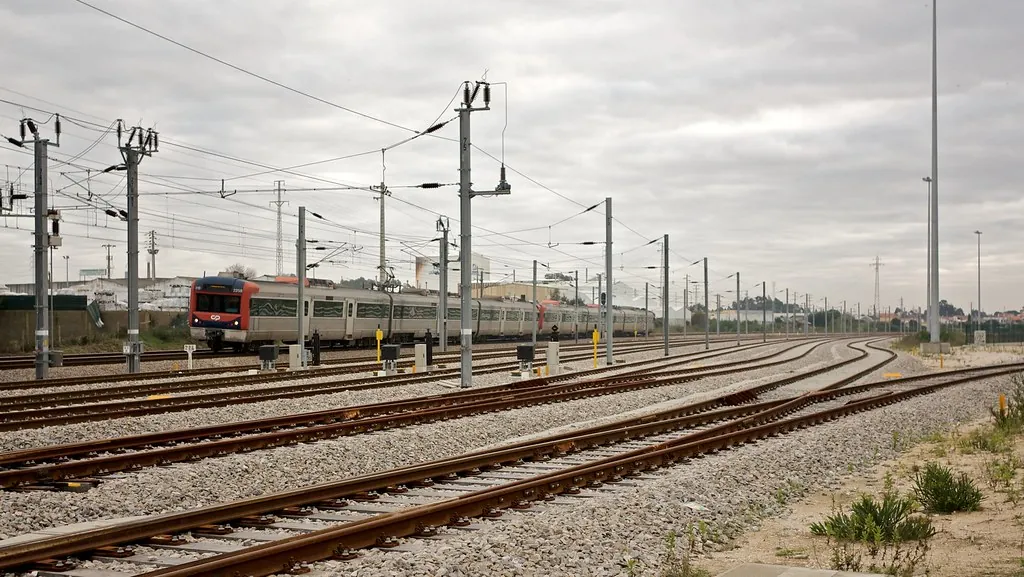
The Vale do Vouga railway closed in 1990, leaving 17 km of level track that now serves as a cycling and walking greenway. Binoculars are essential—purple herons and glossy ibis patrol the drainage ditches, and spoonbills feed so close you can hear their bills snap. The Rio Novo do Príncipe canal bisects the parish and forms a corridor of reeds all the way to the São Jacinto dunes; if you’re walking the coastal variant of the Camino, Cacia is the logical pause—seven guesthouses, zero stars, all with hot water. Enough.
Palheiros still breathing
Dark-timbered rice barns and low-roofed fishermen’s huts—called palheiros—dot the outer marsh. Some still store scythes and wooden pitchforks; others have been converted into studios where reed-weavers work to the sound of tidal water. At dusk the flooded paddies turn the colour of old coins, the church bell strikes seven, and the smell rises—silt, bulrush, earth that remembers being sea. You won’t bottle it; you’ll simply come back.