Full article about Bairros: Smoke-Cured Beef & Vinho Verde Heights
Granite lanes, oak-smoked Arouquesa and mountain-honey fritters above the Douro
Hide article Read full article
Smoke, Oak & Arouquesa Beef
Oak smoke coils lazily from the curing shed, threading through dangling strings of chouriço like slow-motion baroque. At 261 m above sea-level, on the ridge that divides the Douro gorge from the first granite ramparts of the Marão, the DOP-labelled Carne Arouquesa is more than a bureaucratic stamp: it is the sum of every pasture a local can name, every calf whose sire grazed the same frost-sweet meadows.
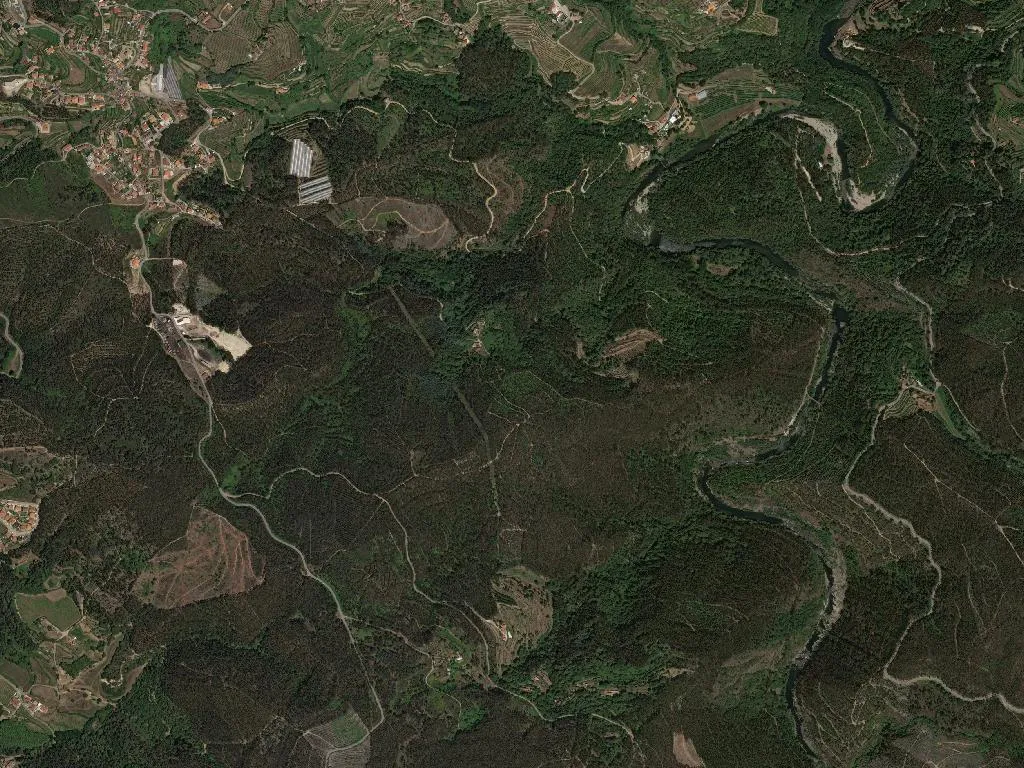
Bairros occupies 859 ha of schist wall and granite outcrop where 2 392 people live at a density that feels like breathing room rather than crowd. Houses follow the contour lines; vegetable terraces drop to seasonal streams; vines scramble over walls built from the very stone they sit on. Place-names survive in dialect—Cimo de Vila, Fonte da Pipa, Lameira—each a shorthand for a clearing, a spring, a crossroads that still exists.
Green Wine, Mountain Beef
Vinho Verde creeps up these slopes on pergolas or razor-thin terraces. Its electric acidity finds its counterweight in beef that has never known a feedlot: Arouquesa steers spend their lives shuttling between upland meadows in the Terras de Basto and winter grazing along the Paiva valley. The joint arrives as a butterflied sirloin or a weekend rib roast, seasoned only with coarse salt and the ember glow of an oak-wood grill. Behind the house, the smokehouse granite stores the day’s heat; fat seams dissolve slowly, basting the sausage that will accompany the meat.
Beehives dot the riverside meadows where heather, sweet chestnut and wild broom take turns in bloom. The resulting High Minho honey—dark, resinous, DOP-protected—tastes of Atlantic humidity funnelled inland by the Douro gorge. At São João in June it sweetens the filhós, crisp yeast fritters lifted from copper cauldrons while still too hot to handle.
Generations in Real Time
Census data sketch a parish in transition: 294 children under fifteen share the lanes with 470 residents over 65. Yet the primary school remains open; break-time shouts ricochet off stone walls as the yellow bus climbs the 14 % gradient each morning. After lessons, bikes freewheel past drying maize and the bakery where bread is still slid from a wood-fired oven built in 1936.
Only five dwellings are officially registered for paying guests—farmhouses or spare rooms offered without glossy brochures. Tourism is discussed in conditional tenses; hospitality is measured in small currencies: directions to the 17th-century chapel, the offer of a cup from the pot on the stove, the still-warm loaf shared on the doorstep.
June in Flames
When the solstice arrives, Bairros ignites. Bonfires appear in every courtyard and church square; sardines grill over gorse twigs that crackle like sparklers. Children leap the smaller pyres; grandparents occupy stone benches, glasses of loureiro-laced Vinho Verde catching firelight. The sun stalls above the ridge, striping centuries-old oaks and the first swelling bunches of grapes. Granite that has absorbed the day’s warmth releases it slowly; crickets fill the valley; the Paiva glints 120 m below, unseen but insistently present.
The parish asks not for haste but for attention: to the sausage firming in the smoke, to the honey crystallising in the jar, to the ember that never quite dies.