Full article about Pedorido: Where River Mist Clings to Stone Granaries
Douro mist lifts above 47 granite granaries in Pedorido, revealing baroque carvings and Roman relics
Hide article Read full article
A Morning of Smoked Wood and River Mist
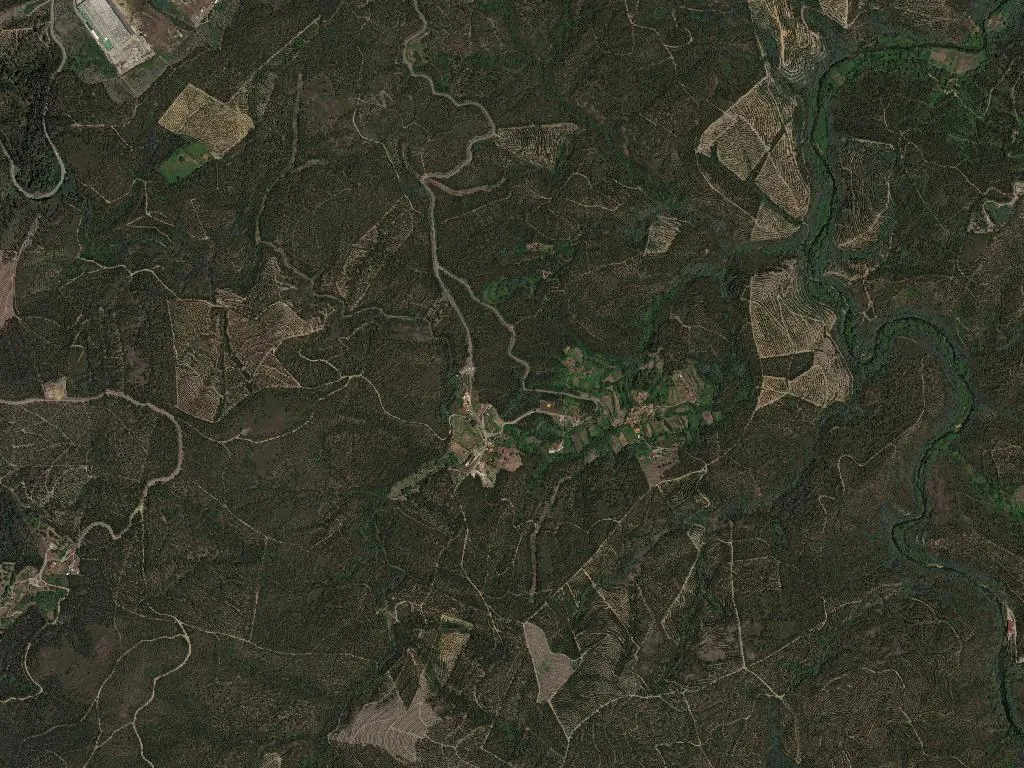
The scent of smoldering wood mingles with the damp aroma of the river at dawn. Pedorido stirs slowly, caught between the murmur of the Douro and the calls of roosters echoing through the scattered vineyards on the hillsides. A mist rises from the waters, revealing terraces of vines descending to a stone quay where wooden boats nudge their hulls together. At 186 metres above sea-level, the river still dictates the day, just as it has since the place was recorded in 1112 as “Pederide” in Coimbra cathedral’s Black Book – Latin for “foot of the stream”.
Proximity to water shaped everything here: the economy, the architecture, even the cadence of speech. For centuries Pedorido functioned as a riverine warehouse between the coast and the interior, barges swapping wine, olive oil and grain. When the 1880 road bridge was built, excavations turned up coins minted under Constantine II (4th C) and a bronze Visigothic fibula, proof that every generation has paused on this bend.
Stone, carving and collective memory
The parish church, raised in 1544 and dedicated to St John the Baptist, anchors the village square. Outside, Manueline knots frame the portal; inside, gilded baroque carpentry drinks candlelight. Ten gilded panels recount the life of the Precursor, attributed to the celebrated wood-carver José de Santo António Ferreira (1720-98). A few lanes away, the granite Capela de São Sebastião, erected in 1599 after a plague vow, keeps a lower profile. Opposite, the 18th-century Solar dos Carvalhos still tends its box-hedged gardens where D. José de Carvalho e Melo, first elected president of Castelo de Paiva town council, once entertained Liberal politicians.
The true open-air museum lies above the settlement: 47 stone-stilted granaries, among the densest clusters in northern Portugal. Raised on mushroom-shaped granite pillars to outwit humidity and rats, they once stored maize measured in alqueires, the old dry-volume unit still quoted at harvest markets.
Bonfires, chestnuts and river eels
On 24 June the village ignites. The Festa de São João sees 37 bonfires – one for each hamlet – lit before dawn. Drums (Bombos de Pedorido) start at four in the morning; by afternoon children parade three-metre paper-flower poles in the “Cortejo dos Mastrinhos”, a ritual running since 1923. In early September the Romaria da Nossa Senhora da Saúde draws pilgrims up to a hilltop chapel, followed by a fair where Mangualde garlic sausages, DOP Minho Highland honey and copper-pan roasted chestnuts change hands. October belongs to the chestnut itself, distilled into liqueurs, cakes and late-night “challenge songs” that duel across the square until frost shortens the evening.
At table, the Douro eel stew is the edible CV of the parish: freshly trapped elver simmered with maize bread, tomato, onion and coriander. Roast kid scented with bay and white wine appears at christenings – Maria “Auntie”’s four-generation recipe is still circulated on folded paper. Old-style pork shoulder, coloured with Espírito Santo sweet-paprika and cumin, arrives with warm corn-rye broa. Desserts – toucinho-do-céu (an almond-yolk slab) and ear-shaped biscuits – are washed down with Quinta do Outeiro’s Vinho Verde: 11% alcohol, razor-sharp acidity, the perfect foil for pork fat.
Tracks through vines and granaries
The Rota dos Vinhos Verdes threads five kilometres of dirt path above the river, pergola-trained vines forming a green tunnel. Housed in the 1958 cooperative winery, the Centro de Interpretação da Vinha e do Vinho schedules comparative tastings where local oenologist António José Costa unpicks the alchemy that earned him the 2022 “Vinho Verde Alvarinho Trophy”. Below, Miguel “the Boatman” poles upstream, mooring at river-beaches such as Aregos and Santa Cruz for picnic stops. Behind, the ridge of Serra de Arouca promises stiffer trails for anyone wanting altitude and silence.
At dusk, when slanting light gilds the terraces and the Douro mirrors the sky without a ripple, the church bell calls worshippers to seven-o’clock mass. São João bonfires have cooled, yet the scent of ash lingers on the cobbles, an annual reminder that the river, the vines and the granite granaries will do it all again next year.