Full article about Anta: maize-scented plateau above Espinho’s surf
Neolithic tombs, candle-wax chapels and Atlantic breezes drift across Anta’s farmed plateau.
Hide article Read full article
Anta: the farmland you can smell from Espinho’s beach
Maize now shoulders above the stone walls, and the same Atlantic wind that whips spindrift off Espinho’s surf three kilometres away arrives here muted, scented with the green exhale of vegetable plots. It is a June morning; the bell of Igreja de São Pedro drops two low notes that roll across the plateau as if the churchyard flagstones were holding the echo in escrow. Anta wakes slowly — the parish coastal Esphinho residents half-jokingly call “the interior” — and although it never touches the sea, its fields carry the fingerprints of people who lived here millennia before anyone drew a coastline on a map.
Stones older than memory
The name is the clue: anta is Portuguese for a Neolithic chamber tomb. Two survive on the coastal plateau — the Monte do Padrão dolmen and the Anta burial mound, both listed national monuments — their granite silhouettes the only fixed points in a landscape that agriculture has repeatedly erased and redrawn. In 1952 the dolmen took a banal blow: part of its structure was dismantled to make way for a tractor track. The capstone — broad, grey, crazed by centuries of frost and sun — now lies beside the churchyard wall where it doubles as a bench for early mass-goers and evening card-players. Place your palms on it and the damp cold of granite climbs your fingers like a silent warning: this slab was already polished when Rome was still a village.
Gilded wood and a plague cross
São Pedro’s parish church is early-18th-century, single-nave, plain-faced — nothing grand. Inside, narrow windows funnel light onto gilded altarpieces and blue-and-white 1720s tile panels, the gold leaf glowing like low-watt bulbs against the nave’s gloom. Boards creak, and the air carries the unmistakable perfume of rural Portuguese churches: melted candlewax, old pine and incense that refuses to disperse. In the yard a 1786 stone cross bears an inscription pleading for protection against locusts and blight — understandable in a place whose calendar was dictated by whatever the soil surrendered. A ten-minute walk away, the chapel of São Silvestre at Quinta do Passal serves as way-marker on the coastal branch of the Camino de Santiago; pilgrims cross Anta for four kilometres between moss-covered walls and loose-limestone lanes where the loudest sound is your own footfall.
Sardines on the coals and shell-shaped cakes
The weekend nearest 29 June turns the parish inside out. São Pedro’s feast brings a flower-decked procession, sung mass, bonfires in the square and a ritual worth arriving for: the “sardine auction”, whose proceeds fund church repairs. Smoke from charcoal grills threads blue through the pine-scented bonfire haze, settling over the fair like a second roof. Children parade homemade carnival floats cobbled together in after-school workshops, giving the event the easy intimacy of a village sports day. In even-numbered years the Festa do Emigrante hauls back Anta’s diaspora — Toronto, Newark, Lyon — for a convivial supper of Espinho-style pork cubes, eel stew from the nearby Ria de Aveiro and easy-listening cover bands. Vinho Verde from the Aveiro region flows icy and lightly spritzed. For pudding, locals sell melindres de Anta — egg-and-honey cakes baked in scallop moulds — and beijinhos de São Pedro, almond-and-pumpkin-paste petits fours whose recipes exist only in parish memory.
Four kilometres of walls and reed beds
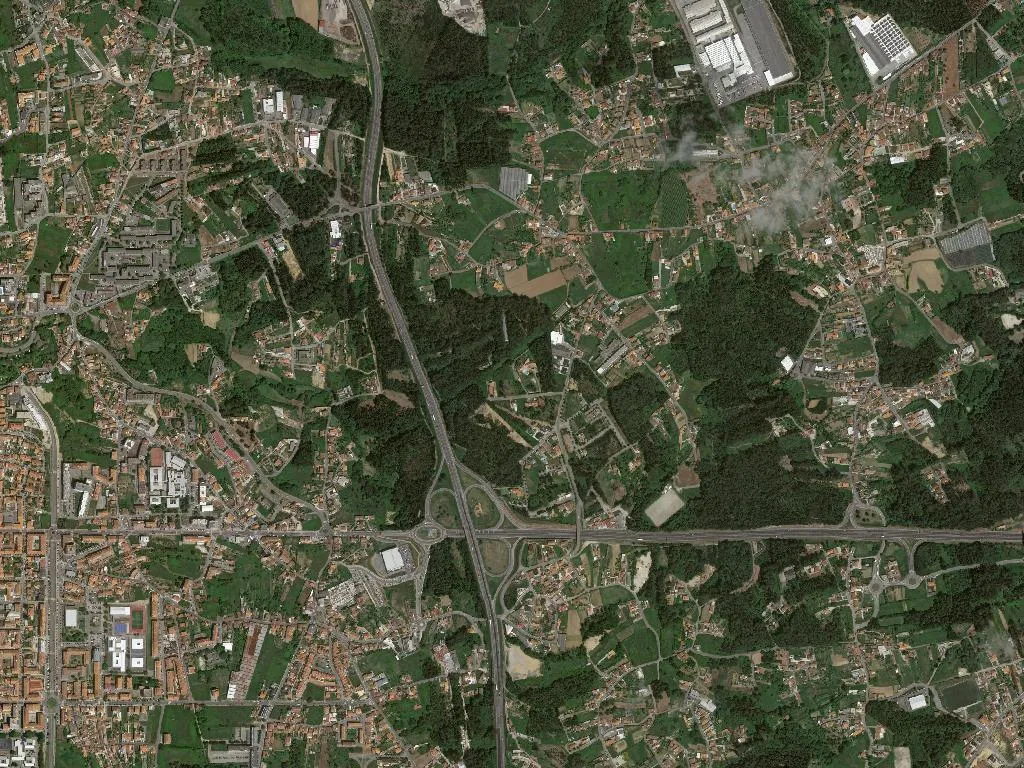
The Caminho da Costa trail is the best walking ticket: start at São Pedro, follow footpaths between maize rows and market gardens, then drop to the seasonal Silvares stream. In winter the water feeds a small wetland of reeds and bulrushes where migrant wagtails and godwits pause. The plateau holds steady at around 50 m above sea level — no crags, just a wide horizon that feels unexpectedly spacious. On Saturdays the Quinta do Passal interpretation centre opens its doors, selling organic honey and lettuces while explaining how Anta’s 601 hectares and 5,688 inhabitants balance new brick-and-tiled cul-de-sacs — made feasible by the A29 motorway — against smallholdings whose whitewashed walls and salt-rusted wrought-iron balconies still outnumber the aluminium double-glazing.
The weight of a stone in the churchyard
Evening, and the terrace of Café O Antanho serves coriander-flavoured pork scratchings and a chilled glass of Loureiro, but the image that lingers is the dolmen capstone by the church. Zé Mário, who nightly circles the square after supper, parks himself on it unaware that his daily bench predates Stonehenge. Granite warms in the last slant of sun, then cools quickly when the plague cross casts its shadow. That shift — heat, chill, in a single slab, in a single gesture — is Anta distilled.