Full article about Silvalde: Atlantic Salt, Reed Mirrors & Sardine Echoes
Victorian cannery hulks, flamingo-dotted wetlands and hay-roofed palheiras in Espinho’s coast-huggin
Hide article Read full article
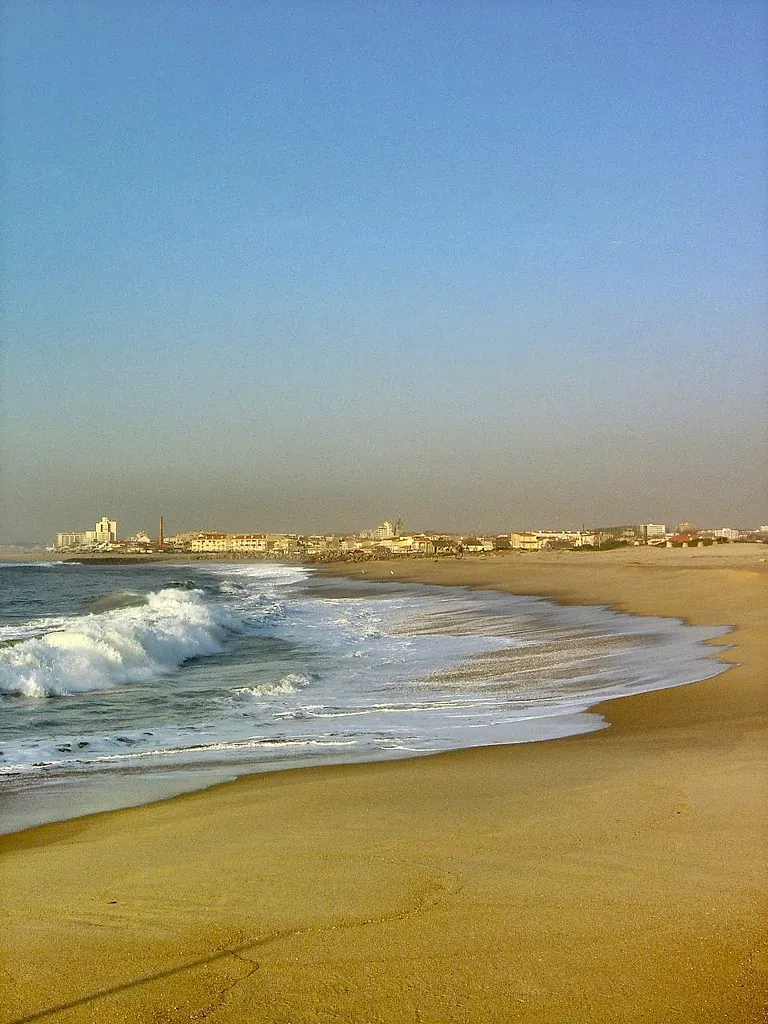
The train brakes first, a metallic shriek on the 1890-built Linha do Norte, then the Atlantic arrives—low, bruised surf less than 300 m away. Between the two sounds floats a third: the sweet drag of maize porridge cooking over a wood-fired oven somewhere along Rua da Lagoa. Seven metres above sea level, 6 000 people occupy this slim coastal shelf, pinned between ocean and the ghost of a lagoon that once carried the Rio Maior straight to the sea.
The name itself is a palimpsest of invaders: Latin silva (thicket) and Gothic vald (valley) – a wooded dip on the dunes. The trees are long gone, but the dip survives as the Paramos-Silvalde wetlands, a reed-ruffled mirror where purple herons balance like ballerinas on fishing stilts. Over it runs the Passadiço da Ria, a 1.2 km boardwalk bolted to the old salt wharf. At dusk the water turns copper, flamingos scissors across the sky and telephoto lenses duel for elbow room on the narrow planks.
The Factory That Smelled of Sardines and Pickles
Number 23 Rua 23 is a Victorian hulk of blind windows and flaking render: the former Real Fábrica de Conservas Brandão Gomes, founded 1894. Its private rail spur once slid sardine tins, candied fruit and Piccadilly-style pickles straight onto boats at Leixões, bypassing every road. Now municipal-listed and hollow, the building demands imagination: the clang of stamping machines, the briny rasp of women’s laughter above the vinegar vats.
Walk three minutes to Largo Dr. José Afonso—one of the first Portuguese squares named for the republican physician (1934)—and you can still cup your hands under the 1897 granite fountain fed by the Mocho spring. The stone is thumb-polished to a marble sheen by 127 years of bucket queues.
Hayricks, Lime-Wash and Wind-Gnarled Wood
The Rota das Palheiras footpath stitches together what remains of Silvalde’s fishing hamlet. Palheiras—low, hay-roofed sheds of adobe and pine—lean along Rua da Lagoa, some converted into garden stores, others left to the maritime wind that prises planks apart like old postcards. The trail pauses at the early-18th-century Capela de Santa Cruz, its gilded baroque altar gleaming in candlelight; a 1602 stone cross outside once marked the border between Espinho and Vila da Feira. The route ends on a timber deck above the dunes, where the coast unfurls in a single, unbroken blade of sand from Espinho to Ovar.
When Saint Peter Hits the Beach
On 29 June the parish carries its plaster Saint Peter down from the 19th-century mother church (baroque retable, 1900s azulejo panels) and sets him, quite literally, in the surf. Fishermen shoulder the statue while a brass band plays Adeus Ó São Pedro; mass is celebrated on the tideline, followed by dancing on the prom and a firework bouquet that rattles café windows.
The calendar keeps turning: February’s Candlemas procession blesses the boats with wax-drip torches; May’s Romaria de Santa Cruz scatters holy pão-de-Deus (anise-sweet bread) across the fields; July’s Battle of the Flowers—launched 1933—turns Avenida 8 into a slow-moving snowstorm of petal shrapnel and marching-band serenades. First Sunday of August, fishermen file into the cliff-top Nossa Senhora da Ajuda chapel, then re-emerge for a communal eel stew in Largo da Graciosa.
Eels, Cornbread and a Throat-Warming Liqueur
The dish that pins Silvalde to the map is caldeirada de enguias—a bronze stew of lagoon eels, tomato, onion and green pepper, mopped with yellow cornbread whose crust cracks like crème-brûlée. Between May and August, sardines char on open-air grills, served with pão de escanda (spelt loaves) and roast-pepper salad. October brings paprika-stained feijoada de buzinas (whelk and white-bean stew) and, stranger still, pumpkin porridge hiding slivers of sweet eel. At festival time, lemon-scented dough knots are fried in olive oil, dusted with sugar and passed around scalding hot. Wash everything down with licor de erva-príncipe, a cinnamon-honey firewater poured from clay flasks—its vegetal heat lingens like a low tide in winter.
The Way That Doesn’t End at the Shell
Silvalde sits on the coastal Camino de Santiago. Credential stamps are available in the mother church; the parish albergue offers bunk beds and a clothesline strung between fig trees. Yet you don’t need a scallop shell to slow your pace here. A cycle lane shadows the Rio Maior to Espinho’s urban park; Tuesday’s street market sells still-twitching sea bass, wicker lobster pots and homemade juniper gin. On summer nights the 1932 bandstand—gift of the Trindade fado house—hosts cantigas ao desafio, improvised call-and-response ballads duelled out over nylon-string guitars.
A few paces away, the 1951 bronze Pescador de Silvalde freezes forever the snap-cast of a net, engraved with the maxim: Quem não arrisca, não petisca—roughly, “nothing ventured, nothing nibbled.” It is, oddly, Portugal’s only public statue dedicated to the anonymous fisherman. Lay your palm on the cold granite, taste salt on your lips, and you understand: Silvalde is not a place to tick off but a rhythm to slip into, even if only until the next train home.