Full article about Beduído: pine resin, rain-soaked soil and silence at 22:30
Beduído (Estarreja, Aveiro) smells of pine resin, Tuesday market bread and rain on espresso-dark soil—visit for quiet lanes, DOP beef nearby
Hide article Read full article
The scent is pine resin, not perfume
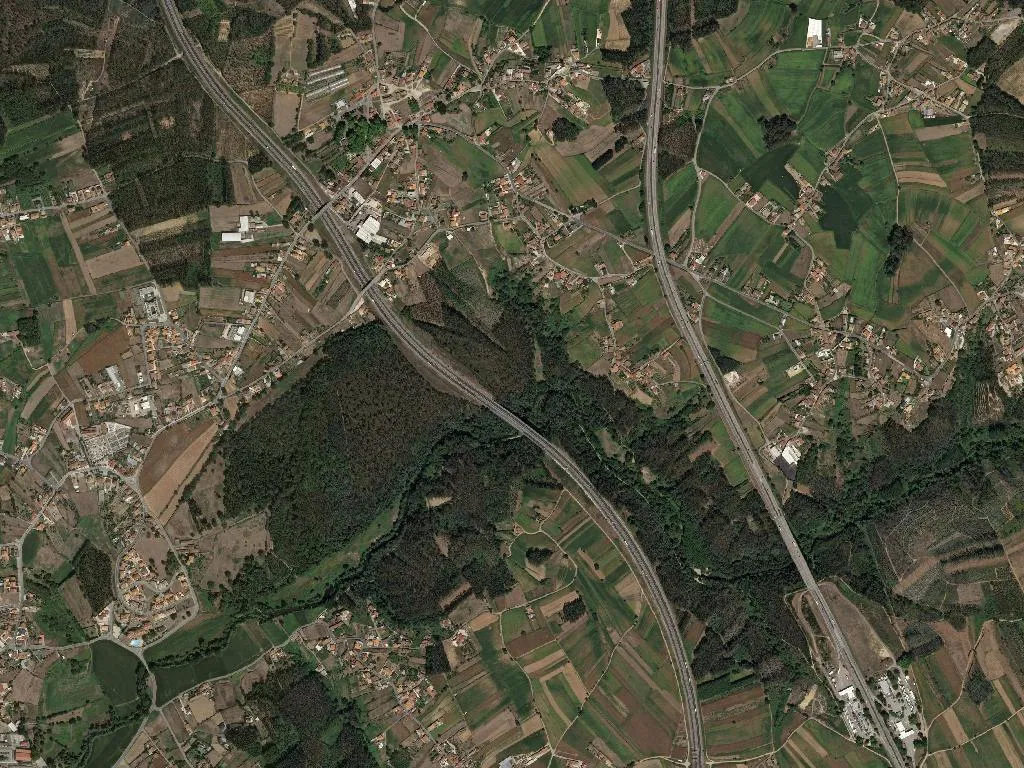
October mushrooms glue themselves to pine trunks, and the resin stains whatever you wear. After rain the soil turns the colour of espresso grounds, sucking at boots and the pads of the bracke dogs that zig-zag ahead. Beduído sits only 34 m above sea level, yet when a north-westerly rolls in from the Atlantic the sky drops so low the parish seems to shrink. Between the EN109 and the railway to Porto the land exhales through hollows: fumigated potato ridges, loose-stone walls swallowed by pines, and the lane to Moninhos that disappears under tea-coloured water whenever the Ria de Aveiro breaches the fields.
A place people pass through, then stay
Officially 4,952 inhabitants; in practice, several are only here on census night. Houses are low, limewashed a chalk that never quite dries white, their blue shutters blistering in the sun. Silence arrives at 22:30, timed to the last bus to Estarreja and the metal shutter of the Galp petrol station. The Portuguese Coastal Camino cuts straight through, yet pilgrims rarely overnight: they knock back an espresso and a sugar lump at Café O Centro, ask how far to Ovar, and vanish. Flecks of yellow paint still mark the route, but nettles now braid the waymarkers and a crushed Super Bock can glints in the ditch.
The 2021 census counted 1,238 residents over 65 and only 653 under fifteen. The primary school runs two composite classes; at break the children kick a mouldy satsuma across gravel because the proper ball burst weeks ago. Pensioners cluster outside the Minipreço at nine sharp, snapping up yesterday’s bread at half-price, then shuffle home, carrier bags hissing over the pavement. Market day is Tuesday: two fruit stalls, one remnant of cloth, and Mr Joaquim who sharpens scissors from the back of a Peugeot Partner.
Certified flavours, bovine roots
Carne Marinhoa, the region’s DOP-protected beef, is served three kilometres away at A Parreira in Canelas. In Beduído itself you taste it only on feast-day barbecues at the hunters’ club. The rest of the year the chestnut-coloured cattle graze the flood meadows of the Póvoa; locals ring Zé Mário, who delivers a minimum three kilos to your door. Ovos Moles – the clove-scented egg-yolk sweets of Aveiro – arrived only when Isabel, the priest’s daughter, married an aveirense and imported her mother-in-law’s recipe. Now a single tray is produced for the September feast of Nossa Senhora da Saúde, sold at €1.50 each to fund a new altar step.
Between field and freight line
There are nine guest beds: six in the old São Miguel primary school converted by Luís, two in his late mother’s townhouse, and a cottage on the Vale Moinhos ridge where mobile reception demands a rooftop scramble. Guests are either lost drivers or grandchildren visiting for the weekend. No gift shops, no curated trails – just O Nosso Cantinho grocer’s selling nails individually and tear-off sheets of brown paper, and O Ponto de Encontro where Sr António pulls a 55-cent bica into your own cup if you bring a mug.
At six the first freight train rattles the windows of the trackside terraces; at seven the wind swings from Lactogal’s powdering plant and the air smells of burnt milk; at eight the white minibus collects the cleaning women for Estarreja’s industrial zone. After that, only chainsaws in the pinewood and the chained dogs that guard illegal pine-nut harvests. Mr Albano’s tractor coughs towards the potato plots behind the cemetery, and the day settles into its own quiet.
Beduído does not court visitors. Those born here either stay for life or leave for Swiss building sites, French vineyards, or the Fedrigoni paper mill outside Aveiro. Arrive by mistake, however, and the mistake begins to feel deliberate: the parish road that leads nowhere in particular, the bend where the church tower suddenly appears, and, as the temperature drops, the tang of woodsmoke because bottled gas is still judged an extravagance.