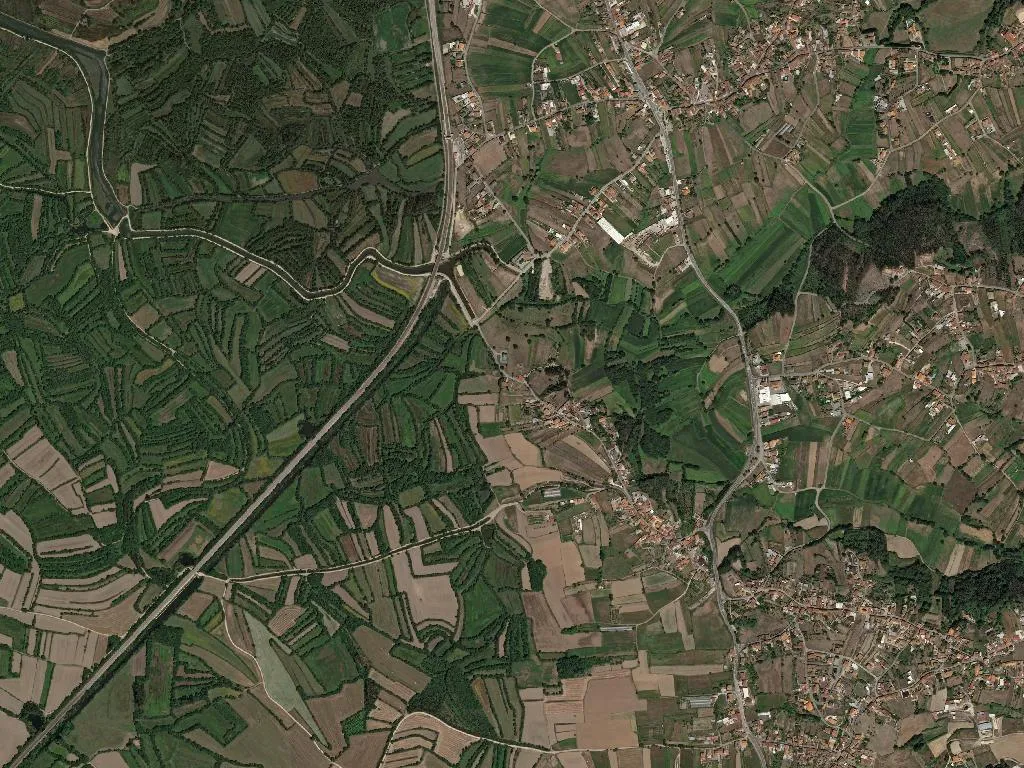
Full article about Cobalt Palheiros & Eel Stew at Sunrise in Canelas e Fermelã
Canelas e Fermelã, Aveiro: painted stilt-huts, spoonbill dawn, three-hour eel caldeirada—plan your sensory escape.
Hide article Read full article
Dawn on the Dike
Morning light knifes through the fog that clings to the drainage ditches, and the painted palheiros—those slender, stilted huts—blink open their shutters in colours that would make Matisse pause: cobalt, ochre, vermilion. Silence here is granular. It is the hush of silt settling back after the tide, the soft slam of a palheiro door warped by salt, the single metallic cry of a spoonbill lifting off the flats. Walk the baked-earth dike between Canelas and Fermelã and the air tastes of iodine and wet reeds, a broth the Atlantic keeps simmering.
Two parishes, one lagoon
Until the Liberal reforms stripped it of the honour, Canelas styled itself a vila. The parish church still behaves like one: baroque façade, gilt-wood ripples inside that catch candlelight like low sun on the Ria. One floorboard creaks and the whole nave answers. Fermelã, a kilometre west, keeps its head lower. Its name remembers a medieval watch-tower—firmellum—and the tiny Chapel of St Sebastian still blesses loaves every January, ladling cumin-scented broth to neighbours who stand in their coats eating from clay bowls. Administratively the two were fused in 2013; hydrologically they had merged centuries earlier, stitched together by the same channels that fishermen once poled by starlight.
The lagoon larder
Eel is sovereign. In farmhouse kitchens a caldeirada bubbles for three hours, the fish collapsing into potato, tomato and handfuls of coriander, served with doorstops of corn broa to mop up the liquor. The winter version, ensopado, is darker, thickened with the eel’s own gelatinous stock; cooks stir clockwise, coaxing the sauce to grip the pan. Whelk-feijoada surfaces only when the thermometer drops—choriço smoke drifting through the house while the bivalves surrender their brine. Dessert obeys Aveiro’s IGP dictate: ovos moles pressed into barrels and seashells of crisp rice paper. Meat comes from the neighbouring paddocks—Carne Marinhoa DOP—grilled over eucalyptus embers, salted just enough to make the olive oil shimmer.
Painted huts and flamingo commas
The way-marked trail shadows the salinas where pyramids of white salt skin over in summer heat. Out on the mud-flats, flamingos bend like pink commas, searching for artemia; dunlins stitch the waterline with nervous prints. Nowhere else in the Ria are palheiros packed so thickly—some still harbouring oars and glass-net floats, others reborn as weekend studios, all obeying the same proportions dictated by the boat-builders who once doubled as house carpenters. Cyclists on the Ria cycle route brake instinctively; the geometry is too photogenic to pass.
Sailing through centuries
A moliceiro glides past, its bow painted with a satirical panel—today a footballer kicking a politician. Master Rito, now in his eighties, still hand-rivets these flat-bottomed boats from pine and chestnut, the same design used to harvest moliço—seaweed fertilizer—for nineteenth-century cornfields. Tourists recline on cushions where labourers once stacked dripping algae, ducking under the same iron bridges that rattle when the IC1 road hums overhead. In mid-August the canals clog with flower-decked boats for Canelas’s Romaria of Our Lady of Health; incense and cinnamon-dust hang in equal measure. Come Holy Week, the Passos processions re-enact seventeenth-century tableaux, hooded penitents pacing the cobbles to a single drum.
Dusk ends with the sound of wind combing through willow catkins—a long, hypnotic hush that steadies the pulse while the lagoon turns copper and the palheiros cast slender shadows across the saltings, as if the whole landscape were slipping quietly back into the water.