Full article about Salreu: Where Dawn Reads the Sky Like a Neighbour
Aveiro’s flatland village keeps time by tides, 1741 vellum and woodsmoke from São Martinho.
Hide article Read full article
Dawn lets itself in
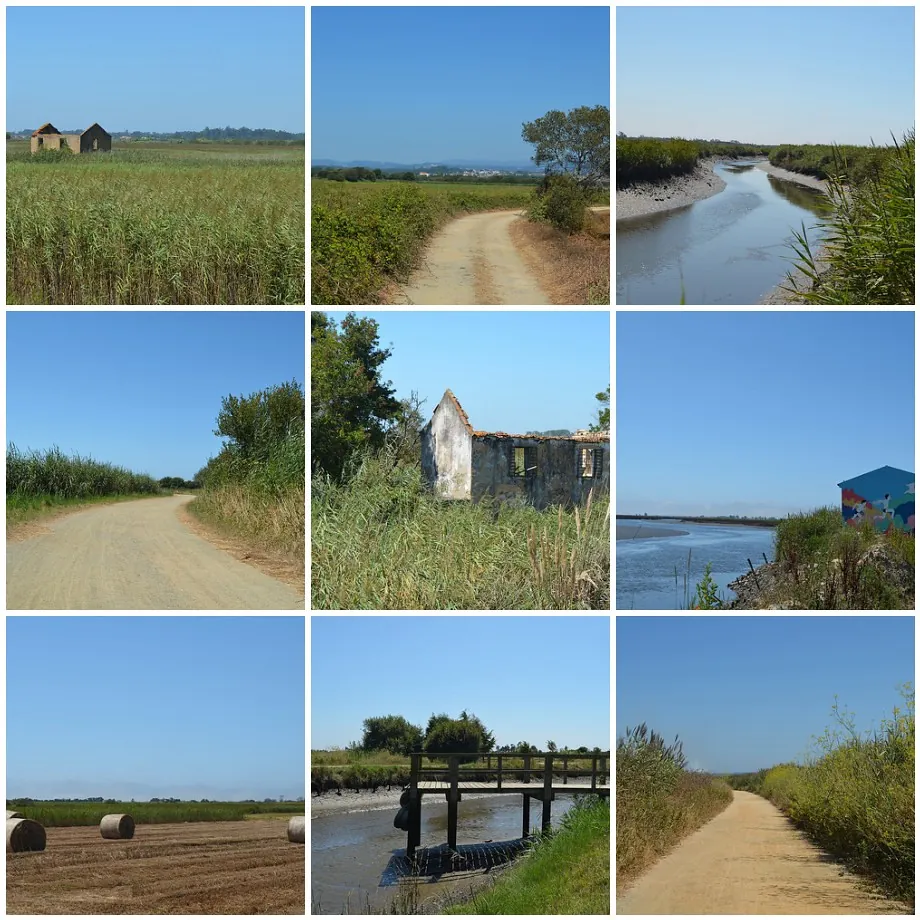
Morning arrives at Salreu the way a relative enters a childhood home—no knock, no announcement. In the drainage ditches the water carries a crooked mirror of willows and a sky everyone here can read: pale dove-grey means the tide is slipping out; when it turns leaden, the lagoon will rise. The air smells of silt and salt, but also of woodsmoke drifting from chimneys still warm beside the parish church. Red-tiled roofs, rinsed overnight by Atlantic rain, punctuate the pancake-flat plain.
A sheet of parchment trumps GPS
In April 2025 Salreu won a boundary dispute no one saw coming. Aveiro’s administrative court returned two square kilometres that had been quietly reassigned to neighbouring Canelas on a 2001 digital map. The ruling hinged on a hand-inked demarcation from 1741, exhumed from Coimbra University’s archive—284-year-old vellum that carried more weight than any satellite layer. Overnight the football pitch where my cousin used to bend free-kicks became, officially, Salreu soil again. The parish name—Latin salvus, “safe”—finally earned its keep: the village safeguarded its own with a document that smelled of mothballs and candle wax.
Stone steps, third pew
Nobody calls it São Martinho, yet that is the church’s name. A knoll has anchored worship here since the twelfth century, though the present tower is 1893. The granite steps are polished slippery by Sunday best; the 11 o’clock Mass fills the churchyard with “Então, como vais?” before the bell finishes ringing. Inside, high windows stencil squares of light across floorboards that creak like an old schooner. Population 3,673, but on Sundays it feels twice that: grandchildren back from Porto, grandparents saving seats, and afterwards someone always suggests a bica on the square they still call Rossio even though the name vanished from maps decades ago.
Eels, eggs and tomato-scented rice
Central Bakery fires its ovens at 7 a.m. and 4 p.m. sharp; arrive five minutes early and the crust sings. Dona Fernanda has shaped ovos moles since 1978, the thin wheat-case collapsing under cinnamon-yolk filling—“like riding a bicycle, you never forget”. At family-run Mercantel, Teresa only serves eel stew on Fridays. The fish come from Murtosa, three kilos at a time, and she can taste the difference between lagoon-caught and pond-farmed: “the others have muddy breath”. Her seafood rice is reddened with tomatoes picked that morning from Sr António’s kitchen garden beside the Antuã River, a plot he has tended since retiring from the Estarreja chemical plant forty years ago.
Waterways and wayfarers
The Antuã slides sluggishly seaward, ferrying broken reeds and emerald algae. It is not beautiful in a postcard sense, but it is understood: children learn to swim in its caramel-coloured margins, poachers know which root hollow hides autumn-fat eels, and the same heron returns to the telegraph pole by the iron footbridge every winter. The Portuguese Coastal Camino cuts through, yet few pilgrims linger—boots go plof-plof in the mud as they chase the next stamp. Walk Salreu at dusk and the soundtrack is wind: combing tasselled maize, rattling willow leaves, billowing the goal nets on the municipal pitch where my son trains Saturday evenings.
The hush that stays
When the sun drops behind the old CUF factory and the fields bruise to old-gold, Salreu shrinks. Shutters close, televisions flicker, but the water keeps up its steady schhh on the way to the Ria—the same lullaby that sent me to sleep four decades ago and now soothes my children. It is the sound of a place that never aspired to be more than itself: somewhere you recognise a local by the cadence of their “bom dia”, where a coffee cup is left untouched for the neighbour who hasn’t arrived, where justice can wait 284 years without anyone thinking of leaving.