Full article about Veiros: Where Rice Fields Slide Into Ria de Aveiro
Veiros, Estarreja, keeps its 16th-century church and windmill above tidal wetlands that gain 3.8 ha a decade.
Hide article Read full article
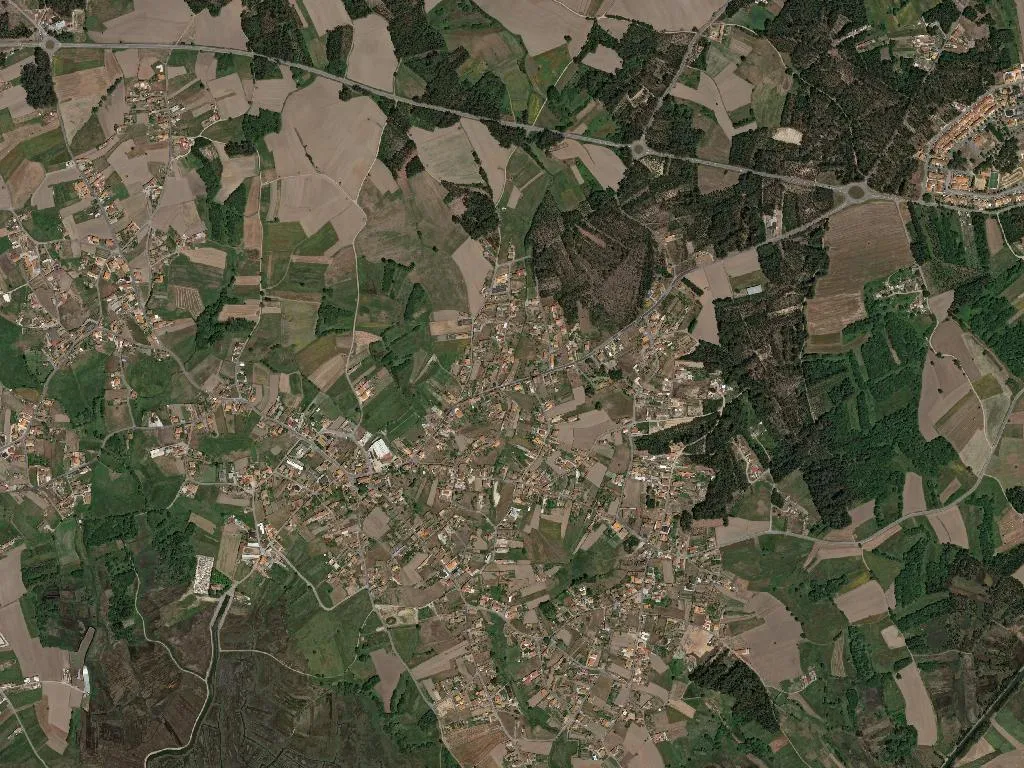
The Dutch windmill at Veiros lifts its four lattice sails into an improbably flat sky. On 280 days a year they hang motionless, starved of the north-westerly that once drove the stones. Below, the muddy creeks of the Ria de Aveiro inhale two metres of tide at every full moon, submerging the black sludge where glossy ibis and black-tailed godwits stitch their beaks through the ooze. The air smells of rotten-egg marsh gas laced with eucalyptus smoke drifting from the 47 rammed-earth smallholdings still holding the line between rice paddy and salt marsh. This is how Veiros wakes: among 380 ha of shoulder-high rice and 1,200 ha of tidal wetland that the Vouga estuary steals back from dry land at the rate of 3.8 ha a decade.
A name that still pulls its weight
The place-name derives from the Latin vires – strength – and appears in Manuel I’s 1515 charter as “Veyros”. The word still fits. Farmers here seed the old Carolino varieties by hand, refusing to surrender ground that the ocean would happily reclaim. The reason is man-made: since the Ribeiradio-Ermida dam went up in 2013, river-borne silt no longer reaches the open sea; instead it settles in the estuary, letting the marsh advance westwards by 1.2 km since 1958. Geography is rewritten every tide.
The parish church, begun 1567 and patched after the 1755 quake, stands at the settlement’s heart. Inside, 17th-century gilded carving – classified in 1977 – catches the light from Manueline side windows, throwing gold back onto polished schist. Stone-built field chapels – Santo António (1704) and São Sebastião (1732) – punctuate the lanes; farmers still pause there on Sexagesima Sunday to have seed rice blessed before the first flooding of the paddies.
Between paddies and salt marsh
The Portuguese Coastal Way of St James cuts through Veiros on its 4.3 km approach to Beduído, giving walkers a horizon-wide view of the Ria. Cycle and footpaths laid in 2019 thread between April floodwater and grey-willow scrub where every breeze sets the thin branches whining. Three kilometres west, the São Jacinto Dune Reserve unfurls cord-grass pans where herons stand like porcelain figurines and Kentish plovers sprint along the water’s edge. The Estarreja Mariculture Association runs low-impact boat trips down the tidal channels (Sat 10 a.m. & 3 p.m., €15) – slow drifts that let you watch the landscape build itself: one centimetre of silt a year, glasswort colonising the mud, flounder and sea-catfish flicking beneath the surface.
Rice, beef and convent sweets
Local menus revolve around Carne Marinhoa DOP, the native cattle that graze the water-meadows – 280 beasts a month processed at Estarreja’s abattoir. Expect six-hour iron-pot stews or wood-oven roasts. Producers sell direct on Friday afternoons: Quinta do Outeiro (4–7 p.m.) or Herdade da Ria (order ahead), keeping the chain from pasture to plate ruthlessly short. From the Vouga come eels – three tonnes annually, hunted by seven licensed masters – simmered with garlic and coriander in farmhouse kitchens. And because Aveiro is only 18 km away, Ovos Moles IGP (€2.20 for six at Padaria Central) appear beside the espresso: crisp wafer shells filled with yolk-and-sugar custard, a monastic recipe that once paid the nuns’ grocery bills. Wash them down with a light Bairrada white – Quinta das Bágeiras 2022 is €6.50 on the village wine list.
The mill that keeps watch
Restored in 2004, the 1892 windmill now serves as an observation deck. Climb 43 steps and the Ria spreads out like a moving map: six-hour tides, September rice harvests, February’s first grey herons, March’s returning swifts. Even when the new Nordic-pine sails are still, they mark time in a place that refuses to be either land or water – eight metres above mean sea level yet ankle-deep in mirrored sky. As the local writer Aquilino Ribeiro put it in 1918: “Veiros, where earth turns to water and water to earth.”