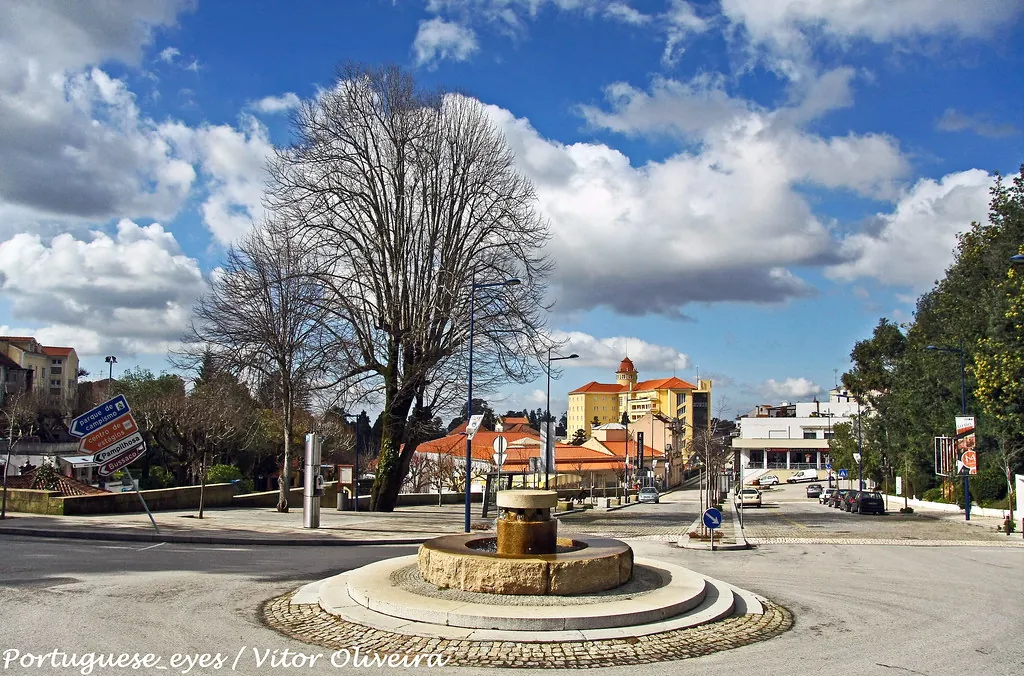
Full article about Luso’s 27 °C Spring: Spa Steam & Pine-Scented Secrets
Marinhoa beef, Baga fizz and thermal water at 27 °C—daily life in Luso, Bairrada.
Hide article Read full article
Steam, Pines and a Glass of 27 °C
The vapour coils upwards in white threads and slips between the maritime pines, vanishing like someone who leaves without looking back. At the springhead the thermometer holds steady at 27 °C; the water tastes faintly of iron—a flavour children wrinkle their noses at while their grandparents call it “the taste of health”. First-time visitors to Luso puzzle over a village whose entire economy bubbles out of the ground, yet for a century and a half the routine has remained unchanged: drink the water, submit to the same clay wraps, retell the same gossip on the same slatted benches.
Inside the spa the air is still thick with eucalyptus and freshly-laundered linen. The building itself—Portugal’s last grand estação termal completed in 1880—deserves the detour, but the real theatre is human: Cidália’s grandmother queueing for the lumbar douche she has taken every September for four decades; Zé Manel knocking back a galão before cycling to his parcel of Baga vines; teenagers kissing behind the plane trees where their parents once did exactly the same. It is cinematic, yes, but it is also Tuesday.
Between the Ridge and the Vine Rows
Bairrada begins where the red clay starts clinging to your shoes. On the lower slopes of the Serra do Buçaco the forest is so dense that shadows seem to cast shadows; at the foot of the escarpment the vineyards reset themselves into ruler-straight quares, each parcel demarcated for the DOP’s sparkling wines. In the paddocks between, chestnut-coloured Marinhoa cattle graze—those doleose-eyed beasts whose meat is the region’s other controlled origin product. On a clear Atlantic morning you can climb to the 17th-century Carmelite hermitage and spot the ocean 35 km away, but most visitors sensibly remain at sea level, order a half-kilo of leitão da Bairrada at Rei dos Leitões, and postpone the panorama until after the espresso. When the waiter says the wine is “from here”, say yes; it is not a sales pitch, it is civic pride.
Footprints of Pilgrims
The Portuguese Central Way of St James cuts straight through the parish. Hikers emerge on Rua da Calçada with blistered feet and thousand-yard stares, then stall at the public fountain as if they have struck an oasis. There is no albergue, but a hand-painted board at the forest edge reads “Quartos – Dona Emília”. For €15 she supplies a room scented with beeswax polish and a breakfast of crusty pão de mistura thick with farmhouse butter—fuel enough to reach Coimbra in a day. Routes change, yet the expression on every arrival is identical: half bewildered, half relieved.
Three Quiet Landmarks
Luso’s monuments carry no crenellations. Instead, look for the Swiss-style chalet where statesman-physician Egas Moniz—Nobel laureate for pre-frontal leucotomy—summered before the First World War; the 1920s bottling hall where riveted copper pipes still fill 1,000 bottles an hour; and the wrought-iron gate of the Belle-Époque villa where Countess Alice Hardenberg held soirées that ended only when the cedars took the dawn light. At twilight, when the sky drains to lavender behind those same trees, someone snaps a carafe into the roadside spring—clink—and silence reasserts itself. The water keeps rising; the village stays put; the story begins again tomorrow, only slightly altered.