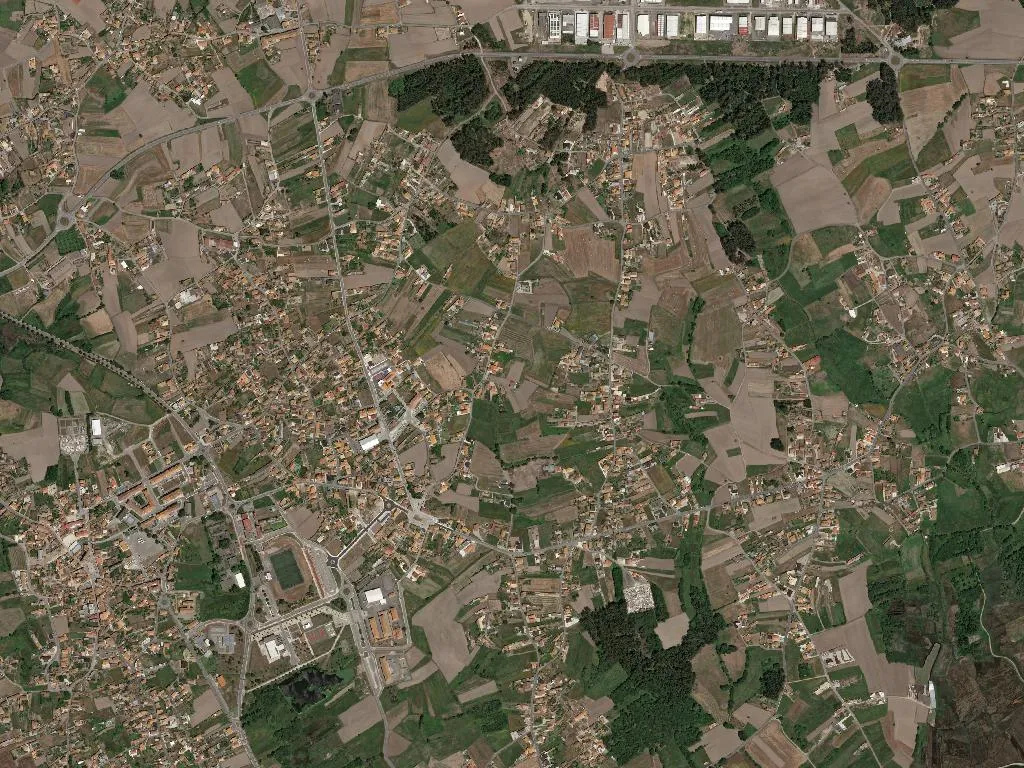
Full article about Monte, Murtosa: A Salt-Kissed Knoll Above the Ria de Aveiro
Monte, Murtosa hides gilded saints, mariner manor arms and candle-lit Easter ranchos above the shimmering Ria de Aveiro lagoon.
Hide article Read full article
The sound arrives first: bicycle spokes pinging on the cycleway, a warehouse door thudding shut beside the canal, a heron’s rasp as it lifts off the saltmarsh. Monte — population 1,568, altitude five metres — is the slightest hiccup on the pancake-flat littoral of the Ria de Aveiro. The name is literal: a twelve-metre bump where villagers built their parish church in 1747, trusting the extra height to keep the floodwater out. Even now the Atlantic is never more than a whisper away; it glints in drainage ditches, seeps into willow roots and turns the sky into a second ground beneath your feet.
Church, coats of arms and gilt carving
Inside the Igreja Matriz, candlelight slides across a gilded baroque retable and 18th-century cobalt tiles where saints hover like paper cut-outs. Outside, a stone cross pins the centre of the parish. Along the lane, manor houses carved with weather-worn coats of arms testify to fortunes made from salt and the Newfoundland cod fleets. One son of the village, Captain António Lopes Marinho, born at Quinta da Palmeira in 1875, commanded schooner after schooner across the North Atlantic; his wages built the drinking fountain that still stands on the square, installed in 1887 when engineers drained the coastal lagoons and turned wetland into workable farmland.
Pilgrims, praise songs and Easter dancers
On the weekend closest to 15 August the Romaria de São Paio pulls in half the surrounding county. There is a riverine procession of Nossa Senhora da Boa Viagem — once the patron of cod fishermen and shellfish pickers — followed by fireworks and a contest of conventual pastries. At Easter, children in embroidered shawls parade as the Ranchos de Monte, singing medieval loas in honour of the Risen Christ. The tradition was fixed in the 19th century by the itinerant preacher Father Joaquim de Monte, whose sermons also launched the charitable brotherhoods that still bankroll the festivities.
Eel stew, whelks and egg-yolk bundles
In tavern kitchens a slow-simmered caldeirada de enguias perfumes the air: river eels, tomato, onion and fistfuls of coriander. Local cooks lengthen arroz de marisco with whelks and brown shrimp scraped from the same estuary; the dish is mopped up with dense corn bread still warm from wood-fired ovens. For pudding, trouxas de ovos — spirals of egg-yolk threads — share the plate with fuzis de ovos-moles, both heirs to the Aveiro convent tradition protected by IGP status. Monte’s own contribution is a chewy white-bean tart, best paired with fresh goat’s cheese and a wedge of quince paste. On feast days the table is completed by Carne Marinhoa DOP, a butter-soft beef from the pastures further inland.
Painted boats, flamingos and the mill trail
Monte is the only parish in Murtosa without a sea front, yet a finger of the São Roque canal laps at its edge, giving shelter to a pocket-sized marina where salt barges once tied up. From here, a moliceiro — the high-prowed, carnival-bright boat designed for seaweed harvesting — can still ferry you to Ilha dos Ovos. A 14-km cycle track threads south through saltmarsh and reed beds where avocets, redshanks and, in late summer, rose-pink flamingos pause to refuel. The Rota dos Moinhos footpath skirts abandoned tide mills and a bird hide run by SPEA at São Paio. On Wednesday mornings the covered market sells just-landed sea bass, coriander by the bouquet and Murtosa’s hand-painted pottery; a studio next door will let you splash your own azulejo tile.
In July the population almost doubles as emigrants return from France and Switzerland. Accents mingle, yet the scent is constant: smoked eel drifting from the quay, rosemary from backyard hedges, the iodine sigh of mud when the tide empties the canal. Monte remains faithful to its improbable topography — a modest ridge in a landscape that prefers the horizontal, where land and water negotiate the boundary daily and never quite settle the argument.