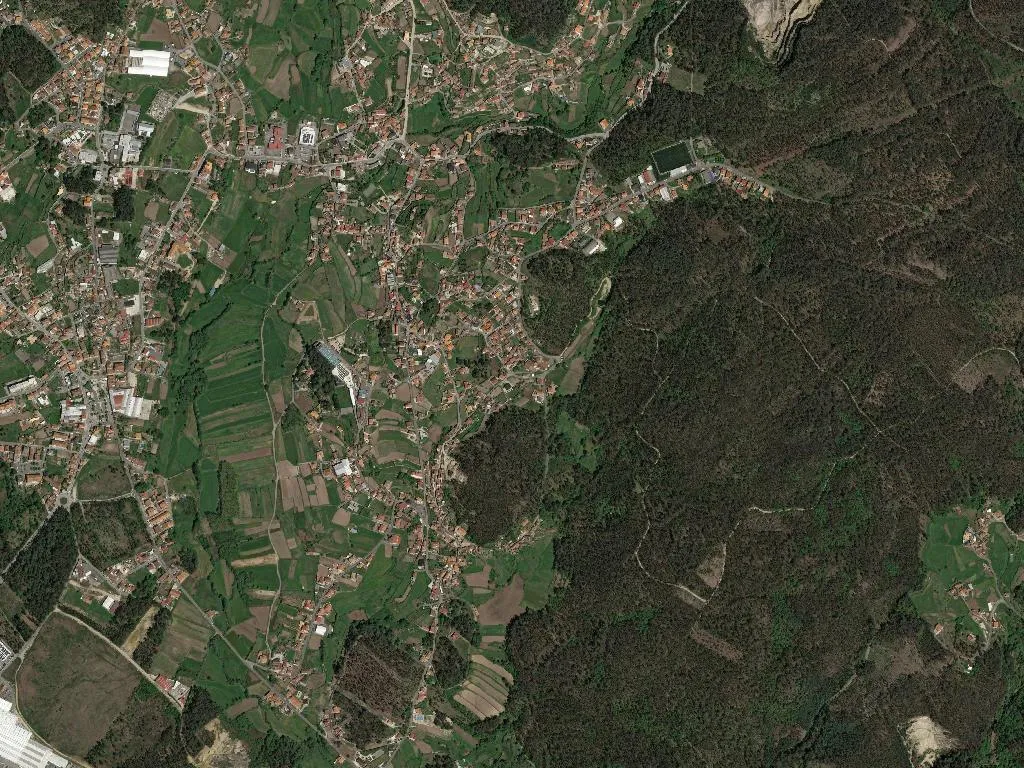
Full article about Fajões: bell tower, chanfana & stone saints
Fajões, Oliveira de Azeméis: baroque church bells, 16C weather-worn saints, clay-pot chanfanna & schist cottages high above Aveiro.
Hide article Read full article
Moss clings to schist like a guest reluctant to leave
The old lock-up – yes, that slate-roofed cube opposite the church – now has Egyptian-cotton sheets and wi-fi, yet the iron door still groans with colonial heft. At eight sharp the bell in the baroque tower issues its daily bulletin: we are still here, climb, descend. Fajões sits only 381 m above sea level, high enough for folk in the coastal flats of Oliveira de Azeméis to call it “the mountain”.
When this village was the council
Until 1855, Fajões was a town in its own right, complete with judge, town hall and a mayor nicknamed Neves who woke up redundant after Lisbon redrew municipal borders the way a baker kneads dough. Locals still insist the magistrate patrolled in cape and shotgun; tavern talk, probably. The name itself is older than the border squabbles – either from the Latin fagium (oak grove) or a medieval settler called Fajão. Pick whichever etymology tastes better with your coffee.
Carved wood and whittled stone
Work on the parish church began in 1788 and, depending on whom you ask, has never quite stopped. The gilded high altar rivals a Zurich numbered account, yet the real star stands in the roadside chapel of São Salvador: a sixteenth-century stone saint whose nose has been rubbed away by centuries of reverence and rain. Beside it rises the 1969 Guia, a concrete bell-tower so geometric it looks as if the architect forgot the rest of the village. In the tiny Monsenhor Nunes Pereira museum, pensioners whittled schist into model cottages the size of Madeira cake slices – every roof tile a sesame seed of patience. Walk uphill to the Penedos de Fajões and the Atlantic wind razors your cheeks like a cut-throat barber.
Mountain meat and high-country honey
Cattle come from Arouca, veal from Marinhoa, but the kitchen treats them as locals. Order chanfana – goat stewed in black pottery so fragile the chef warns: “Stir and the pot breaks its neck.” Wild boar descends straight from the maquis onto the plate; trout arrive still silver-twitching. At O Pascoal – the only restaurant, impossible to miss – the clay-pot roast is timed by the church bell, not a smartphone. Finish with mountain honey: one spoon for the mouth, one for the suitcase.
Reservoir water and pilgrims’ footpaths
The Alto Ceirá dam created a beach where children learn to swim while parents relearn anxiety. In 1943, the Santa Luzia reservoir drowned the hamlet of Vidual de Baixo; one stone house surfaces at low water and now serves as a backdrop for weekend photographers. The Portuguese Coastal Camino cuts through the parish; cross the Romanesque bridge of Ventalim and your rucksack suddenly feels ballasted with granite. Heather and oak are safeguarded under Natura 2000, guaranteeing the boar somewhere to hide from tomorrow’s chanfana.
Stories that refuse a full stop
July hauls the whole village into the street: brass band, procession, smoked-sausage stalls. The choreography repeats on 15 August. Winter, though, belongs to the Contos de Fajão – tales of a judge who sentenced with a stick, a wife who turned husbands into donkeys, a baker who paid debts with warm bread. They are still traded round hearth embers while the wine loosens tongues.
Sit on the dam wall at dusk, pockets of heat rising off the water. No audio guide necessary; just let the granite, the bell and the wind speak in whichever language you think in.