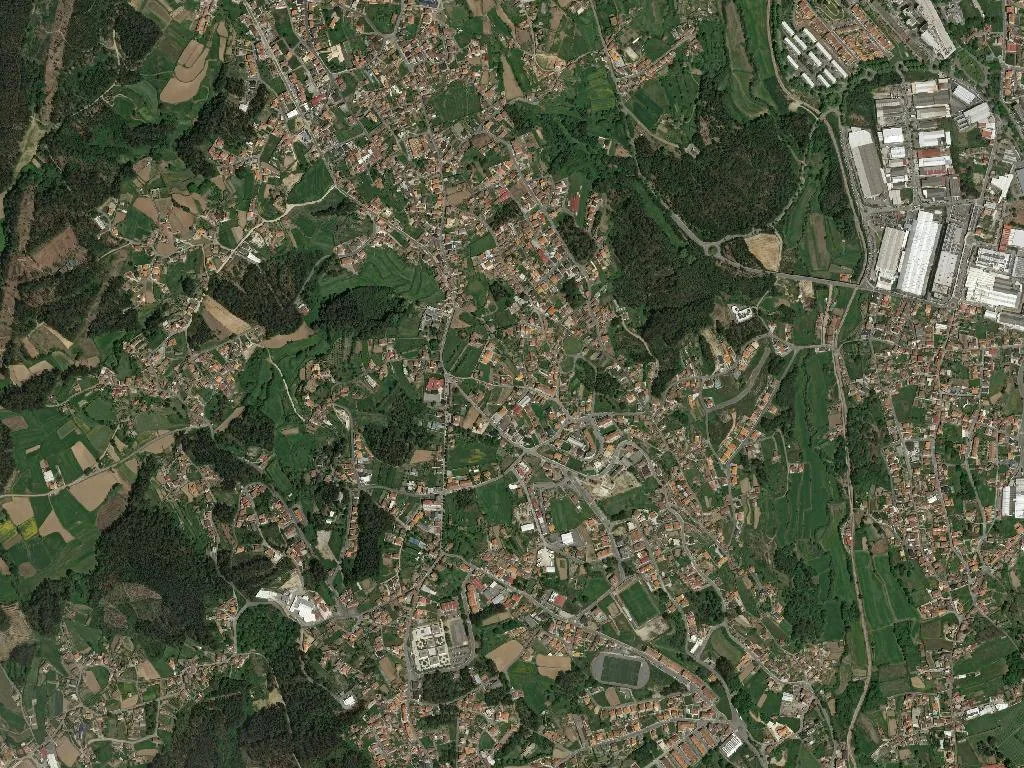
Full article about Cucujães: Broa steam rises before the bells toll
São Brás morning in Vila de Cucujães – maize bread, chouriço and 500-year village ritual
Hide article Read full article
Vila de Cucujães: where the cornbread is still warm before the procession
At eight on the morning of 3 February the bell of Igreja Matriz fires off like a starter pistol. The note ricochets between granite façades, slips through the lime-washed rows of terraced houses and lands, finally, on a long wooden table wedged against the church door. Slices of broa – dense, maize-brown, quarter-inch thick – steam beside curls of Marinhoa-breed chouriço and rashers of smoked pancetta. Farmers in flat caps accept the offering wordlessly, as if the breakfast were a family heirloom that has simply found its way into their hands. This is the Blessing of the Throats, São Brás’s annual insurance policy against winter coughs, and the air smells of woodsmoke, lard and coming rain.
Cucujães wakes like this: with ritual, with wood-fired ovens, and with the unselfconscious ease of a place that has been doing the same things since long before anyone thought to call them traditions.
A name that stuck in 1547
Parish records first spell it “Cucugianes”; the 1911 orthographic overhaul tidied the ending. Etymologists point to the Latin cucujus, a land-owning clan during the Reconquista. Whatever the root, the settlement was already an agricultural hub when the 16th-century cadastral maps were inked. Perched at 249 m on the coastal shelf that tilts up toward the Serra de Santa Maria, it became the natural corridor between Aveiro’s salt flats and the upland cattle fairs. When the Vouga railway inched through in 1888, Cucujães freight depot filled with maize, potatoes and pine planks heading west, and with cod, salt and Manchester cotton coming back.
Passenger service ceased in 1990; the station slipped into a three-decade siesta. December 2024 reopened the building as Portugal’s only pilgrim hostel inside a Victorian railway terminus. Original tongue-and-groove panelling, cast-iron luggage scales and a sepia photo line of the Albergaria-a-Velha–São João da Madeira stretch let you imagine the hiss of steam even while you lace up your boots for the next stage of the Central Portuguese Way.
Six kilometres of yellow arrows
The Caminho enters the parish at kilometre 260.6 and leaves at 266.8, but those six kilometres compress a topographical atlas. First come the granite flagstone lanes where moss colonises every join; then the irrigation levadas that siphon water from the Couto, Pica and Moura streams into corn plots and pastures of chestnut-coloured Arouquesa cows. In the deeper valleys the path tunnels through Pyrenean oak and ash so dense the light collapses into shifting coins of green and gold on the red earth.
Cross the thirteenth-century Ponte de Salgueiro – a single stone hump over the Rio Antuã – and the air temperature drops three degrees. Morning walkers should pack an extra layer; the river exhales cold even in July. Three hectares of private woodland, the Mata da Senhora da Alegría, have been fitted with discreet interpretation boards: blackbird, European starling, robin – each silence between their phrases feels almost chewable. After heavy rain the ground turns to biscuit-brown fondant; proper footwear is non-negotiable.
The brick the nuns invented
Cucujães tastes of garden, orchard and pig. Kale soup arrives thick enough to support a spoon upright, the chlorophyll bite offset by coins of Marinhoa chouriço. Local cozido is chickpea-led: swede, potato, belly pork and the same smoked sausage, nothing dainty, everything designed to answer the Atlantic drizzle. Feast-day kid goat is grilled over sweet-chestnut embers; the fat spits, the smoke impregnates sweaters, and every bite carries a memory of the wood that cooked it.
The postcard sweet, however, is the tijolo – “brick” – a rectangular shard of mille-feuille invented by the Sisters of La Salette. Egg-yolk jam and slivered almonds are sandwiched between whisper-thin pastry, the top caramelised to the colour of terracotta. Café O Brasileiro (no Brazilian connection; the owner simply liked the word) serves it with coffee roasted two streets away. Order two; the first vanishes before your brain has logged the texture.
On the first Sunday of each month the market in Largo Dr António José de Almeida sells DOP rosemary and heather honey from the Minho uplands, Marinhoa salami, chestnut-wood kitchenware and Cucujães 3720, an artisanal lager brewed with Santa Maria spring water and organic hops. Stallholders still watch the sky; if the Atlantic decides to unload, half of them stay in bed.
Paulitos, candles and a 96-year-old brass band
Carnival Thursday sends gangs of teenagers through the parish beating metre-long plastic sticks – the Paulitos – and firing satirical verses at any neighbour foolish enough to leave the washing out. The tradition survives, though the lyrics are now half-memorised from WhatsApp. During Lent the Entrudo do Bacalhau buries a symbolic cod in a mock funeral for meat; at Christmas the masked Kings rap on front doors with wooden staffs.
The first October weekend belongs to La Salette: food tents, open-air concerts and, at dusk, a candlelit procession that sketches a wavering orange diagram between the granite houses. Almost every event is scored by the Banda Filarmónica de Cucujães, founded in 1928 and still the oldest continuously operating band in Oliveira de Azeméis. Forty processions a year, the same brass arrangement of “Ave Maria” echoing off the same walls their grandfathers played to. The current conductor is the grandson of a founder; the baton, they say, is the original piece of wood, only the hand has changed.
Sunset from Senhora da Alegría
Climb the lane that corkscrews behind the football ground until the tarmac gives way to gravel and a diminutive Baroque chapel appears, alone in the fields. From the terrace the Antuã valley rolls out like a green bolt of velvet; the corn plots turn ochre, the shadows of the Serra de Santa Maria lengthen, and somewhere below an invisible stream rehearses its evening song. Cucujães has nearly ten thousand residents, an Austrian automotive-lighting plant that employs 350 of them and a population density higher than Porto – but none of that registers up here. What remains is the precise clack of stick on stick, drifting up a granite alley on a long-ago Carnival Thursday, and the smell of chestnut smoke that has nowhere else to go but into the sky it came from.