Full article about Clarinet over Bairrada vines in Bustos Troviscal Mamarrosa
Neolithic mounds, Roman bridges and fermenting must echo through this trio of villages
Hide article Read full article
Where Bairrada tunes its instruments
The clarinet arrives before anything else. Not the wind combing the vines, nor the click of irrigation pipes — a single reedy phrase slips through a half-open window in Troviscal, stops, starts again, as though the village itself were clearing its throat. By mid-morning the note hangs in the air with the smell of turned earth and the faint sweetness of fermenting must. The light is low, slanting across red-tiled roofs and the regimented cords of Bairrada vines, and you realise the culture here is not pinned inside a museum but blown, bowed and sung.
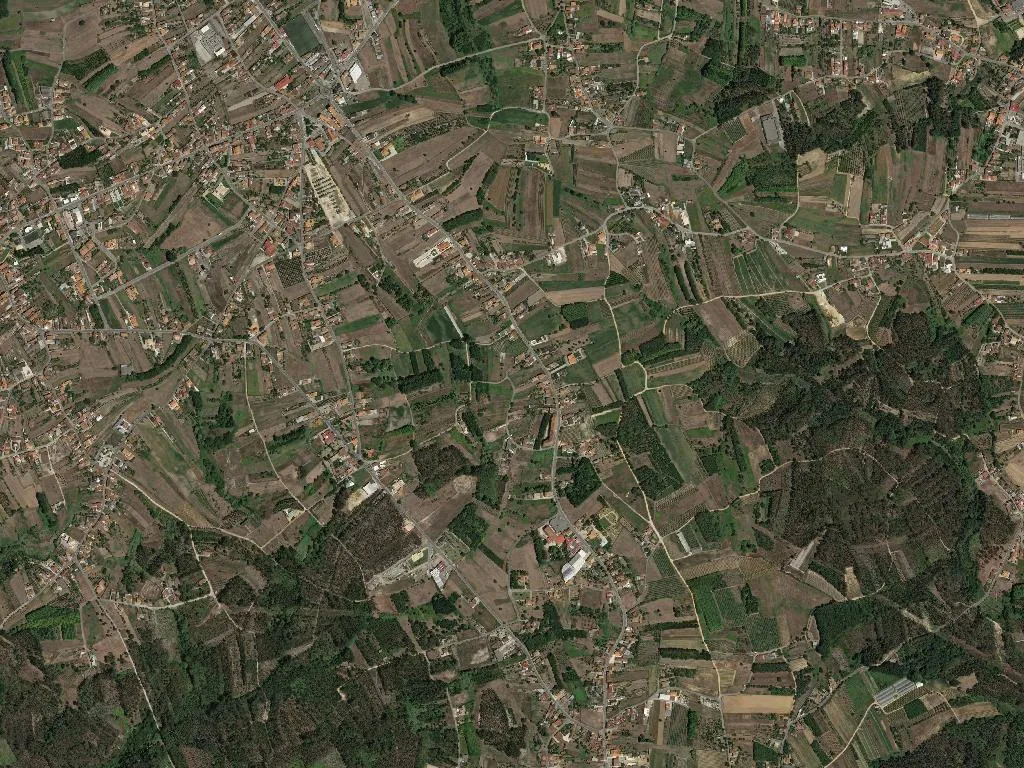
Bustos, Troviscal and Mamarrosa were yoked together in 2013 into one civil parish that stretches across 28 square kilometres of barely-undulating land barely 60 m above sea level. Six thousand people, 1,400 hectares of vineyard, a demographic triangle that points inexorably towards the Atlantic 25 km away. Come in September and the air is thick with carbon-dioxide fizz: the whole plain exhales young wine.
Three names, three sedimentary layers
Mamarrosa carries the oldest echo. The name is a contraction of mamoa rasa, the shallow Neolithic burial mounds that still dent the fields around the settlement. The place was once an independent municipality – you can feel it in the confident bulk of its parish church, one of the few in inland Portugal that still unlocks its doors at lunchtime. Inside, the air is bees-wax and extinguished candle; outside, the square is quiet enough to hear lizards scuttle across warm basalt.
Troviscal spent four centuries inside the neighbouring municipality of Cantanhede and still behaves like a frontier town. Walk down to the Passadouro and you can pick out the abutments of a Roman bridge that once carried the road between Portus Cale and Conímbriga. The stone is traffic-polished, almost flush with the stream bed; wear trainers, the arbutus is unforgiving.
Bustos identifies itself by its tower-like water reservoir, the Torreão celebrated by local poet Hilário Costa. The cultural association here programmes theatre and fado on a scale that defies the parish density of 219 souls per km². Some nights the auditorium holds more people than the café; that single statistic tells you everything about local priorities.
The band the churches refused to hire
In 1911 primary-school teacher José Oliveira Pinto de Sousa founded the Banda Escolar de Troviscal. Parish priests promptly banned it from religious festivities — too secular, too loud. Instead of folding, the band colonised the square, the bandstand, the summer fairgrounds, and invented a civic soundtrack that still shapes identity. The Museu Etnomúsica, housed in a former primary school, keeps the evidence: tubas dented by use, foxed marches annotated in fountain pen, sepia photographs of moustachioed clarinettists who stared down the clergy and played on. Entry is officially free; drop the suggested two euros in the box — the next restoration depends on it.
Branch lines of that musical DNA feed into Bustos’ annual Festival of Student Tuna groups and Mamarrosa’s five-part harmony choirs. Even the blood-donors’ association meets under fluorescent strip-lights with a guitar leaning in the corner, ready for the after-session sing-song. With 1,778 residents over 65 and only 767 under 14, volume is a survival strategy.
Leitão, fizz and the steak you have never heard of
The landscape is a chessboard of cereal plots and vine parcels. Baga and Bical for sparkling, Touriga Nacional and Merlot for reds, Maria Gomes for floral whites — Bairrada supplies 65 % of Portugal’s bottle-fermented fizz, the serious stuff aged on lees for three winters. The signature dish is leitão assado, suckling pig scored and roasted until the skin shatters like caramelised glass, but the insider order is Carne Marinhoa DOP, beef from the autochthonous Marinhoa cattle that graze the coastal meadows. The meat is faintly marbled, the flavour somewhere between Dexter and dry-aged sirloin. Try it at Tasquinha do Manel in Mamarrosa: no website, no sign, just a charcoal grill behind the pharmacy. Ask for bife na brasa with migas — fried bread crumbs soaked in meat juices — and expect the owner to recount the day’s gossip between flips of the steak.
Tracks between vines and chapels
A 12-kilometre loop links the three settlements, skirting field-edge shrines dedicated to St Anthony, St Joseph and St Thomas. Spring water still runs from the Fonte da Saúde even in August; tractors pause mid-road, drivers waving you through with the unhurried elegance of people who measure time by ripening. There are two places to sleep — a manor house in Bustos and two guest rooms above a vineyard store in Troviscal — which keeps the human footprint at weekend scale. Plenty of visitors base themselves in Aveiro, 25 minutes away, but they miss the 7 a.m. chorus of chimneys and the clarinet scales drifting across the dew.
Evening reconvenes the band. Someone lifts a trumpet to the sky behind the primary school; a sustained B-flat arcs over the roofs, holds, then dissolves into the vine rows. If you are drinking coffee in the square, Silvestre behind the counter will tilt his head: “Estão a aquecer” — they’re warming up. Stay. The run-through is free, and no ticket buys acoustics like these.