Full article about Palhaça: Grape-must hills & straw-stack lore
Late-summer Palhaça, Oliveira do Bairro, glows with fermenting Baga grapes; wander ochre lanes, stone chapels and straw-roof hamlets unchanged since 1512
Hide article Read full article
The scent of fermenting grapes
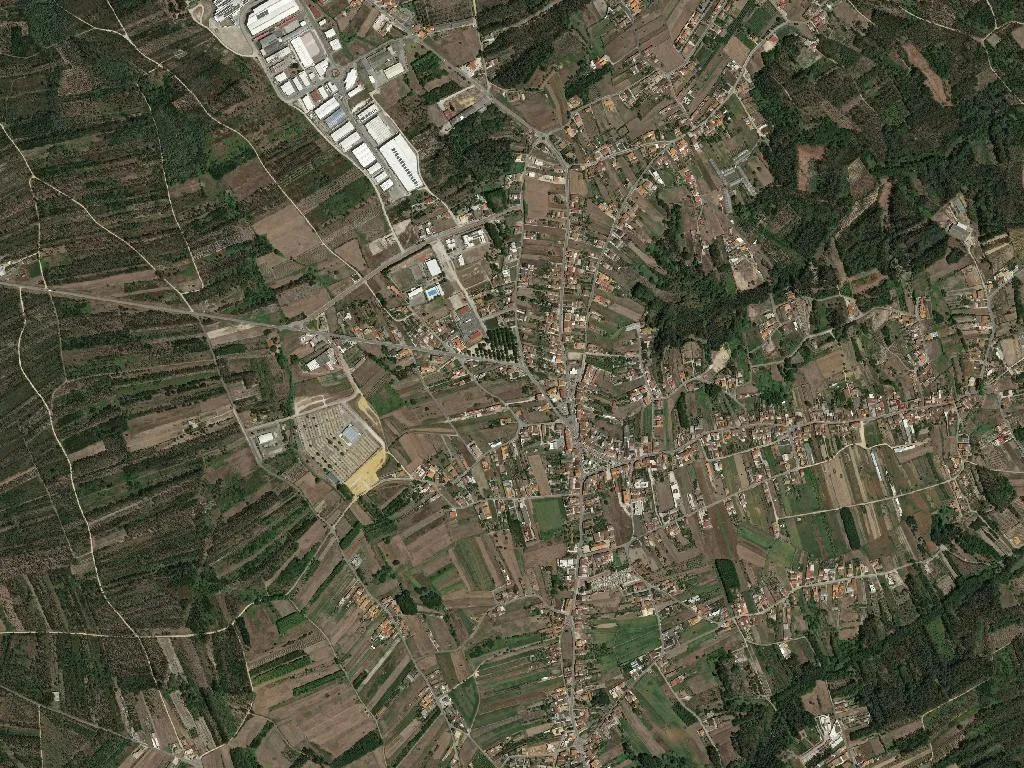
Come late September, the air in Palhaça smells of first-run grape must. Baga bunches darken along the wire trellises and the winter-silent wineries stir back to life. The parish inhales and exhales with the vineyard calendar—stone cottages scattered across low hills, ochre lanes linking hamlets whose names never appear on tourist maps: Vila Nova, Roque, Os Barros, Gandra das Masseiras. At 53 m above sea-level, the land ruffles like a gently shaken cloth, shallow valleys pinned between maize plots and household vegetable gardens. The only punctuation is an occasional tractor in low gear or a dog announcing the post-van half a mile away.
A name that raises eyebrows
“Palhaça” trips up every first-time visitor, yet it has nothing to do with clowns. The word descends from Latin pallassa, a thatcher’s straw stack. Medieval charters called the settlement Vila Nova; a 1512 royal charter bundled it with Recardães, and the 1527 population census still listed it under that alias. The parish ricocheted between Vagos and Aveiro councils until Oliveira do Bairro claimed it for good in 1898. Village status arrived only in 2003—belated recognition for 2,664 inhabitants whose demographic scales now tilt towards the over-65s rather than primary-school playgrounds.
Stone, lime-wash and patron saints
The Old Church, dedicated to St Sebastian and Our Lady of Memory, keeps a low profile: whitewashed rectangle, no bell tower, wood pews polished by three centuries of wool-trousered knees. Sunday gravity shifts to the newer Igreja Matriz on the main crossroads; after mass, conversations migrate to the pavement outside, prams and walking sticks forming an impromptu forum. In the outlying lugarejos, tiny chapels honour St Anthony and St Roch—one-berth shrines where farmers still light a candle before driving their livestock to auction. Stone-and-granary houses survive in Vila Nova and Roque, roofs once thickly padded with rye straw, walls the colour of burnt cream.
August homecoming
The Feast of Our Lady of the Assumption (15 August) is Palhaça’s annual census. Emigrants fly in from Caracas, Lyon, Newark, Boston. Overnight the population doubles; front doors stay open, rental cars clog the lanes. The parish band, founded 1887, strikes up a march, brass glinting in sun that feels aimed specifically at processional banners. By dusk the square becomes an open-air canteen: charcoal-grilled sardines, Bairrada red served in plastic cups, pimba music loud enough to make the elderly shuffle-dance on walking frames. It is less a festival than a collective retrieval of shared memory.
Leitão, chanfana and Bairrada fizz
The local table obeys Beira Litoral doctrine. Leitão da Bairrada—suckling pig scored, basted with lard, garlic and piri-piri, then blistered in a wood-fired oven—arrives with rounds of fried potato and peppery greens. Chanfana, goat (or nowadays often beef) slow-simmered in clay pot and red wine until it slumps into a glossy ragù, is spooned over coarse country bread. Marinhoa beef, Portugal’s only native cattle breed with DOP status, tastes of wild marjoram and long pasture. Between courses, chilled Bairrada espumante resets the palate; afterwards, Aveiro’s ovos-moles—delicate seashells of egg-yolk custard—arrive on patterned rice paper that you are meant to eat.
Vine-wrapped walks
There are no way-marked trails, only farm tracks that braid the slopes. At sunrise the Vale do Ribeirinho lies under a quilt of river-mist; blackbird song drips from the willows. Follow the hedge-lined hollow of the Adioga valley and you will reach Balcanas, where a lone cork oak throws a shade wide enough for a picnic blanket. None of the streams merit the word “river”, yet fifteen minutes west the Ria de Aveiro gives tidal counterpoint—salt marsh, samphire, stilts and avocets.
Evening light arrives sideways, gilding the vines and turning stone walls translucent. Somewhere a gate hinge creaks, wood-smoke threads the air, a single church bell rehearses the Angelus. Palhaça never raises its voice; it simply lets the day settle into the folds of its straw-thatched name.