Full article about Escapães: Where Night Ovens Feed Saint Sebastian
Dawn sugar-loaves rise in stone lanes above Caima mills and baroque crosses
Hide article Read full article
Dawn smoke and sugar
At four-thirty on a January morning the air in Escapães tastes of two things only: resinous oak burning in domed bread ovens and the first caramel crackle of sugar as it crusts a star of dough. By candle-light the women ease the fogaça—a four-pointed sweet loaf the size of a dinner plate—onto wooden trays, cross themselves, and step into the lane where torchlight picks out granite curls of 18th-century smoke. The procession has begun: a vow renewed every year since 1883, when cholera swept the parish and desperate villagers promised Saint Sebastian a midnight loaf if the dying would stop. The plague ended; the ovens never cooled.
Granite shoulders, water ribs
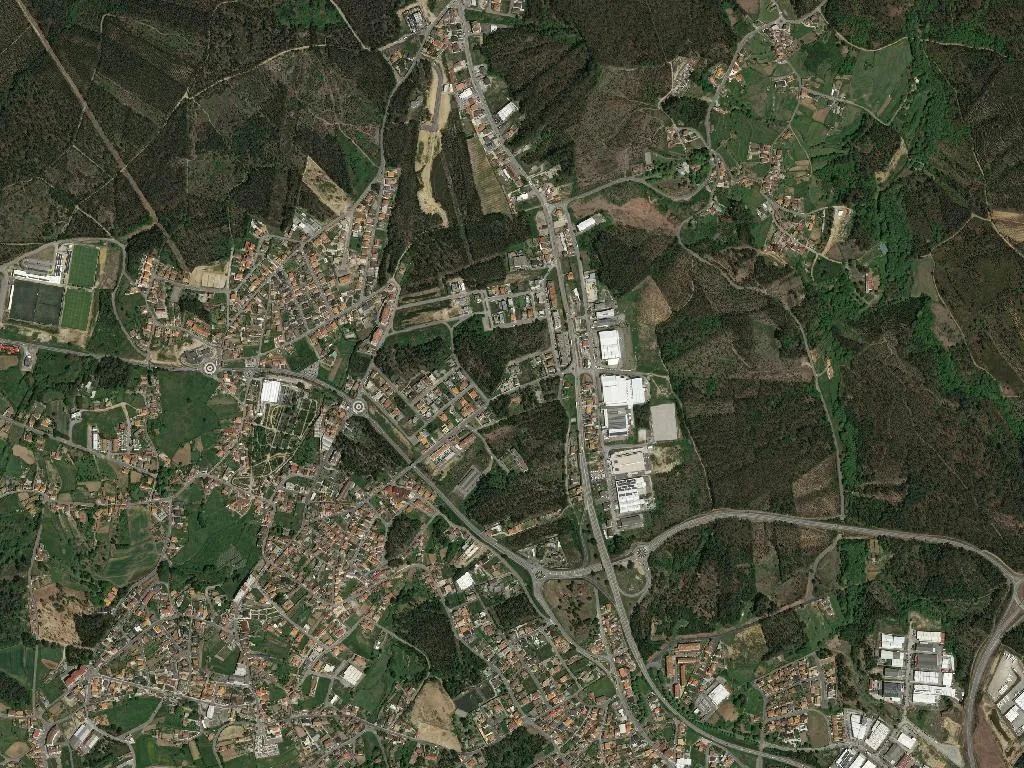
The settlement rides the western flank of the Serra de Santa Justa at 281 m, its name first inked in a 1514 charter as “Scapanes”—Latin for “shoulders” or, some argue, “the place you slip away to”. Both fit. Granite rolls like shoulder-blades above the Caima River, while side-streams—the Escapães and Casal brooks—cut narrow escapes of their own. Six water-mills once turned here; their gaunt shells now punctuate the 6-km Mills Trail where spilled sunlight flickers across old weirs and the granite lip of a vanished river-beach.
Inside the 16th-century parish church a gilded baroque retable glints above 18th-century tiles that narrate Sebastian’s martyrdom in cobalt. A reliquary on the epistle side holds a finger-bone sent from Coimbra in 1623; parishioners still file past it before major processions. Outside, three baroque stone crosses stand sentinel over the square, and the 1780 granite fountain continues its slow sculpture of the lavadouro—the communal wash-tank whose rim is scalloped by centuries of laundry and winter frost.
Beef, smoke and convent sugar
Arouquesa beef—PDO-status cattle that spend autumn among holm-oak and cork—arrives at table either flash-grilled or cubed into rojões marinated overnight with white wine, bay and garlic. At O Milleiro restaurant the meat is paired with batatas a murro (literally “punched potatoes”) and a loose bean-and-rice stew, while curls of Alentejan smoke-cured sausage drift into caldo verde. The same bread ovens that bake the fogaça turn out corn broa dense enough to mop river-eel stew, and pumpkin porridge softened with smoked bacon fat.
Convent sweets have travelled shorter distances: trouxas de ovos (egg-yolk spirals), papos de anjo (“angel cheeks”), and goat’s-milk queijadas still follow recipes nuns exchanged with manor-house cooks in the 1700s. They appear without ceremony on weekday counters at Pastelaria Central in neighbouring Lourosa, but taste of saffron, lemon peel and the slow economics of surplus yolk.
Terraces, kingfishers, pottery wheels
Small holdings step down the valley in schist terraces where cabbages glow like jade after rain. Cycle the disused Linha do Vouga track south of the parish and the view alternates between oak scrub and pasture until Santa Justa’s quartzite ridge slams into the sky. Kingfishers stitch the Caima under the medieval single-arch Ponte do Casal, a perfect place to unstitch a picnic of fogaça and Vinho Verde beneath willow shade.
In a former hayloft on Rua do Casal, Mestre Quim keeps a pedal-powered potter’s wheel turning. The red clay he digs behind the kiln becomes bilha jugs for aguardente and the shallow bowls used at the January feast to break the blessed loaf. Guests at the three-room Casa do Casal next door wake to the same wheel’s faint whirr and, at dawn, the fluted call of grey wagtails that treat the mill-race as a private bath.
Fire night
June brings São João bonfires and paper balloons; September the candle-lit parade of Nossa Senhora da Saúde; Twelfth Night the Cantar dos Reis when masked singers barter songs for cakes. Yet the parish shows its full hand on 20 January. After midnight Mass the fogaça emerges molten, is cracked against the church door, and shared among 3,315 residents who have waited a year for the first puff of caramel-scented steam. By two o’clock the square is quiet again, wood smoke drifts above granite eaves, and Escapães slips back into its ordinary miracle of water, stone and bread.