Full article about Fiães: Where the Caima River Still Mills Time
Granite terraces, Art-Nouveau balconies and a 1596 church glow in this Aveiro village.
Hide article Read full article
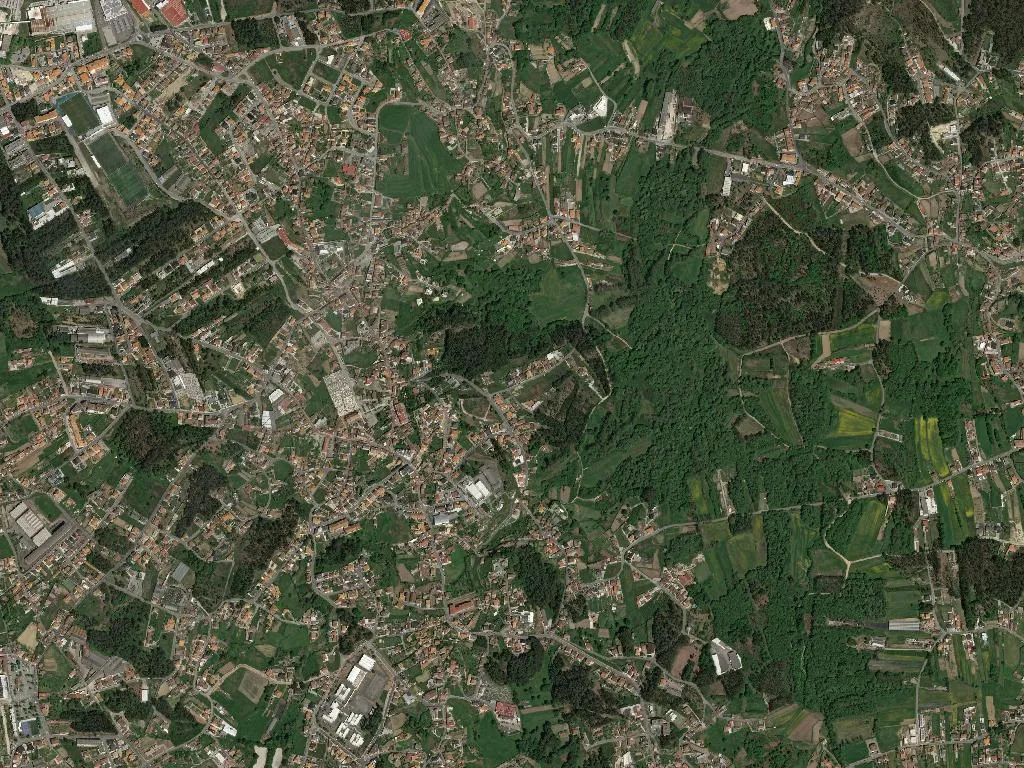
The soundtrack arrives before the view: the Caima river slapping the paddles of Moinho do Povo, the only water-mill still working every day, turning so unhurriedly it seems to mill minutes, not wheat. One hundred and fifty-one metres above sea level, the granite walls parcel the landscape into pocket-handkerchief terraces of kale and orange trees, the green darkened by Atlantic dew that never quite burns off. Fiães covers barely six square kilometres, yet its 7,000-odd inhabitants have chosen density over dispersion, terraced houses shoulder-to-shoulder rather than scattered across the slopes.
Fourteen spellings, one parish
In the 1258 royal enquiries the place is already “Fyanes” – one of fourteen medieval variants that suggest cartographers were never quite able to pin the village down. Folklore points to the beech-tree (faia) that still shades the Covas and São Paio streams; historians prefer the Latin “fages”, meaning fringe of woodland. Whatever the etymology, the settlement spent its first five centuries inside the protective couto of Santa Maria da Feira until Manuel I’s 1514 charter granted it self-rule. Liberal Wars left a brief scar in 1832 when Miguelist troops splashed across the Caima, but the deeper marks were made by migration: Brazil in the 1890s, the Renault plants of Saint-Étienne after 1960. Remittances came home in the form of Art-Nouveau balconies and glossy azulejo friezes, while a 1953 primary school still carries the name of António dos Santos Cerqueira, the miner who paid for it after forty-six years abroad.
A retable of filtered light
Rebuilt in 1596 after a lightning fire, the parish church hides a gilt Manueline altarpiece that has enjoyed listed status since 1977. Slip in through the south door just after siesta and the nave is empty except for dust motes sliding through stone slits, striping the 1623 carving with slow-moving gold bars. The air smells of extinguished beeswax and sun-warmed granite; the only percussion is timber expanding in the heat. Outside, the 1723 granite crossroad crucheiro points one arm towards the river, the other towards the bakery, establishing hierarchy in stone.
1.2 kg on the head
On 20 January the village reverts to its liturgical calendar. Four hundred girls process through the steep lanes balancing fogaças – flower-shaped brioche of precisely 1.2 kg – on cotton towels draped over their heads. The Confraria de São Sebastião has enforced the weight since 1953; deviation disqualifies. By 10 a.m. the citrus-butter aroma has drifted down Rua da Igreja, curling into winter coats like an extra scarf. The ceremony has paused only three times: typhoid in 1937, Covid in 2021-22. At Padaria Central you can book the preceding afternoon, flour your own wrists, and learn the 360° wrist-twist that pinches the dough into petal form.
Thirty-two mills, three wheels left
The 1864 industrial survey counted thirty-two water-mills along the Caima; today only three still spin original paddles – Moinho do Povo, Moinho do Meio, Moinho de São Paio. The 4.5 km Mill Trail, sign-posted by the town hall in 2009, links five ruins and three survivors, the sound-track shifting from faint trickle to full-throated splash depending on rainfall the night before. Half-way, holm oaks give way to granite cliffs velvety with moss; kingfishers flare cobalt between pools. Pack a picnic – cornmeal broa and heather honey from the 1958 agricultural co-op – or reserve a table at O Moinho for rojões à moda de Fiães: diced pork simmered in pig’s-blood gravy, the village’s blunt reply to coq au vin.
Winter broth, summer accordion
Christmas Eve brings the Cântico ao Senhor da Pedra, a 124-year-old hymn whose lyrics were composed by a local schoolmaster; the congregation sings it unaccompanied, voices ricocheting off raw stone. The first Monday of September is given over to Nossa Senhora da Saúde, an open-air mass followed by a neon-fairground arraial where candy-floss dissolves into diesel fumes. High summer means bailarico on the church square: folding chairs, lukewarm lager at two euros a plastic cup, and an accordionist who has played the same schottische since 1987. In December the kitchens steam with turnip broth – thick shreds of kale, pork fat, enough black pepper to make the nose bleed – washed down with Loureiro-Azal vinho verde drawn from plots too small to fill a dozen demijohns. At the co-op seven women still hand-turn cork off-cuts into trivets and coasters sold by weight; next door, the 1926 municipal pavilion, once the parish council chambers, keeps its original eclectic façade, pastel plaster and neo-Manueline window-heads, reminding passers-by that every village once wanted its own miniature palace.
Morning ends the way it began: water thudding against timber, a pulse you feel in the soles of your shoes. Only now the current carries a second layer – warm lemon-butter drifting from the bakery, so dense it settles on coats and hair like a second skin Fiães refuses to take back.