Full article about Fornos: bells, beef and gunpowder mornings
3,433 neighbours share stone walls, fogaça cake and Arouquesa steak near Aveiro
Hide article Read full article
Morning lines
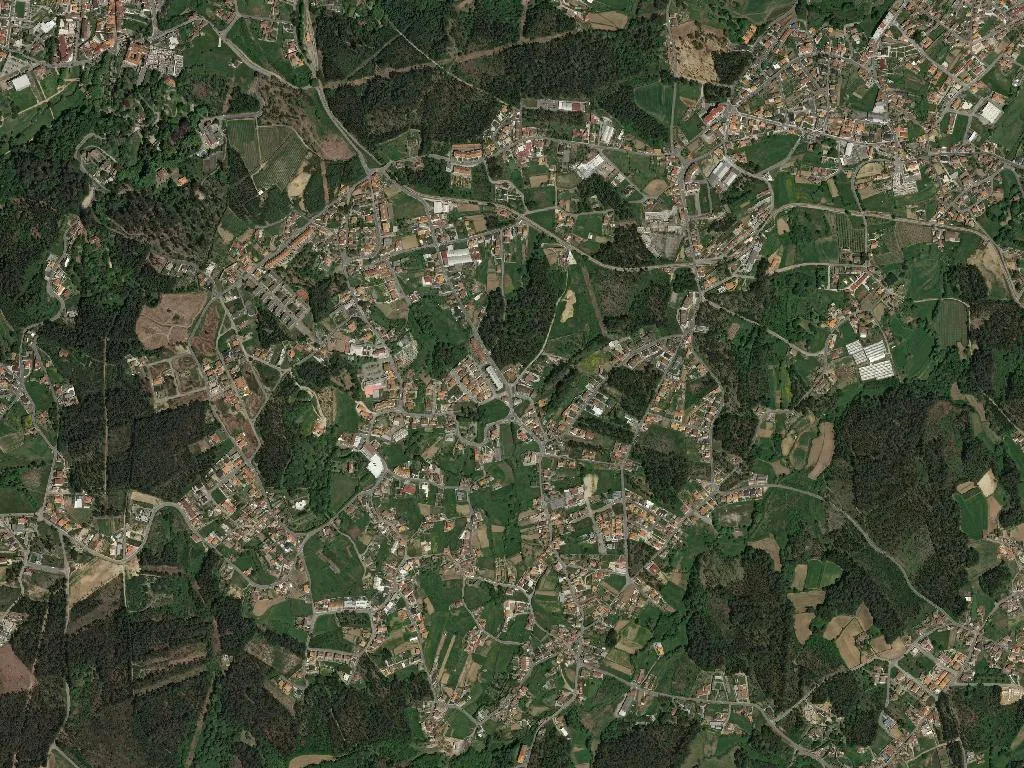
Smoke rises ruler-straight from chimneys, sketching vertical columns into the cold January air. From the square, the church bell tolls a bass note that measures time not by GMT but by the pace of neighbours who rise before the sun. In Fornos, 25 minutes inland from Aveiro’s lagoon, houses shoulder each other for warmth, back gardens share stone walls, and conversation drifts through open louvred windows as easily as the smell of woodsmoke.
The geometry of 3,433
This is a parish drawn to human scale. With only 3,433 residents, anonymity is impossible: the same faces recur at the Friday market, the 10 a.m. mass, the counter of Café Central. Pushchairs and walking sticks negotiate the same narrow pavement; teenagers on rusted BMXs coast past widows in black who walk three abreast. Density here is not oppressive—it is social fabric. Private life and collective ritual are negotiated daily over garden gates and coffee cups.
Fogaça and gunpowder
Every January the village tilts towards São Sebastião for the Festa das Fogaceiras. Girls process through the streets in crimson sashes and white dresses, balancing trays of fogaça—half-brioche, half-birthday cake—topped with a single poached egg. Rockets crack overhead; caramelised sugar mingles with gunpowder. Arrive after 11 a.m. and you’ll stand; the nave fills faster than a London tube at rush hour. Locals tuck a blessed slice into the larder, insurance against Atlantic storms that still rattle the zinc roofs.
Beef from the Serra da Freita
Carne Arouquesa appears on tables the way November rain arrives—unannounced, always welcome. At Zé da Tasca the steak is cut as thick as the butcher’s fist, the fat the colour of farmhouse butter. It lands with boiled potatoes still in their skins and a saucer of raw garlic: no jus, no micro leaves, no apology. Silence is the correct accompaniment; bread is provided for mopping.
Between things
Fornos issues no glossy brochures. There are no viewpoints with Instagram handles, no way-marked PR trails. Instead there is the Central, where António has pulled espressos since 1983 and remembers who takes two sugars. There is the bakery where the dough is proved under tea towels and pensioners debate the price of bread as fiercely as fishwives in Matosinhos. Beauty resides in repetition: the same greetings, the same pastries, the same bell that closes the working day.
When dusk settles and smoke lifts once more from the chimneys—this time for supper—Fornos reveals its quiet talent: it is a place to live, not to tick off. That may be the rarest quality of all.