Full article about Gião: granite lanes & wood-smoke hush
Sweet fogaça loaves, Arouquesa beef and silent horizons in Santa Maria da Feira’s smallest parish.
Hide article Read full article
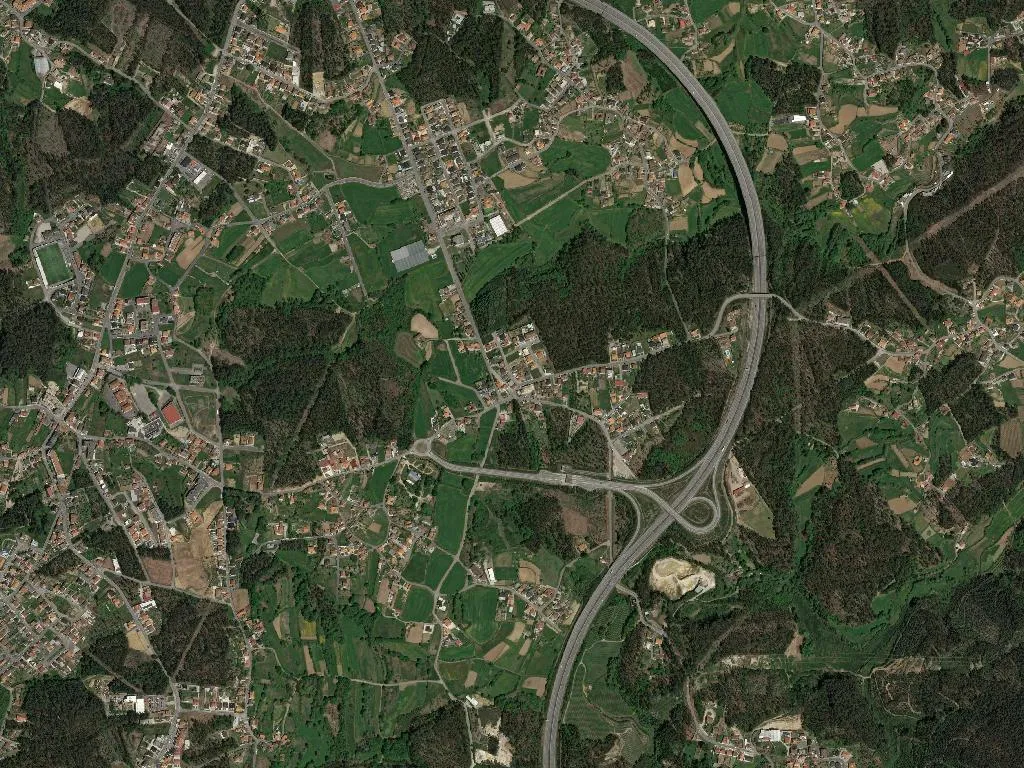
The church bell strikes the hour. Hardly anyone is in the lane to notice. Gião counts 2 412 souls, 349 hectares of low-lying pasture and oak scrub, and an altitude of 189 m that delivers neither viewpoints nor rivers. What it does have are waist-high granite walls, hand-drawn vegetable rows in every back garden, and a plume of wood-smoke that flavours the winter air.
A name that might be Roman
A 1978 parchment calls the place Villa Iuliam. Historians still argue whether legionaries ever saw the valley; locals shrug and point to Quinta da Beira, where the parish council now sits. Gião is the quietest of Santa Maria da Feira’s 31 parishes, and its low density is treated as an asset: walk ten minutes in any direction and the horizon is uninterrupted by concrete.
20 January: bread on the lap
Feast of São Sebastião. Girls in white linen file through the lanes carrying fogaças—IGP-protected sweet loaves shaped like wheeling swallows, iced with crystallised sugar and a scarlet ribbon. You won’t find them in the weekly market; they are fetched warm from the padaria or ordered from a neighbour’s oven. Butter is optional; the sugar is designed to crack between the molars.
Beef that begins up the mountain
Gião keeps no cattle, yet Arouquesa DOP veal appears on every grill within 20 minutes’ drive. Blond-coated, white-fat calves are dry-aged for four days in the Serra da Freita, then cooked over carvalho wood here. Expect roasted new potatoes and whatever the cook picked from the plot that morning. With no local vineyard, the 20 cl glass is filled from Lafões or the Douro—served in a tumbler, never a stem.
A church without a plaque, paths without arrows
The parish church carries no blue-and-white tourism badge. It opens at eight, closes at noon, reopens at five. Inside: dark deal pews, a ceiling you can touch, the drift of candle wax. Earth lanes lead past doorless wayside shrines—single azulejo niches, plastic roses bleached the colour of weak tea. Roam and you wander into yards: hens under twisted apple boughs, woodpiles braced against cottage walls. A dog barks; the owner waves. Maps are useless; follow the scent of bonfire or the diesel growl of the only tractor still working.
Silence that still has people
496 residents are over 65; only 304 are under 25. Streets empty at midday because the able-bodied are in the fields or the repair shop. Café O Sossego pours a 65-cent bica from six in the morning until seven at night. There is no Airbnb; visitors sleep in a cousin’s spare room or drive to Feira. When the bell tolls for vespas, the note rolls across open ground and everyone knows supper is ready.