Full article about Mosteirô’s Fogaceiras Parade: Cinnamon-Scented January
Watch white-clad girls balance blessed fogaça bread through fog-lifted streets in Mosteirô.
Hide article Read full article
Mosteirô: where January still smells of warm sugar and cinnamon
The scent arrives before any explanation. A dense sweetness—dough raised on sugar and cinnamon—meets the cold January air and drifts above Mosteirô’s streets like a wordless summons. It is the morning of the Festa das Fogaceiras and every resident—6,481 at the last count, plus whoever has driven in from Porto or Aveiro—breathes in time with a procession that honours St Sebastian. The fogaceiras, local girls in white dresses and coloured sashes, carry the eponymous bread on wicker trays balanced against their heads as if it were something closer to relics than breakfast. Which, in a way, it is.
A cake with its own postcode
The Fogaça da Feira IGP is not a casual pastry. Shaped like a miniature castle turret—wide base, conical top—it is a protected geographical indication, registered at EU level, meaning the recipe, the method and the 346 hectares around Mosteirô are legally bound together. Each loaf is scored by hand, baked until the crust bronzes and the interior stays cotton-soft. Pick one up and you feel the weight of obligation: every family expects at least one fogaça on the table in January, and every grandmother has an opinion on whose wood-fired oven does it best. During the festa the bread becomes procession currency: carried, blessed, sliced, shared. Nobody stands on the pavement waiting to be entertained; they step into the road to join the slow drumbeat of belonging.
A balcony above the fog belt
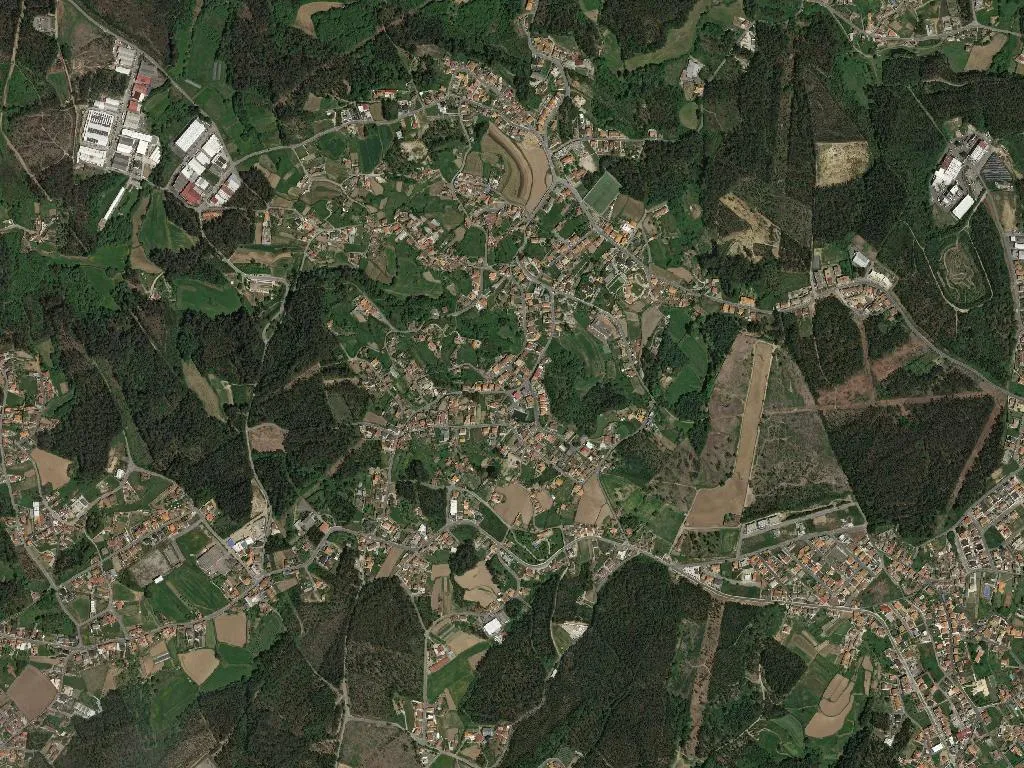
Mosteirô sits at 184 m, high enough for winter mornings when the surrounding valleys fill with fog and the parish appears to float. The houses—stucco painted in salmon, ochre and duck-egg blue—press together along granite-walled lanes. Front gardens are still kitchen gardens: cabbages in regimented rows, orange trees sagging with fruit. Density is 470 people per km², unusually high for a rural parish, so curtains twitch quickly and dogs know every footstep. Demography tilts elderly—1,496 residents are over 65, only 729 under 15—yet school buses still brake sharply at the pastel-painted stop outside the café, and teenagers scroll TikTok against the same wall where their grandfathers once traded cattle.
The detour that repays the mile
Leave the A1 at São Paio de Oleiros, swing through the new roundabout and climb the N1 spur towards Espinho. Within two kilometres eucalyptus and maritime pine close in, the tarmac narrows, and a football pitch appears on the left. On Sundays the clubhouse bar opens at ten, coffee comes splashed with aguardente, and the smell of grilled bifanas drifts across the car park. Just beyond the ground a stone bandstand—unused since the 1980s—suddenly wakes up: concertinas strike the opening chords of the Marcha de São Sebastião, grandmothers haul wooden benches into place, and someone produces the first bottle of erva-príncipe liqueur. If you arrive too late to park inside the village, you will still hear the drums echoing off the granite as you walk uphill. Follow the scent of sugar; it is more reliable than GPS.
Meat that remembers mountain pasture
Sweet has its counterpart in savoury. Arouquesa beef, DOP-protected and reared on the high serras of the Vouga valley, arrives in Mosteirô in deep-red cuts marked by a thin rim of gold fat. The breed—small, chestnut-coloured, horned—grazed above 700 m on broom and heather, and the flavour carries the altitude: minerally, almost herbal. Local restaurants (really just two, both with relatives in the kitchen) grill it over eucalyptus embers with nothing more than coarse salt. When the steak lands, conversation stalls; there is only the sound of knives finding the grain.
Stone that made the shortlist
Heritage statisticians record two listed monuments within the parish boundary, one granted Imóvel de Interesse Público status. The inventory offers no prose, but the fact alone is telling: in a region where breeze-block warehouses have marched across farmland, somebody once slammed down a legal marker and said “stop”. Walk Rua do Castanheiro at dusk and you will see why: a 17th-century granite cross whose corners have been softened by Atlantic rain, still carrying the shallow relief of a scallop shell. It is not spectacular; it is simply still there, anchoring present tarmac to past footpath.
After the last drumbeat
By late afternoon the procession has dissolved, trays are empty, and white dresses are folded for next year. The village exhales a different quiet: not silence, but a residue. Wood smoke from living-room fireplaces mingles with the last traces of cinnamon; someone somewhere is slicing the final fogaça, its crust now cool but the crumb inside still faintly warm. You taste it standing at a kitchen counter, butter melting into the soft dome, and understand the unspoken contract: each January the parish promises to remember itself, loaf by loaf, drumbeat by drumbeat, until the scent rises again.