Full article about Rio Meão’s barefoot dawn: bread, plague vow, river echo
Rio Meão, Santa Maria da Feira: January barefoot procession with giant sweet-bread serpents keeps a 1561 plague vow alive along the river.
Hide article Read full article
The brass band ricochets off the hillside before the procession appears. January dawn, and twenty women are walking barefoot up the EN227 with five-kilo sweet-bread serpents balanced on white-cushioned heads. Cinnamon and lemon drift through the cold air as the loaves sway in time with their steps. Four kilometres lie between Rio Meão and the castle at Feira; every one of them is travelled in fulfilment of a vow made in 1561 when plague retreated from these valleys.
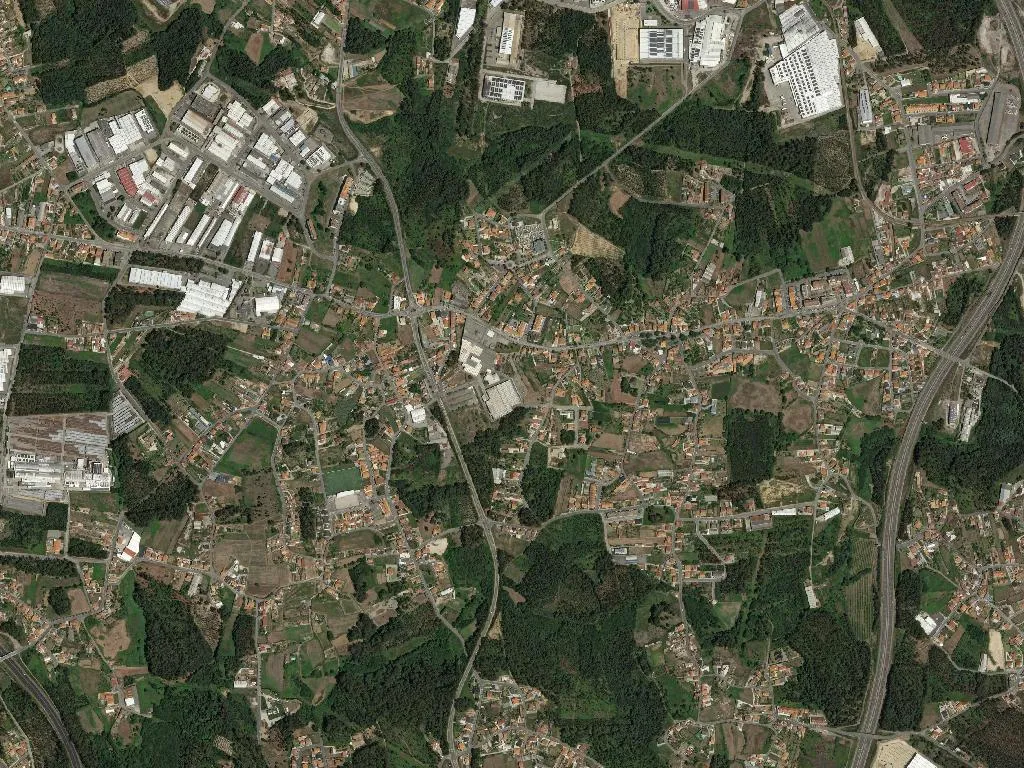
The parish sits in the bowl carved by the river that gives it its name, first recorded in 1220 when nobles donated its waters to Grijó monastery. Alder and willow still hem the Meão – spelt “Méão” in medieval charters – irrigating smallholdings that fed the area long before maize arrived. Sheltered at 111 m by the granite ridges of the Serra da Parada, the place enjoys a mild mesoclimate; on clear winter afternoons the low sun throws terraced geometry across the fields, a pattern mechanisation has not quite erased.
Stone, timber, running water
São Tiago’s parish church has commanded the crossroads since 1258, its Romanesque-Gothic bones corseted inside later baroque gilt. Atlantic damp has lent the granite façade the colour of weathered slate. Around it, manor houses in dressed stone map the old rural hierarchy, when the “couto” of Santa Maria da Feira organised landholding from the valley floor to the upland commons.
Water-mills punctuate the river: some roofless, others turned into weekend houses, all obeying the same vernacular grammar of schist walls and chestnut axles. The Meão footpath follows the water to the fairground at Feira, letting you watch grey wagtails on reedy banks and listen to the constant hush of pebbled current. A single-arched medieval bridge, now part of the road, hints at the valley’s former weight on the north-south grain route.
Sweet serpents and an old bargain
Every third Sunday in January the village honours St Sebastian with the Festa das Fogaceiras. The fogaça – an IGP-protected sweet-loaf shaped like a coiled snake, scented with cinnamon and lemon – preserves a convent recipe. From Thursday the bakeries exhale warm sugar; by dawn on Sunday the women’s white head-cloths are already spotted with flour. Barefoot or in traditional kid slippers, they carry the loaves to the castle esplanade, trailed by drums, pipers and a circling crowd that only disperses when the last serpent is laid at the church door.
Rio Meão also lies within the Carne Arouquesa DOP zone; blonde-coated cattle graze the surrounding hills. In the farm restaurants the roast arrives crackling outside, rose within, sided by roasted potatoes and sautéed turnip tops. The local take on cozido includes Galician cabbage and swede; dessert is likely to be broa de mel (maize-and-honey cake) and a glass of light red poured, in old Minho fashion, into a tumbler.
Four barefoot kilometres
Village status was granted on 20 May 1991 and is still toasted each spring with civic ceremonies that corral all 4,813 inhabitants. At 720 per km², population density is balanced: enough houses to support a chemist and a café-tabac, not enough to dilute the rural soundtrack of cattle bells and maize leaves rustling like newspaper.
The Trilho dos Moinhos climbs through oak and eucalyptus to Lourosa, crossing streams that keep water even in August. Arouquesa cattle watch indifferently from behind electric tape; overhead, the silhouette of the castle at Feira is a constant compass, reminding the valley that its history was written from the heights.
When the Fogaceiras procession returns at dusk, the women set their bread serpents on the church steps. The weight leaves their shoulders, but the cinnamon lingers on their fingertips – a 463-year-old promise renewed for another year.