Full article about São Paio de Oleiros: where dawn smells of sweet fogaça
Village ovens fire at 6 a.m., baking golden loaves that march to St Sebastian on 20 Jan
Hide article Read full article
Dawn rising in dough
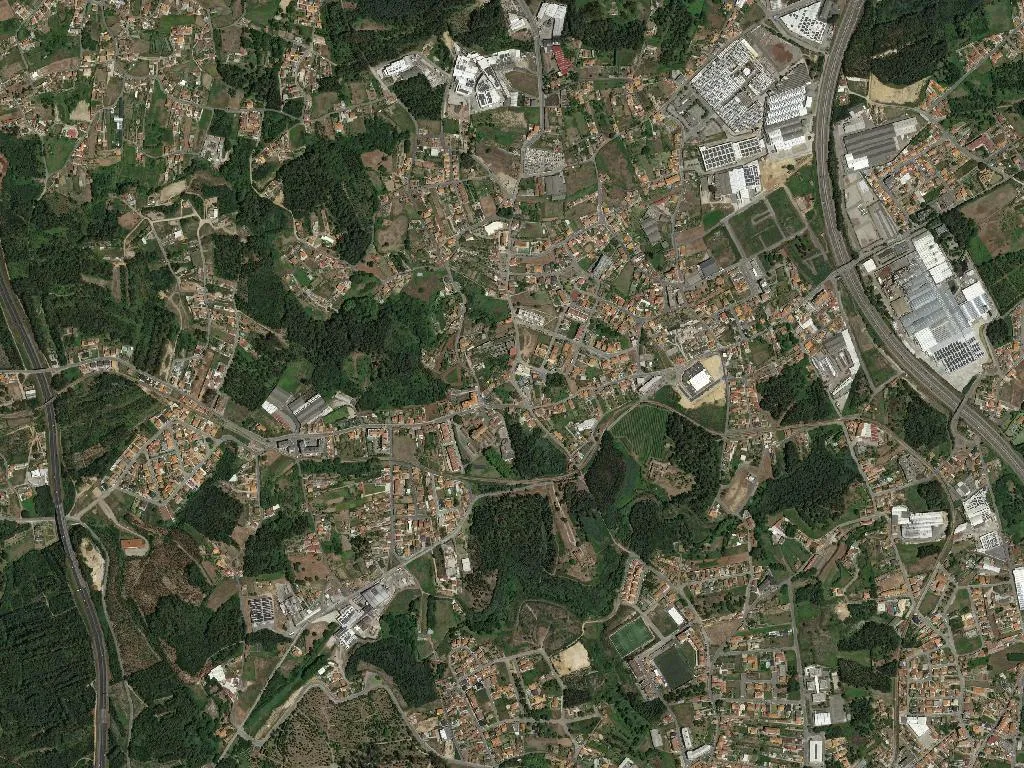
At six on a January morning the sky is still the colour of slate roofs, yet every kitchen window in São Paio de Oleiros is already open, exhaling plumes of sweet-scalded milk. Inside, women knead beneath flickering fluorescent striplights, counting decades not in years but in rosaries of flour and egg yolk. The wood-fired cooker crackles like church tapers; no one here calls the swollen golden discs “sweet bread”—it is simply “our bread”, and that is enough. At 97 m above sea-level, the village occupies a narrow margin between the rural that refuses to budge and the industrial parks creeping west from Porto. Tradition is not a museum piece; it is the living rise of dough and the heat stored in firebrick.
Two parishes, one heartbeat
The civil parish map was redrawn in 1835, yoking São Paio and Oleiros together without consulting either. Locals still speak of crossing the invisible border—“I’m going up to São Paio”—when they walk 400 m to post a letter. The parish church, dedicated to the martyr St Paio, anchors the union: limestone walls and a single Baroque tower that gathers 3,661 souls inside four square kilometres. Around it, alleyways narrow to the width of a single donkey cart; 924 pensioners remember when these lanes ended in wheat, not warehouses, while 393 children thread the same passages on scooters. In Vilar, a 1709 wayside chapel commissioned by Bishop José de Santa Maria stands as a reminder that private piety once doubled as local infrastructure, saving muddy journeys to the mother church for baptisms and last rites.
The bread that forgives
Every year on 20 January the village rehearses its origin story. The Festa das Fogaceiras honours St Sebastian with a spectacle no tour operator packages: hundreds of girls in white dresses balance wicker baskets of fogaça—circular sweet loaves bearing the castle’s four-tower silhouette—on their heads, processing to the church where the bread is blessed, then torn apart and shared. Participation is hereditary; ovens are borrowed; strangers find a piece pressed into their hands before they can refuse. Later, the same tables carry Carne Arouquesa DOP, beef from the mountain breed that grazes the nearby Arouca Geopark, its flavour tightened by heather and broom. There is no classified vineyard within the parish boundary, so the wine is brought in from cousins in Bairrada—effervescent white to cut the fat, austere red to lengthen the evening.
A modest lung
São Paio de Oleiros Park offers no sweeping vistas or wild river gorges—just 6 ha of gently sloping ground planted with lime and paulownia, threaded with compacted-earth paths where teachers power-walk before the bell. Yet its ordinariness is the point: a buffer between the hum of the A29 motorway and the clatter of pot-lids. On Sundays, teenage boys practise wheelies on the basketball court while grandparents occupy the benches in strict north-facing alignment, arguing about football and glucose levels. The park is the parish’s exhale, proof that green space need not be spectacular to be necessary.
When the last tray cools
By nightfall the communal ovens are brick-cold, the square hosed clean of sugar and wax. The village withdraws into its low, tiled roofs, but the scent lingers in coat fibres and hairlines. Identity here is not declared; it is proved in the crumb. Tear a warm fogaça and you understand why some borders are drawn in yeast, not ink.