Full article about Couto de Esteves: granite hamlet above morning mist
Charter-stamped ridge village where baroque gold glows against smoke-cured beef
Hide article Read full article
Granite dawn at 349 metres
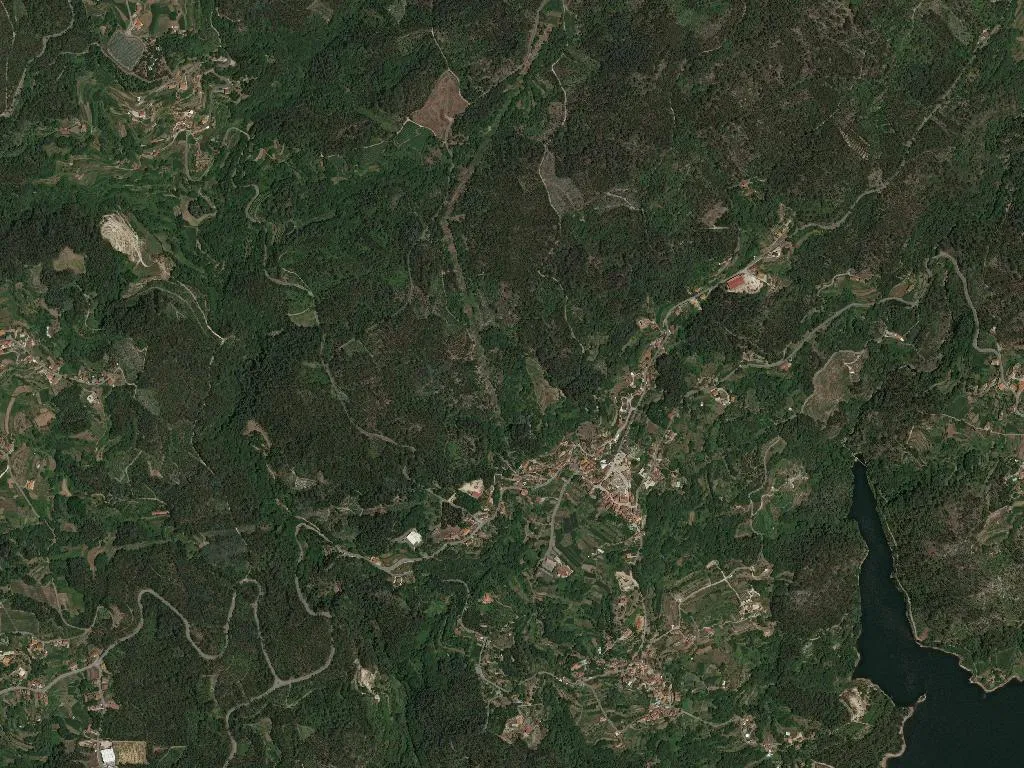
Granite walls drink in the cold of first light while wood-smoke climbs in slow pencil lines above oak-dark ridges. At 349 metres, Couto de Esteves is awake long before anyone appears: a shutter creaks, a dog barks once, boots scuff the uneven cobbles. Houses grip the slope as if the mountain itself were holding its breath—slate roofs black with dew, hinges warped by a century of winters, stone the colour of weathered tweed.
A charter older than the kingdom
“Couto” signals a place that once enjoyed royal immunity—tax-free, judgement-free, a medieval sanctuary granted by Afonso III in the thirteenth century. The suffix remembers Estêvão, the probable settler who persuaded the crown to sign the parchment. The charter worked: for 700 years the parish turned in on itself, living off small rye plots and the oak forest that still stipples the 1,642-hectare parish. Even the 1960s arrival of the EN16, the winding road that finally linked the ridge to the Atlantic, failed to dilute the population; today 712 people are registered, 46 per cent over retirement age.
Gold leaf between grey stones
The parish church squats at the village’s gravitational centre, granite outside, spectacle within. Gilt-carved altarpieces from 1747 throw candlelight back in fractured amber, a baroque flare against the Calvinist sobriety of the walls. Twenty metres downhill, the twin chapels of São Sebastião and Nossa Senhora da Saúde—both listed in 1977—keep local devotion on life support: Saturday vespers attended by eight widows in wool coats, Sunday processions that finish with aguardiente in the sacristy. Around the lanes, cylindrical-pillared espigueiros store last season’s maize, their granite lids lifted by the same families who built them in 1903.
Meat that carries a passport
Breakfast might be Arouquesa DOP beef cured in sea salt and smoked over oak, lunch Marinhoa DOP steak pounded with garlic and bay, supper vitela assada from the Lafões IGP calves that graze the valley floor. In winter the village still practises the matança ritual: blood caught in red-clay bowls, morcela stuffed while warm, chouriça links hung in the fumeiro until they bronze like old violin wood. The scent clings to hair and sweaters for days, a carnal reminder that supermarkets are 28 km away in Aveiro.
Tracks that remember wolves
Waymarked rural paths peel off from the last streetlamp, diving into heathland where pine and native oak alternate with small holdings of kale and potatoes. After 4 km the Vale do Vouga glints below, a silver incision catching the low winter sun. The route is part of the Natura 2000 network, though you will find no visitor centre, no ticket booth—only boot prints of the local caçadores and, if you start early, the parallel prints of wild boar that still root for chestnuts. Climb higher and the wind carries cowbells from the Arouquesa herd grazing the wetlands; their milk will be churned into butter the colour of daffodils.
The ridge teaches its own dialect: how granite feels at 6 °C, how wood-smoke announces a neighbour is awake, how silence gains density with altitude. Forty-three primary-school pupils learn it daily; they are the insurance policy scribbled in the margin of a medieval charter that still governs life at 349 metres.