Full article about Dornelas: Biscuits, Wild Boar & Brandy Trails
Dornelas hides centenarian anise biscuits, granite ridges and smugglers’ boulders above Sever do Vouga’s silent mills.
Hide article Read full article
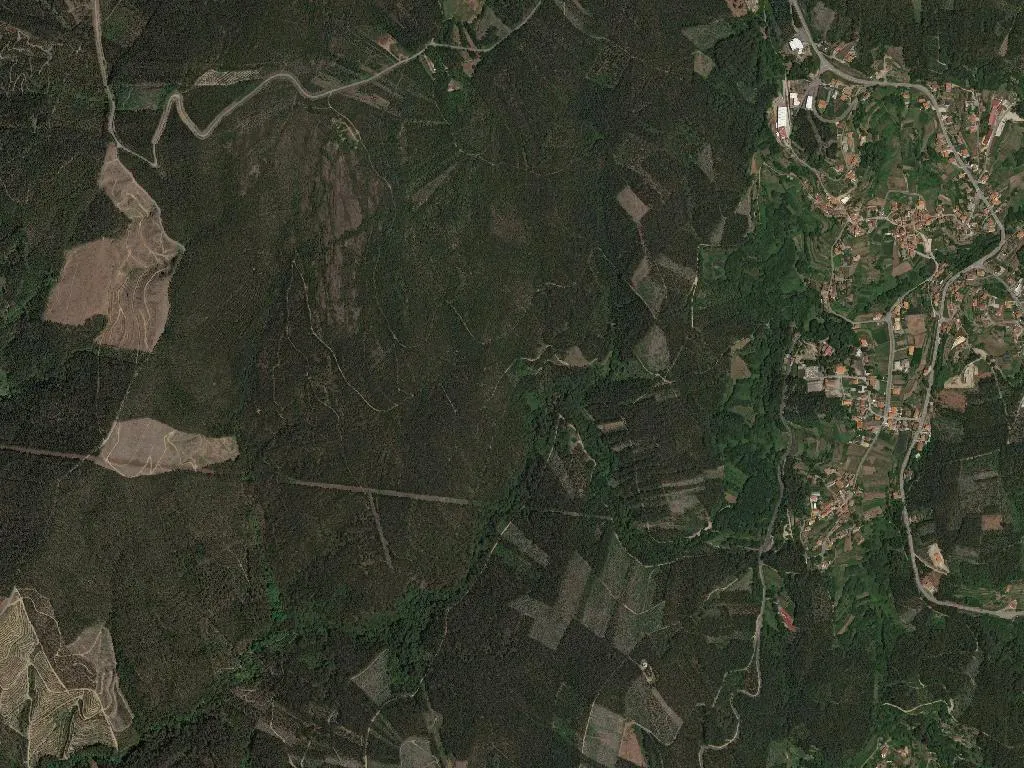
The scent of burnt cork drifts uphill before the valley reveals itself. Dornelas clings to the northwest slope of the Serra do Caramulo at 490 m, where grey granite ribs push through meadows the colour of billiard cloth and the River Jardim slides between gorse thickets. Nine hundred and sixty-six people share 904 hectares; silence is broken only by the parish-church bell or the thin whistle of a red kite planing over heather.
The biscuit parish
The name comes from the Latin dornus, cork oak, and the trees still stand like tipsy sentinels. Yet locals brag about something sweeter: sequilhos de anis, brittle anise biscuits rolled from centenarian recipes kept in oil-slick notebooks. Once carried to neighbouring fairs in head-load baskets, they are now baked mostly for the feast of St James on 25 July, when a procession leaves the 1893 church and the party spills across the forecourt. Inside, a gilt-carved Baroque altarpiece glitters against the exterior’s weather-beaten sobriety: lime-washed walls, a sun-cracked door, rainwater staining the granite like tears.
Stone, water, smugglers
The winding road down to the valley crosses bridges such as the single-stone Ponte do Souto, built for pack-mule traffic between Albergaria-a-Velha and Sever do Vouga. Summer drought barely silences the Pênga stream beneath. Elders still point towards the “secret boulder” where, during the Estado Novo, demijohns of bagaço brandy were hidden among the cistus; today only wild boar leave hoofprints in the mud. Farther down, derelict water-mills moss over, their grindstones stalled since maize and rye stopped becoming the potato-corn bread that once accompanied chanfana goat stew.
Smokehouse flavours
Dornelas cooks what the land yields. Wild-boar casserole darkened with red wine, hunter’s rabbit scented with bay, wine-smoked morcela blood sausage that snaps to the knife. DOP-certified Arouquesa beef and Marinhoa cattle slow-simmer until the kitchen windows fog. On feast days trays of fatias de Dornelas—almond custard slices—appear, chased by Caramulo medronho, a clear fruit firewater that burns the fog from the chest when Atlantic cloud pours over the ridge.
Bathing in the Garden
The Dornelas–Pessegueiro footpath, six km of the Grande Rota do Vouga, drops to the Poço do Bolo, a river basin where the water glows bottle-green over polished schist. Locals swim beneath alders that freckle the surface with trembling coins of light. The trail continues through heath and french broom, nesting ground for blackbirds and the Iberian red-headed bullfinch much sought by visiting ornithologists. Each October the “Broa Route” detours through village taverns serving potato-corn bread straight from wood ovens, its crust shattering to a dense crumb that demands cold butter.
By dusk, low sun ignites the cork crowns and the air cools fast. Footsteps echo on uneven cobbles, a hinge creaks shut. Dornelas offers no spectacle—only the slow accretion of things that endure: a plume of smoke rising vertical before it unravels, the weight of an empty wicker basket, fingerprint ridges pressed into biscuit dough.