Full article about Silva Escura
Morning rays crack the Manueline cross, wine-dark kid stews in clay, and the Ribeiro de Silva chatte
Hide article Read full article
The oak-light fracture
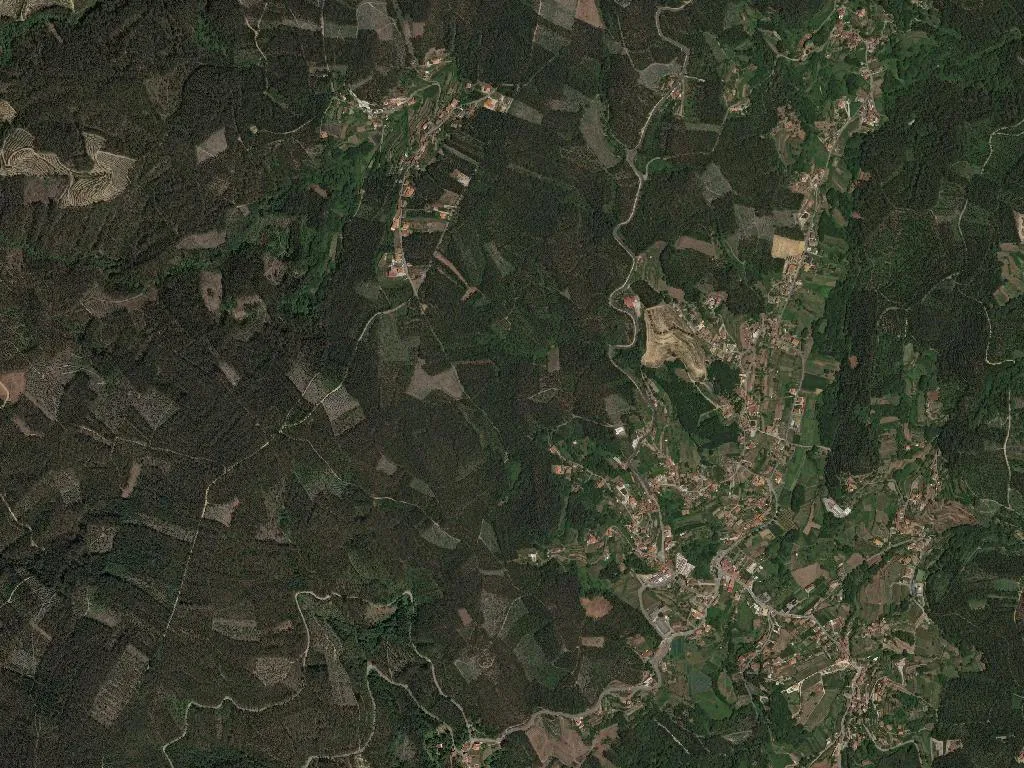
Morning in Silva Escura begins when the alvarinho oak tips its first oblique ray onto the granite cross, prising hairline cracks open as if the stone itself were waking. Below, the Ribeiro de Silva keeps up a neighbourly chatter over the stones, the only audible sound at 425 m above sea-level. Air smells of wet loam and moss, threaded with wood-smoke from a hearth that has clearly ignored the calendar. Green folds over the slope in winter layers: pine, oak, cork, broom—the same mix that christened the village and still clings to Monte da Silva like tenants who refuse to pay rent.
Granite that once swallowed a cross
The parish church stands neither large nor small, seventeenth-century shoulders shrugging at every century since. Inside, a gilded baroque altarpiece flares against blue-and-white azulejos that wouldn’t look out of place on a Victorian dinner service. The real gossip, though, clings to the Manueline cross out front. During the Liberal Wars someone—great-great-uncle of someone, inevitably—bricked it into the church wall for safekeeping. There it stayed, a granite hostage, until workmen unearthed it in 1932. Mortar scars still ladder its sides like badly healed stitches.
Where lunch arrives in a clay pot
Café O Ponto Final deals only in absolutes. The chanfana—kid braised in red wine, bay and whatever else the cook refuses to divulge—comes to the table in a blackened clay pot older than most customers. The scent colonises the room; resistance is useless. Order a pastel de Silva while you wait: puff-pastry ruffles leaking egg-yolk custard, sugar snowing over your fingers faster than onto the plate. In winter, lampreia may appear, the eel-like creature freighted with river-mud flavour from its journey down the Vouga.
Eight kilometres that feel like twelve
The Gândara trail starts beside the church and climbs between schist walls shoulder-narrow, granite espigueiros standing sentinel overhead—tiny stone granaries where maize once waited out the damp. At the miradouro the valley unrolls: abandoned terraces arm-wrestling bramble, Maronesa cattle that know exactly how photogenic they are, a pine ocean sliding to the horizon. A common buzzard circles on thermals like a slow punctuation mark.
June fires, October chestnuts
On the eve of St John, 24 June, bonfires spike the darkness and the procession lurches downhill, bearers staggering like black-cab drivers on a speed bump. Sardines blister over makeshift grills, music leaks past 3 a.m. The serious eating, though, happens the third Sunday of October: chestnuts crackling in iron pans, jeropiga (new wine fortified with aguardente) poured short, cakes assembled by grandmothers who could bake blindfolded. Smoke ribbons upward, perfuming the air with the foretaste of winter.
The bridge that carried contraband
A single granite arch crosses the stream where, for decades, crates of illicit aguardente began the night-time dash from Gândara to Porto. Pause mid-span and the river’s chill rises through your soles; it is easy to imagine footsteps quickened by the clink of glass and the prospect of a police road-block. The echo of your own stride answers back: time never left, it merely sat down for a breather.
The ribeiro keeps talking even when the water slips out of sight. What lingers is the scent of crushed broom—bittersweet, green-tobacco sharp—the same someone inhaled five centuries ago and decided, yes, this is where the story stops.