Full article about Fonte de Angeão: Baga, Brine & Stone-Carved Silence
Walk limestone lanes where Atlantic salt meets Bairrada reds in a 300-soul Portuguese hamlet
Hide article Read full article
Stone on Stone
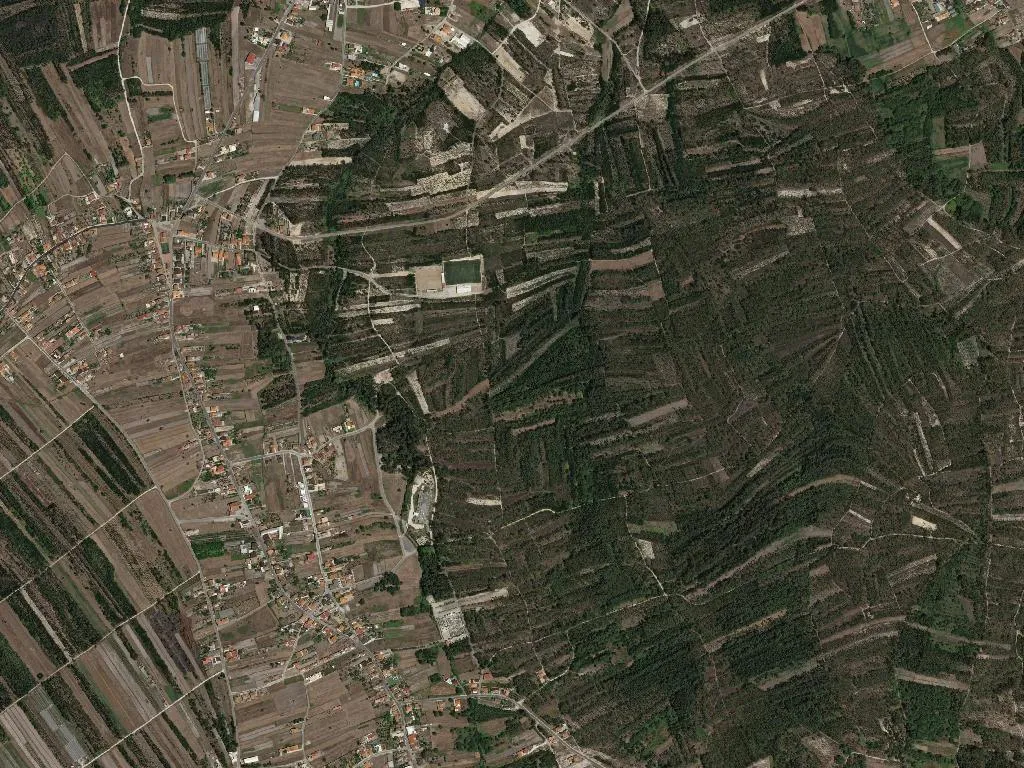
The metallic chink of steel on limestone ricochets through Fonte de Angeão’s lanes. Two men in flat caps are hand-dressing pavers, tapping each slab until it slots flush against its neighbour. Their labour keeps the parish’s 12 km of walkways level—no small feat in a terrain that rolls like a gentle swell between pine woods and Bairrada vineyards only 55 metres above the Atlantic.
Salt in the Air, Shells on the Walls
The coastal branch of the Portuguese Camino slips through the village on its way from Porto to Santiago. Medieval drovers used the same corridor to haul salt-fish inland and bring wine out; today way-markers show a yellow scallop shell painted on whitewashed cottages. With barely 115 residents per square kilometre, walkers can count on long intervals of nothing but cicadas and, when the wind swings west, the faint iodine tang of waves breaking eight kilometres away.
Baga in the Blood
Fonte de Angeão sits inside the Bairrada DOP, where cool Atlantic nights and brick-red clay coax Baga—the region’s obstinate native red—into bottles that can outlive their makers. Holdings are pocket-handkerchief: a row here beside the primary school (shuttered since 2017), another behind a cousin’s barn. September’s grape scent drifts into early fires; if you want to taste, you knock on the side door, wait for the echo of footsteps across an earth floor, then follow your host into a cellar that smells of damp schist and candle smoke. No tasting notes, just a jelly glass drawn straight from the barrel.
Arithmetic in the Afternoon Shade
National statistics tell the story faster than any census sheet: 300 residents over 65, only 122 under 15. Retirement-aged men monopolise the only café’s outdoor tables for a three-hour sueca card tournament; the nearest school bus stop is a 15-minute drive. Young parents commute south to Aveiro’s tech park or north to Vagos’ industrial zone, streaming back after dusk when kitchen lights flick on like constellations across the darkening vineyards.
What Endures
Twilight condenses the village to its raw components: dogs warning off shadows, iron gates creaking shut, the mineral lift of clay cooling after a hot day. No Unesco plaques, no gift shops—just the slow reiteration of gestures that have shaped this square of earth since the first vines were planted. Walk the lanes at this hour and you understand: Fonte de Angeão is not a place to tick off but a rhythm you learn by footfall.