Full article about Santo António: mist, loquats & lupin-scented gossip
Santo António in Vagos, Aveiro: coastal-plain village of misty vegetable plots, loquat gardens, espresso cafés and Bairrada wine country walks.
Hide article Read full article
A Low-Lying Morning
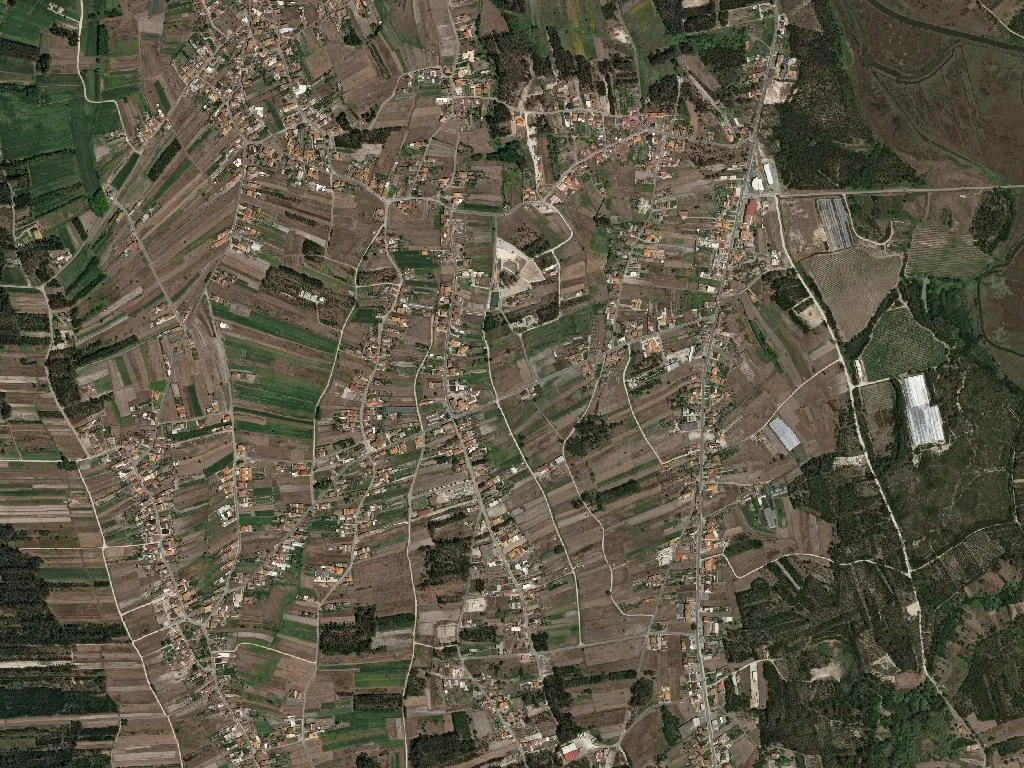
The morning mist lifts like steam from a kettle, unravelling the tidy geometry of vegetable plots stitched around Santo António. At fourteen metres above sea level, the air smells of wet topsoil and the first wood-smoke of the day. Somewhere behind a hawthorn hedge a 1987 John Deere coughs into life; a dog called Kiko answers from a barn; Mr Aníbal pulls the bell-rope in the parish church, varying the rhythm so villagers know whether to dress for Mass, a wedding or a funeral. Between the Aveiro lagoon and the Bairrada vineyards, the parish occupies a strip of coastal plain that is beginning to thicken into farmland rather than sand.
Passage and Permanence
The Portuguese Coastal Way of St James slips through Santo António without signage or ceremony. Pilgrims expecting grand shrines find instead whitewashed houses whose render flakes in crescent moons above the windows, loquat trees in every back garden, and footpaths of compacted earth that stitch one hamlet to the next. The monuments are gestures: Dona Rosa watering her lettuces with well-water at dusk; Jaime resting on the stone bench outside the closed primary school, rolling the day’s newspaper tighter and tighter in his fist.
The parish church stands exactly at centre, white, sober, its three-tiered belfry visible from the EN235. Life radiates from it in concentric circles: the Central café where Zé Manel serves espresso with a dish of salted lupins and everyone debates the forecast for the apple harvest; the monthly market whose real purpose is to bump into the brother who emigrated to Ovar; alleyways narrow enough for neighbours to call each other by first name and to know who is ill, whose grand-daughter is visiting from France. Spread across a thousand hectares, 3,170 people still command a slice of ground large enough for potatoes to last the year and kale for winter soup.
The Taste of Bairrada
Being inside the Bairrada DOP wine region is not a picturesque footnote; it dictates the palate. Clay soils roll with vines whose fruit will later ferment in cooperative cellars in Mealhada or Anadia. At the unmarked tasca run by Tia Manuela, roast suckling pig appears only on feast days when the diaspora returns. Daily cooking trusts the garden: bean-and-rib rice simmered for two hours, turnip-top soup streaked with smoked bacon, salt-cod punched into chunks with new potatoes and slid into the wood oven for Sunday lunch. The kitchen does not aim to impress; it aims to finish the animal, tail to snout.
Of the 429 children counted in the last census, most attend the EB23 school eight kilometres away in Vagos, returning at dusk to cycle along irrigation channels and taste blackberries ripening in the ditches. The 715 residents over sixty-five remember when the stone-cutter gave way to the diamond-blade saw and when Moinho do Sujo still ground neighbouring wheat. The ageing curve is not unique to Santo António, yet here it feels deliberate: a community that refuses to hollow out, even after the dairy cooperative closed and the village school became a day centre.
Flat Horizons
There is no scenic drama. The land surrenders to the eye in one slow exhale, interrupted only by the crowns of eucalyptus planted after the 2005 fires and rooflines crowned with satellite dishes all aimed at the same Atlantic satellite. At the end of the afternoon, when low light gilds the stubble and the vines begin their seasonal shift from green to garnet, the plain acquires a quiet beauty built on muted colour and elongated shadows that reach like fingers across the furrows. There are no belvederes, no cliffs, no serras; instead, a serenity that demands time—time to walk to the crossroads bar for a glass of house red, time to listen to wind hissing through the maritime pines that break the salt wind, time to feel the weight of your own body on the cement bench in the churchyard after a day’s work.
A single plume of wood-smoke rises straight up in the still August air, drawing a line between earth and sky. Santo António fits into that vertical: simple lines, repeated gestures, a geography without excess where the essential reveals itself only after the first cricket begins and the last light drains from the fields.