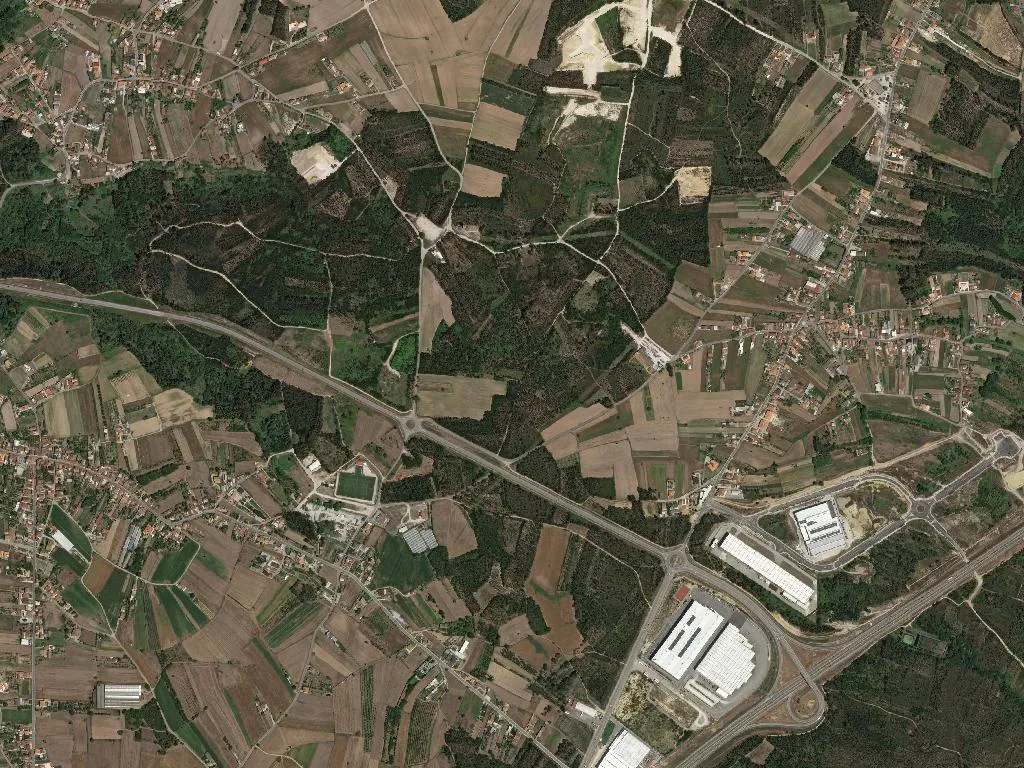
Full article about Sosa, Vagos: where broa steams and Latin lingers
Corn smoke, goat chanfana & 1527 stone: November rituals in a Vagos hamlet
Hide article Read full article
The bell strikes eleven, yet in Sosa no one consults a watch. The bronze note rattles the single-storey houses and sweeps the churchyard like a polite ultimatum: the bakery window is about to close. Outside, smoke rises arrow-straight from Sr António’s wood-fired oven – corn broa whose damp crumb teases the nose. It is November; the wind arrives from the Vouga laced with Atlantic salt, and the loaves burn the fingers of anyone too impatient to wait.
Stone, water and Latin
The parish church is smaller than postcards suggest. Inside, the smell of molten candlewax clings to gilded baroque and to the oak benches where successive generations have sat with the same curved spine. On the eleventh of the month, after mass, the village choir – three Tuesday evenings of rehearsal in the parish-council hall – launches into the Cântico da Despedida in Latin. It is not a performance: entries wobble, a treble hasn’t broken yet, one soprano holds her score upside-down. Still, when the final chord vanishes into the vault, sleeves are discreetly lifted to eyes.
The Manueline stone cross beside the south porch carries the date 1527, but no local can name the donor. The once-Arabic inscription at its foot is now a grey smear that children try to trace with a muddy finger. Opposite stands the Casa do Terreiro, its granite steps polished slippery by mourners waiting for funerals and by families lining up behind the Easter procession. Every child in Sosa has skidded down them on their backsides until a parent threatens the ruin of Sunday trousers.
What is actually eaten
Chanfana happens only once a year, the Sunday before St Martin’s Day. Clay pots that spend eleven months in grandmother’s loft are hauled out; bottles of Bairrada red are uncorked across kitchen tables. Goat shoulder has been salted for three days; after three hours on the hob it collapses at the sight of a fork. There is no written recipe – one household adds a shaving of orange peel, another a whisper of cinnamon, all adjust the wine by instinct. It is served in the same clay bowls, with corn broa that Sr Carlos fetches while still too hot to touch; “once it cools, the spell is broken,” he insists.
In winter, when the Vouga bursts its banks and ponds form behind the old mill, glass eels appear. The resulting caldeirada turns the colour of river silt and is thickened with tomatoes left to over-ripen in a neighbour’s yard. You eat it with your hands, lick your fingers, then swallow a measure of bagaço to “send it down”.
When the tide comes inland
Sosa’s “tide” is not coastal but the salt pulse that forces the Vouga backwards and floods the low meadows. For forty-eight hours the dirt track to Barra beach becomes a reflective sheet; mallards settle on the rice stubble as if they owned the deeds. The smell of wet earth mixes with the iodine snap of marsh samphire. When the water retreats it leaves a skin of glittering mud where children stomp until a welter boot is surrendered to the silt.
Beyond the flood-line the pine forest starts. A sand road muffles sound so completely you hear your own pulse. Dry cones crack underfoot like tiny fireworks. Here, every August, the Aveiro Astronomical Society parks its telescopes. They bring cheese sandwiches, crates of chilled water, and spend the night pointing at Perseid trails. Village children queue for Saturn – a toy-ringed speck that makes them swear under their breath.
What you do when you are not leaving
During the first fortnight of January the charolas – a band of local teenagers armed with an out-of-tune guitar and a varnish-less cavaquinho – tour door-to-door. They begin with the same traditional couplet, finish by asking for “a slice of chouriço and a drop of wine”, and are never refused. On Shrove Sunday they burn the careto – a straw effigy stuffed with last year’s complaints – on a pyre of pallets hoarded by Sr João. Children scream, adults warm their hands, one dog barks at every spark that climbs skyward.
When the bell strikes again, nobody counts. It is merely the interval in which broa cools, eels slip back to the river, January songs dissolve into night air. Sosa stays put, between the Vouga and the pines, breathing slowly – waiting for the next high tide to give everyone another reason not to reach the end of the lane.