Full article about Cepelos: Where Smoke, Kid & Church Bells Fill the Hills
Cepelos, Vale de Cambra: granite terraces, pine-smoked pork, IGP Gralheira kid, Arouquesa beef & candle-lit romarias.
Hide article Read full article
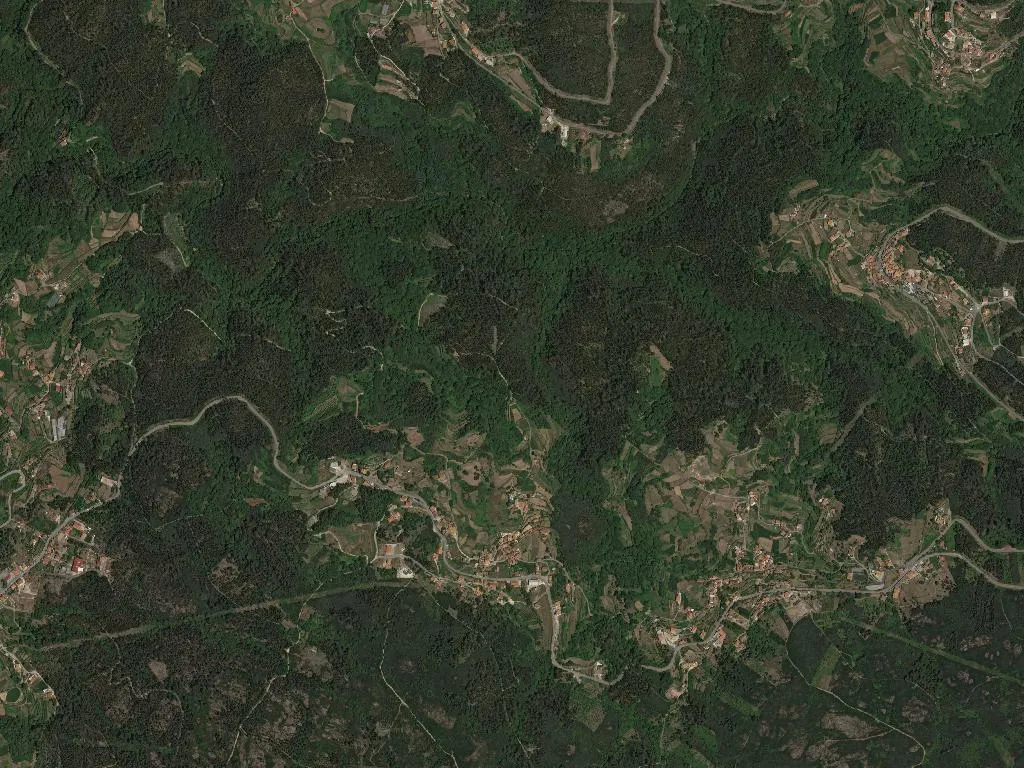
Smoke rises straight from the schist smoking-shed, slow and thick with the scent of pine logs and salt-cured pork that has been hanging for weeks. At 538 m above sea-level the Gralheira wind slices through morning mist; by noon the sun slams into the south-facing slopes where green meadows fatten Arouquesa cows and goats that browse among oaks and maritime pines. Cepelos inhales and exhales with the seasons, obeying an agricultural calendar that has ruled this parish in Vale de Cambra since the thirteenth century.
High ground, deep roots
The name comes from the Latin Cepelum – a hillock – and the topography obliges. Lanes rollercoaster across narrow valleys and open ridges above the river Caima. Medieval smallholders hacked rye and maize into terraces, raised livestock for market and for the pot, and built a granite parish church, water-mills and stone granaries that still refuse to yield to Atlantic weather. Today 1 157 souls occupy just under 1 900 ha – a human density so low that the loudest sounds are the church bell or a distant tractor in bottom gear.
Fires, feasts and field Masses
Three dates anchor the year: Santo António in June, São Pedro at the end of the same month, and in September the Romaria de Nossa Senhora da Saúde. The latter combines a candle-lit procession, a craft fair and makeshift taverns where kid goat is grilled over vine-prunings, washed down with ice-cold vinho verde and potatoes buried in the embers until their skins blacken. Women carry trays of sponge cake and conventual egg-yolk sweets, recipes traced in family Bibles. At night concertinas and bass drums take over; feet stamp the packed earth until the sky pales. These are not postcard folkloric stunts – they are diary fixtures that draw home the 20-somethings who work in Porto and the 90-year-olds who remember the first electric light.
Gralheira kid and Arouquesa beef
Cooks here do not invent; they interpret what altitude pasture provides. Gralheira kid (IGP) grazes on gorse and heather, its flesh lean, fragrant, slow-roasted with rosemary and unpeeled garlic. Arouquesa beef (DOP) from free-ranging cows goes into bolo de carne – a dense, claret-dark pudding of shredded meat, blood and spices, steamed for hours in a cast-iron pot. Dark-amber Highland Minho honey (also DOP) is scraped across hot rye bread or stirred into aged aguardente. There are no printed menus; there is simply what the month yields and what grandmothers remember.
Paths between granaries and streams
The old pedestrian web that links Cepelos to Macieira de Cambra and Roge threads through a landscape that still works. Timber granaries on stone staddles store last season’s maize; abandoned water-mills display moss-softened paddles. Tributaries of the Caima run cold even in August, banks upholstered with royal ferns and willow. Botanists note an Atlantic-Mediterranean mosaic – sessile oak, stone pine, yellow broom that ignites in May. The parish museum – one room run by the local sports club – exhibits ox-yokes, olive-oil lamps and sepia photographs of 1950s romarias: a pocket archive of a life changing gear in slow motion.
Gold pines and grapes on the shield
The parish coat-of-arms shows two gold pines and a bunch of grapes, shorthand for the forests that still cloak the slopes and the tiny east-facing vineyards that refuse to die. Timber and light engineering now pay more wages than agriculture, but every family keeps a plot of vines and a few Arouquesa cows for status and table. Nine stone-and-cedar guesthouses have appeared in the last decade, built by returnees who discovered that silence, altitude and 200 km of way-marked trails are marketable assets.
When the sun tilts and the smoke rises again, resin perfumes the air, a chill slides off the Gralheira crest and the evening bell tolls the Ave-Maria. No signpost is needed: you know you are on a granite ridge 500 m above the Atlantic, a long way from the coast and very close to the root of things.