Full article about Macieira de Cambra
Wake to wood-smoke drifting above granite stepping-stones in Macieira de Cambra, Vale de Cambra.
Hide article Read full article
The Bell’s Echo
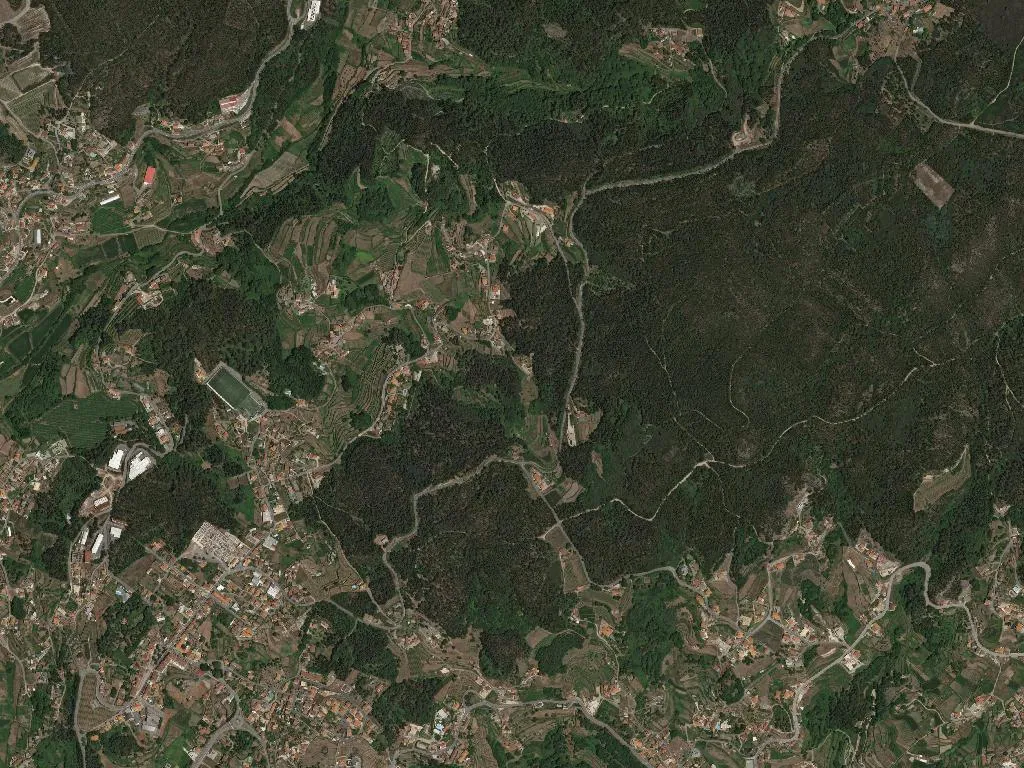
The bell of Igreja Matriz strikes seven and the note ricochets down eucalyptus terraces to the Caima River, where children hop across its granite stepping-stones. At 422 m above sea level, Macieira de Cambra wakes to wood-smoke curling from stone chimneys and dogs announcing a pick-up truck that is already rattling uphill with yesterday’s milk churns. The air is cool, almost alpine; the Serra da Gralheira looms to the east, holding the morning mist in reserve.
Stone That Outlasts
Two public-listed buildings survive here, neither fenced off nor gift-shopped. The sixteenth-century Capela de São Sebastião stands shoulder-to-shoulder with Padaria Central; by 08:00 Mass is out and the queue for warm pão de milho is already through the door. Inside, candle-wax pools on schist slabs and 82-year-old Albertina replaces the altar flowers with whatever is blooming in her garden—white hydrangeas in June, bronze heather in November.
Festivals still punctuate the agricultural year like reliable weather. On the eve of 13 June emigrants from Paris and Neuchâtel park rented Clios two-deep around the churchyard for Santo António; São Pedro on 29 June turns the square into an impromptu rally stage; September’s Romaria de Nossa Senhora da Saúde sends children chasing brass bands through the narrow lanes. Long tables appear beneath walnut trees, groaning with chanfana (goat stew) and vinho tinto from last year’s harvest; the accordion strikes up a vira and septuagenarians who once danced until dawn shuffle into step, walking sticks hooked over forearms.
What the Land Gives
The menu is dictated by altitude and slope. Kids graze Arouquesa beef cattle in the valley’s maize fields; Joaquim’s hives sit in a damp meadow behind his house, producing honey so dark it tastes of chestnut. At O Cacito, Zé has been sliding kid goat into a wood-fired oven since 1983; the meat arrives blistered and fragrant, the skin lacquered with garlic and coarse salt. Bread is bought at seven sharp from Padaria Dores, the crust flaking like mica and the crumb still sighing steam.
Seventeen family houses now rent out spare rooms to hikers on the Paiva Walkways who balk at the €150 rack rate upriver in Arouca. At Casa da Elvira, breakfast is jam made from her own raspberries and milk you watched the cow produce at dawn. Guests are invited to collect eggs, warned only that the rooster bites first and asks questions later.
The Arithmetic of Age
Officially, 470 residents are under thirty; 1,198 are over sixty-five. Abandoned cottages with rusted padlocks slowly disappear under bramble, and the café “O Forno” fills each mid-morning with the hush of daytime television. Yet resistance is visible: vines still pruned by hand for backyard wine, hams smoked over three winters in tiny stone sheds, 89-year-old Amélia in yellow wellies filling a wicker basket with chestnuts while the rain slicks the mountain path.
Dusk falls quickly. Oblique light ignites granite façades and stretches shadows across the packed-earth lanes. Wood-smoke rises in white, vertical lines against a sky that has not yet decided on stars. Between the last shuffle of livestock and the first cough of a distant moped, silence arrives—complete, and utterly uncompensated.