Full article about Roge
Granite cottages, river-sawn tiles and yew-ringed chapel: rural Aveiro’s hidden ridge-world.
Hide article Read full article
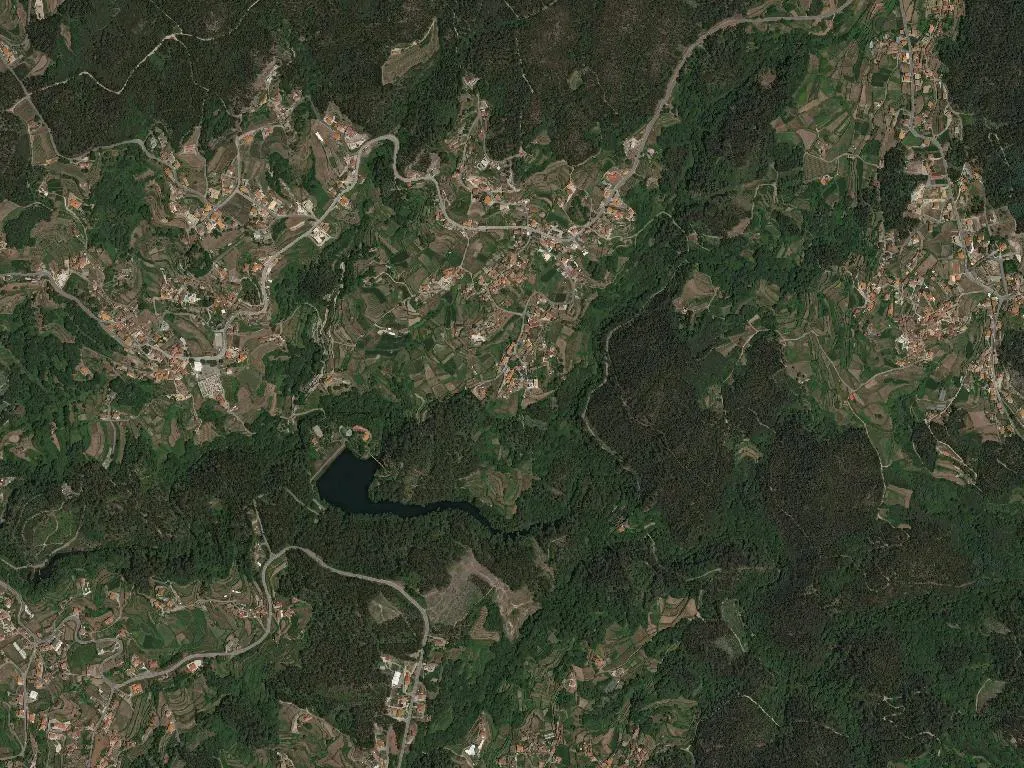
The clang of goat-bells arrives first, ricocheting off schist walls as a small herd picks its way down the slope. Only then do you notice the Caima river, a steady hush that splits the valley floor 400 m below. Roge, a scatter of hamlets strung across the southern flank of Portugal’s Freita ridge, has no village square or solitary café; instead, dirt tracks link granite cottages, dark-stone espigueiro granaries on stilts, and the occasional white-washed chapel that appears through the morning mist like a navigational buoy.
Water that once shifted salt and stone
The Caima still carries enough force to turn millstones. Halfway down the hillside Roge preserves the valley’s only two-storey water-mill: corn and rye are ground below, while a wooden frame-saw above slices roof-tiles from local chestnut. Narrow stone levadas, no wider than a dinner table, snake uphill to irrigate vegetable plots and water-meadows. On the banks the rare Portuguese oak keeps company with alder and ash; glide your canoe silently round a bend and you may surprise an otter before it slips into the next pool. Until the 1940s flat-bottomed boats worked this stretch, ferrying sacks of Aveiro sea-salt to the interior; a 1768 customs roll lists Roge as the compulsory stop for the armed convoy that accompanied the “white cargo”.
Faith that climbs the ridge and descends in procession
The chapel of Nossa Senhora da Saúde sits in a bare earthen yard ringed by ancient yews. Its May-day pilgrimage began as an act of gratitude: during the 1854-55 cholera pandemic Roge recorded not a single death. Ever since, worshippers climb from three municipalities to light candles and queue for honey-dripped brittle sold from card tables beside the porch. On 29 June the focus shifts to St Peter: baroque gilding glints by candlelight inside the mother church before the procession sets off on a three-hour circuit of the hamlets, ending with an outdoor mass and concertina-fuelled dance on a threshing floor. Thirteen days earlier the parish of Paço de Mato lights bonfires for St Anthony and boils leftover fat into laundry soap in steaming copper pans, a scent that drifts across kitchen gardens like a medieval memory.
Meat that roasts slowly, bread that cools on stone
Roge’s kitchens revolve around IGP-certified kid from the neighbouring Gralheira hills, split and grilled over oak until the skin blisters and the fat hisses onto the embers. At Quinta do Outeiro and O Caima restaurants the same coals perfume chanfana – goat stewed in red wine and clay – and Arouquesa DOP beef, its marbling sweetened by mountain grass. On Fridays the communal wood-oven fires up; locals slide rye-and-corn loaves onto the granite hearth to cool, and visitors willing to knead can earn their own crusty souvenir. Mid-summer fairs add bola de São Pedro, an egg-yolk cake that collapses on the tongue, chased by a thimble of home-distilled medronho or lemon-scented “prince’s herb” liqueur.
Trails that breathe forest and stone
The PR3 Vale do Caima footpath links Roge to Paço de Mato in six kilometres and two unhurried hours. It drops to the river, crosses moss-coated weirs and skirts waterfalls that veil dark granite in silver threads. In July the parish council lays on gentle canoe tasters; in December the only sound is your boot on wet leaves inside the Natura 2000 forest. Before heading back, duck into the tiny espigueiro-museum: its floorboards groan under your weight and the air is thick with the perfume of maize drying on chestnut laths.
When the low sun finally strikes the schist walls the chapel bell strikes six. The note rolls down-valley, rebounds off Caima’s cliffs, and returns a half-tone lower – an echo that lingers long after the road back to Vale de Cambra begins to climb.