Full article about São Pedro de Castelões: granite lungs of Vale de Cambra
Morning mist, woodsmoke and 1746-carved stone breathe life into Aveiro’s hillside parish
Hide article Read full article
São Pedro de Castelões: where the hillside exhales smoke and resin
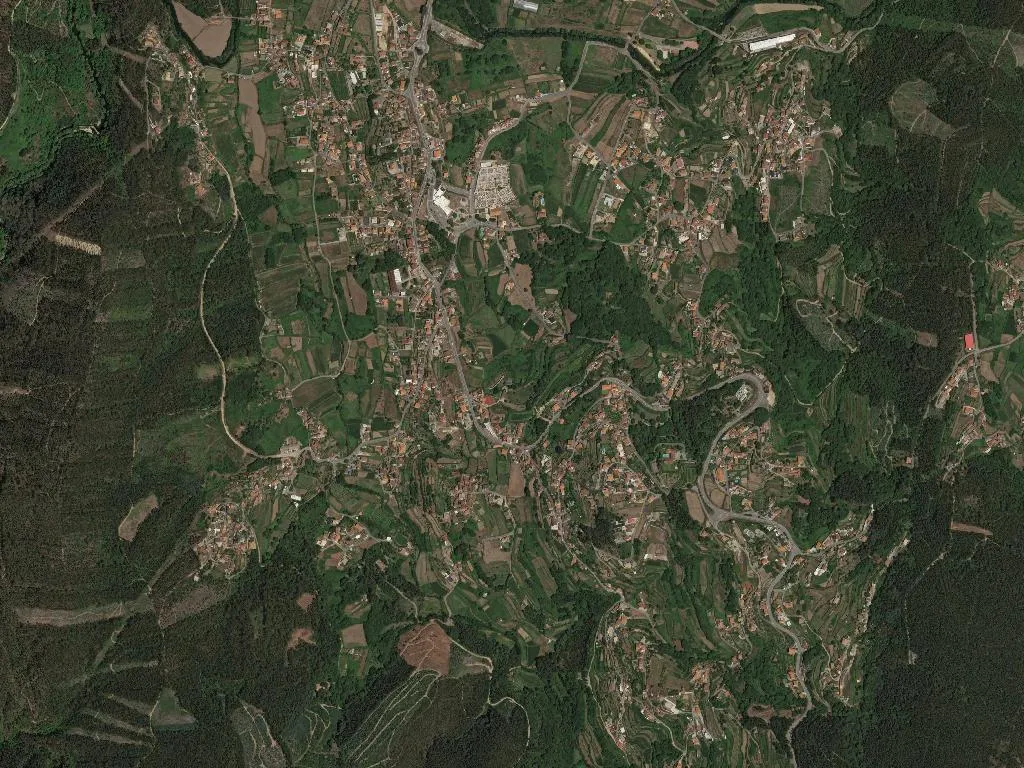
The bell of São Pedro rings eight times and the note lingers, sliding between terracotta roofs still wet with Atlantic mist. Woodsmoke rises from a dozen chimneys, braiding itself into the morning air until the whole slope smells like a struck match. At just under 260 m the altitude is modest, yet gravity feels negotiable here: the air is thicker, cooler, as though the granite itself were breathing. This is the most populous parish in Vale de Cambra, northern Aveiro, and the pavements are already busy—delivery vans, mothers in puffer jackets, a farmer manoeuvring a trailer of fodder beet. Contemplation is a weekend hobby; the rest of the week is work, children, the small mechanics of keeping a settlement alive.
A granite palimpsest
More than 6,800 people share 21 km², a density that startles anyone who still equates inland Aveiro with abandonment. Children—813 under the age of fifteen—outnumber the parish’s listed monuments, while 1,847 residents have passed their sixty-fifth birthday. Between those two figures stretches the quiet tension of a place ageing without hollowing.
Stone is the archive. Everything—house walls, field boundaries, calvary crosses—has been sliced from the same seam of pale grey granite. So when the parish council points to one building and calls it a Monument of Public Interest, the distinction is measured in millimetres: a more ornate lintel, a date—1746—carved just deep enough to survive centuries of drizzle. Lichen works like yellowed varnish, softening edges, eroding the difference between what is heritage and what is simply old.
Three festivals, three temperatures
The civic calendar pivots on three days everyone can recite without thinking. Late June belongs to Santo António: sardines blistering over makeshift grills, pots of basil passed between neighbours, the night air sticky with citronella. A week later São Pedro keeps the trestle tables out; because the saint gave the parish its name, the evening feels less like organised fun than a family birthday. Finally, in September, the Romaria de Nossa Senhora da Saúde turns the tone inward. Candles are lit for hips and hearts, for lungs that still remember mill dust; promises made in hospital corridors are repaid in slow procession. The thermometer may read the same, but each celebration carries its own emotional weather.
Mountain ingredients on every plate
The Serra da Gralheira rises immediately east, and the menu follows the slope. Cabrito da Gralheira IGP—kid reared on heather and wild thyme—arrives with flesh the colour of parchment ink, firm and insistently savoury. Carne Arouquesa DOP, from the local long-horned cattle, is shot through with fat that melts into maroon veins; the animals have spent their lives climbing for water, and the exercise prints itself on the palate. Finish with Mel das Terras Altas do Minho DOP, a high-altitude honey dark enough to suggest treacle, its finish scented with gorse and chestnut blossom. All three carry EU seals, but here the paperwork feels beside the point: geography itself is the seasoning.
Where to stay (and why it isn’t a hotel)
Tourism is still a neighbourly transaction. Nine detached houses are licensed for short lets—no receptions, no minibars, no chains. You wake to the same soundtrack as the residents: a diesel hatchback ticking itself warm, someone sweeping last night’s ash from a step, the wind that slips down the valley and rattles aluminium shutters. Check-in is a key safe and a handwritten note recommending the bakery that opens at seven. Crowds simply don’t occur; even during the festas the parish absorbs its guests without queues or the low-level anxiety of places that depend on being liked.
Smoke that lingers
Dusk is a slow event. The granite façades, chilly all day, briefly turn the colour of burnt toffee while the sun slips behind the ridge. One by one the chimneys re-ignite—oak and eucalyptus now, sweeter than the morning’s kindling—and the air thickens to something you could almost bite. Footsteps on cobbles grow farther apart; a dog barks once, then thinks better of it. Between the last natural light and the first sodium lamp, the entire parish seems to pause mid-breath. Not silence—self-recognition. The smoke keeps rising, carrying the smell of someone else’s hearth into your clothes, your hair, the part of memory that never quite agrees to leave.