Full article about São João de Negrilhos: Dawn-scented fields & lockless chapel
Alentejo hamlet where wild-boar prints cross chapel earth and sunrise smells of wet soil
Hide article Read full article
The scent just after sunrise
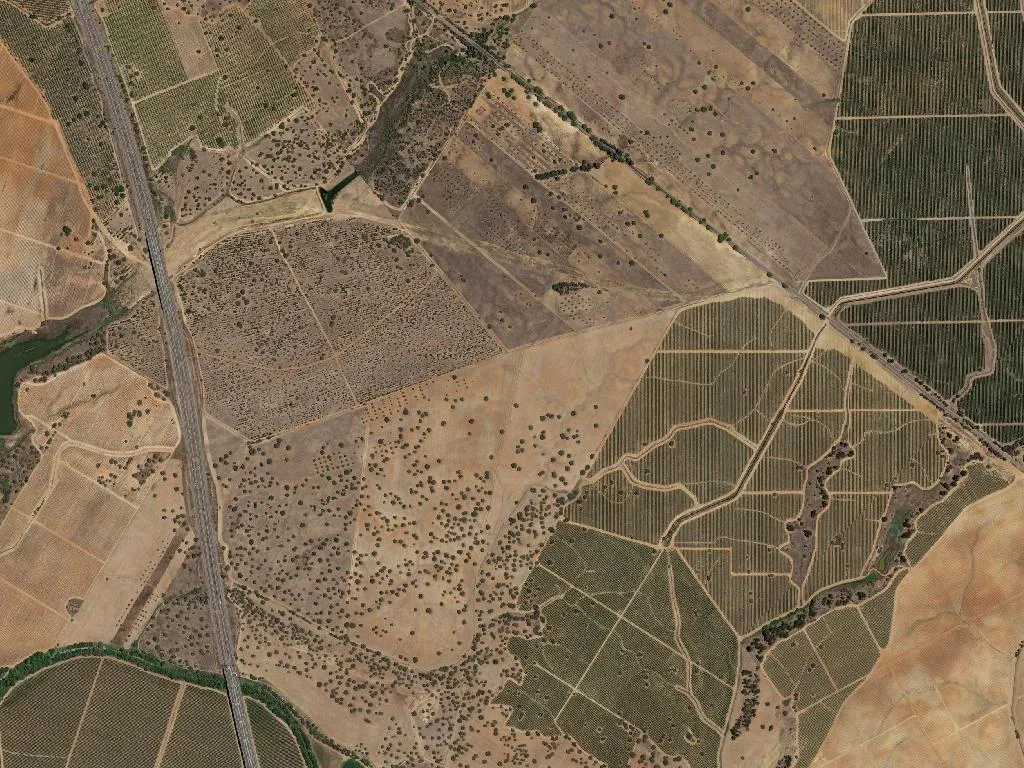
The sun hasn’t yet begun to scorch when the smell of wet topsoil lifts from the furrows. There are no cork oaks to speak of—only knee-high hawthorns and olive trees warped by decades of Atlantic wind, their trunks corkscrewing above terraced tomato plots that the tractor lurches down like a drunk. At six o’clock Mr Joaquim’s gate squeals open; he is already out to irrigate the maize before the levante wind steals the water. The plain sits 91 m above sea level, yet feels lower: the horizon is a carpenter’s level drawn from one white farmhouse to the next.
The parish first appears on paper in 1532 as “Aldeia de Negrilhos”. No one can isolate the etymology; grandfathers shrug and point to the ankle-deep pond behind the town hall where black-leafed pondweed once grew—negrilhos in old vernacular. Only after Dom Francisco de Lemos ordered the church built in 1808 did the priest start tacking on São João. The façade still carries the 1969 earthquake’s hairline fracture; inside, the air is a mix of beeswax and camphor-chest linen, and the timber roof gives a pistol-crack whenever a knee meets the nave’s stone step.
A chapel without a key
On the Monte S. João estate, the chapel of Santa Margadida has been lockless since 1952. A shoulder-shove opens the door: six deal benches, a tin chalice, a flaking folk-art Saint Margaret. Wild-boar prints tattoo the beaten-earth floor; every June the surrounding orange trees drop their fruit unchecked. Four centuries feel negotiable here—time measured only by the resinous whiff of rockrose drifting through the doorway.
What passes for architecture is whatever survived the 20th century: single-storey houses, doors the colour they were last painted (mostly 1970s teal), chimneys broad enough to swallow a cork-oak log. In the outlying hamlets—Montes Velhos, Aldeia Nova, Jungeiros—new brick villas graft onto schist cottages, yet builders still tile roofs in half-barrel terracotta and still whitewash walls with hot lime. The entire parish covers 78 km², but the only statistic that matters is sixteen minutes: the drive from the village centre to the last cattle-grid, gate-closing included.
Water that arrived from below
The cork forest didn’t vanish; it simply retreated uphill. Down on the flats, the 2006 arrival of Alqueva irrigation turned thin, cereal-starved soil into a regimented chessboard of tomatoes. GPS-guided pivots now beep at 3 a.m.; articulated lorries leave chilled for Seville. Cork is still stripped, yet only where patience allows: a well-tended oak yields bark every nine years—long enough for a grandchild to be born and another to start at the University of Évora.
At table, the week writes the menu. Açorda—garlic-coriander bread soup—appears when the loaf is stale; lamb ensopado is strictly feast-day fare. Mr Aníbal slaughters his own, then shreds the shoulder so fine you could read through it. Summer brings chilled tomato soup sharpened with wild river mint; winter, migas of cabbage and smoked belly. The cheese is always Serpa DOP, but bought direct from the cooperative at Vale de Vargo where you can watch the whey drain through cotton cloth like slow rain.
Cousins, pigs and a brass band
The April fair sets up its iron railings next to the Galp petrol station. Aunts reappear after the hiatus since Zé Carlos’s funeral; Chinese pliers and seven-kilo suckling pigs change hands for cash. In June the São João procession sways down the main street behind a philharmonic band that has never met a key it couldn’t flatten. Night-time stalls sell bifanas—pork-cutlet sandwiches—and 200 ml glasses of lager for €1.50; boys from Aljustrel roll up hoping to acquire girlfriends rather than hangovers. Between these fixed stars the calendar is filled with seventh-day masses, dust-lung football on the dirt pitch, and espresso at O Celeiro before the vegetable garden claims the afternoon.
Leave the phone charger at home if you intend to walk. The Monte S. João trail starts at the windmill missing its sails: follow the valley to the stream, then climb through heath where heather grows taller than a child’s head. At dusk, when the sun slips behind the escarpment and the sunflowers glow like toasted bread, the first dog barks and the first chimney releases the scent of oak kindling. In that hinge-moment—between vanishing light and ascending smoke—Negrilhos discloses its single, unassuming truth: it never asked to be discovered, yet it will not object if you choose to stay.