Full article about Gomes Aires
Hear your heartbeat in Gomes Aires, Almodôvar: empty roads, cork-oak silence, eagle skies and a slab of just-made Serpa DOP.
Hide article Read full article
The silence that weighs
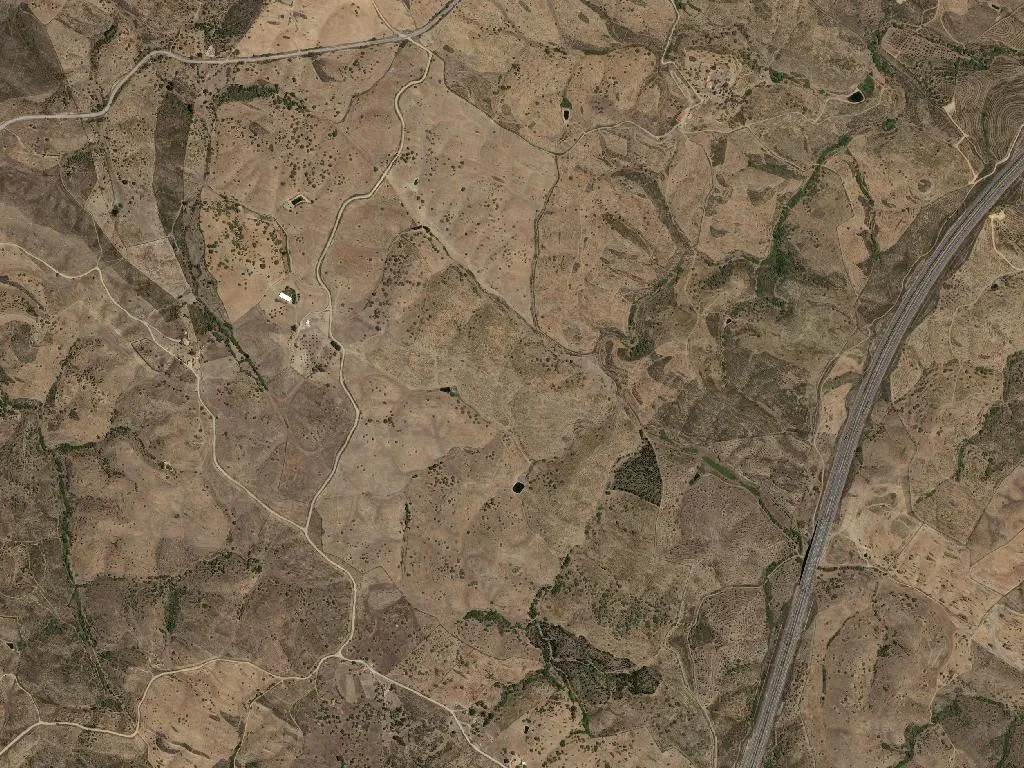
Six thousand hectares of cork and holm oak roll away to every horizon, the grey-green canopy broken only by the copper flash of a booted eagle catching a thermal. In Gomes Aires the quiet is so complete you hear your own pulse. The parish has 392 souls; if every one of them squeezed into Zé’s café on Sunday there would still be empty chairs.
Commons and centuries
The name first appears in a 13th-century charter as “Gomes Arias”, a knight’s reward for service during the Reconquista. More than eighty per cent of the land remains communal montado, which explains why you can drive the single asphalt ribbon for half an hour and meet nothing but cattle grids. There are no listed monuments—only the whitewashed chapel of Nossa Senhora da Conceição, its door permanently ajar, and a cemetery where the same half-dozen surnames have recycled themselves since the 1700s. The primary school closed in 2009; the yellow bus now leaves at seven and returns the children after dark. Inside, the wall map of Europe peels like sunburnt skin, waiting for a government that remembers it exists. One hundred and sixty-five residents are over 65; twenty-eight are still at school. Do the maths.
Tracks among ruins
From the village a dirt lane drifts south-east to the abandoned Contenda estate. Halfway up Vale de Cestos the skeleton of a nineteenth-century windmill stands against the sky, its limestone blocks split like the knuckles of the men who built it. Stay for dusk: short-toed eagles hang motionless above the clearing, wild rabbits ricochet through the grass, and a wild boar has rooted a perfect crescent in the damp earth beside the Almodôvar stream. Bring binoculars and the patience of a field officer—this is not the Eden Project.
Lamb and lactic gold
At Rocim estate the cheesemaker arrives still dusted with whey, a slab of Serpa DOP in his hand—buttery, intense, still warm. Refusing it is impolite; hunger is the only faux pas here. The same rule applies to Baixo Alentejo IGP lamb, slow-braised with chickpeas over vine-prunings while the world’s problems are solved in low voices. Tomato soup with a poached egg, migas studded with foraged asparagus, syrup-soaked encharcadas that sag at the first spoonful—every dish obeys the agricultural calendar rather than the chef’s ego. The table wine is poured into thick glass, its label long since soaked off, its provenance simply “here”. Ask for water and it arrives in a jug, but the doctor in the corner will tell you the wine is better for your blood pressure.
Almodôvar, 15 km away, offers a castle keep and a small museum stuffed with Neolithic chisels. The Guadiana Natural Park lies thirty kilometres south, promising river beaches and black vultures. Yet it is in the demographic vacuum of Gomes Aires that the Alentejo reveals itself unfiltered—the echo of your own footstep on baked earth, the noon heat radiating from stone, the spear of rosemary scent when a low branch snaps beneath your boot. Come, but come on the clock of the land. Afterwards, write and tell me if the silence stayed with you.