Full article about Rosário: Woodsmoke & Sheep’s-Milk Dawn in Alentejo
Stone lanes echo with Serpa cheese, oak-fired ovens and 592 villagers living by church-bell time
Hide article Read full article
Where woodsmoke still marks the hours
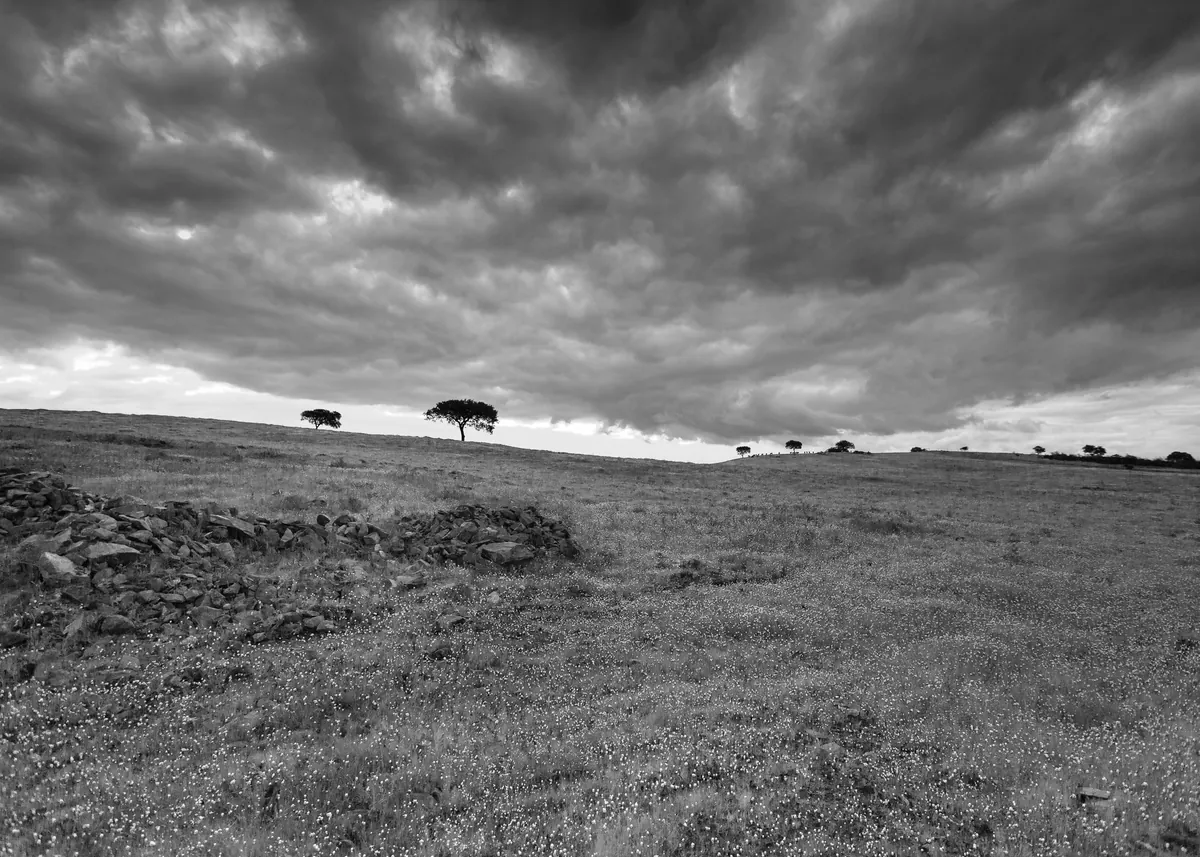
The scent of burning oak lifts from white-washed chimneys while the sun is still high enough to warm the uneven cobbles. Rosário spills down a rounded ridge at 246 m, its 592 souls spread across 6,000 hectares of southern Alentejo scrub. Less than ten people per square kilometre means the silence between houses is measurable: a slammed gate travels, the echo timed to the same heartbeat it would have had in 1950.
Morning begins when the church bell—unremarkable masonry, no guidebook stars—strikes seven. Those who still keep missa find their way without needing the priest to say so; funerals and weddings are plotted from the same step. The building’s limestone has darkened to burnt toast after 150 winters, but it is the parish’s true public square, the only place where news can travel faster than the daily bus to Almodôvar.
What the stone remembers
Walk the single main lane and you pass more geraniums than people. Elderly residents—188 of them over sixty-five—carry seed drills and pig-killing anecdotes the way others carry phones. Ask and they will show you the exact angle for sowing barley by hand, or how to press cardoon thistle into the sheep’s milk for the low, grassy bitterness that lawyers in Lisbon now pay €28 a kilo for.
Flavours that refuse branding
Serpa DOP cheese is not a restaurant menu flourish here; it is what you eat because someone you know makes it. Try the house with green shutters on Rua da Escola: no sign, no website, knock and wait. The lamb you taste tonight grazed the holm-oak montado behind the village—no red IGP tag, just the iron taste of dehesa acorns in the fat. Sunday’s bread emerges from Dona Amélia’s wood oven at 04:30; by 09:00 the crusts are stacked under cotton cloths in the grocery-café, still hot enough to melt the foil around a morning slice of Queijo de Serpa into oily parchment.
Visible routine
Wash day is public theatre: white sheets billow in back gardens like surrender flags to the dry wind. Men return from the fields at dusk with mattocks across their shoulders, discussing a cloud that looked promising but never delivered. The village bar fills after mass, espresso cups clinking on marble worn as soft as soapstone. Logistics are simple—only thirty points on the national remoteness index—yet the road in runs ruler-straight through wheat stubble and cork, making the approach feel deliberate, like an entrance cue.
Light drains quickly. Ochre walls turn rust, shadows stretch across the single taxi rank. Rosário offers no spectacle, no gift-shop narrative. It gives instead the metronome of a place small enough for everyone to know whose cough echoed at 02:00, and the concentrated taste of products that never needed a marketing board. When night settles and the temperature drops, chimney smoke rises vertical, persistent, drawing a quiet line on the dark—the signature of a hamlet still in no hurry to arrive anywhere else.