Full article about Entradas: where dust settles on white silence
In Castro Verde’s Entradas, wheat-stubble light, lime-cool walls and lamb-migas quiet
Hide article Read full article
Dust and Light
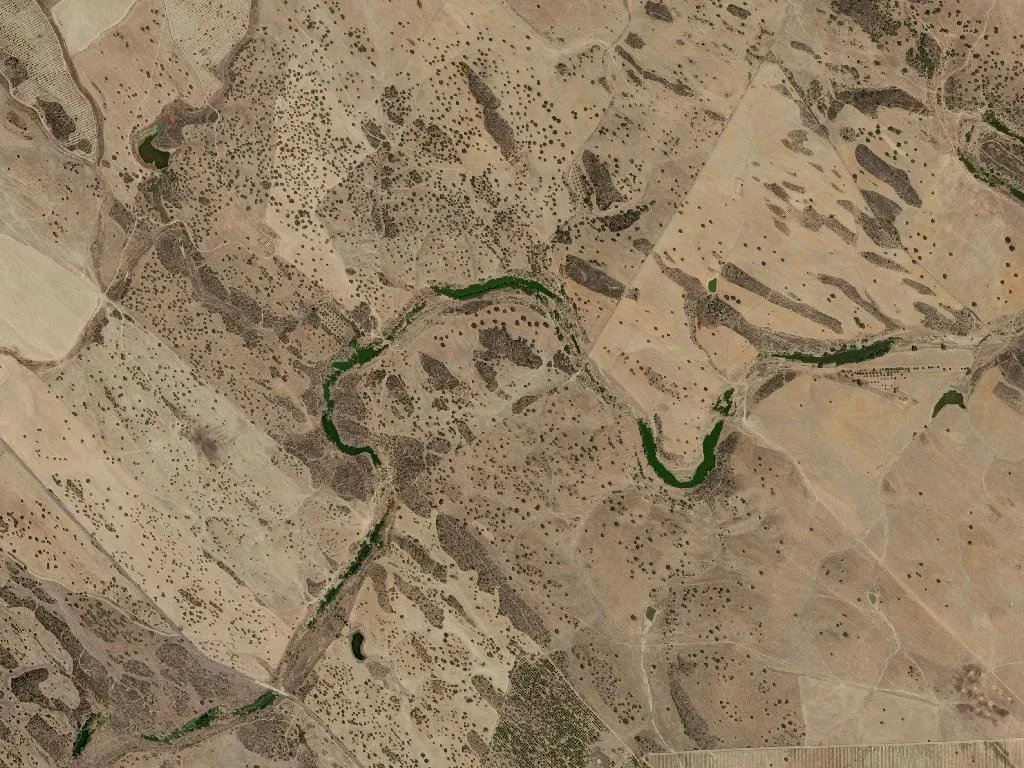
The south wind lifts the dust first, carrying it across 76 square kilometres of open wheat stubble until it settles, fine as icing sugar, on the whitewash of Entradas. At 152 m above sea level, the parish sits just high enough for the horizon to feel circular: holm oaks standing solitary, roofs so low they look like white punctuation marks on a single, continuous sentence. Only 593 people share the page—fewer than eight per square kilometre—so silence is less a absence than a texture. In January it smells of damp clay; in August it vibrates with cicadas and the occasional ricochet of a dog’s bark.
Stone Registers
Five buildings carry the State’s official seal of interest. The nineteenth-century Igreja Matriz closes the vista of Avenida da Igreja with a pediment the colour of old piano keys; inside, the wood smells of beeswax and starched linen. One street back, the former Misericórdia chapel keeps its eighteenth-century azulejos the way others keep family photographs—blue against white, telling marine allegories in a place that has not seen the sea for a hundred kilometres. Walk the grid—Rua de São Pedro, Rua da Igreja, 1º de Maio—and you learn that architecture here is measured not in height but in weight: the specific gravity of lime-plaster that cools the hand when the sun is directly overhead.
What the Land Tastes Like
Lamb registered as Baixo Alentejo IGP grazes the surrounding montado; the meat arrives at tables either slow-roasted with bay and garlic or cubed into a coriander-spiked stew that tastes of rosemary breezes. Serpa DOP cheese, cured for forty days in cloth, gives the inverse sensation—creamy, thistle-bitter, almost cold on the tongue even when room temperature. Wednesday is migas day at O Castelo on the N18: breadcrumbs folded with lamb juices until they resemble savoury pudding. Breakfast at Café Central means pão de testa smeared with soft Serpa and a spoonful of house fig jam, the Alentejo answer to Devon cream tea.
Plain Time
The day is front-loaded. By seven the parish council steps are swept, by eight the coffee machine in the Central is hissing, by nine the men have discussed the weather forecast and the women the price of olive oil. Between eleven and five the village is practically a still life; even the swallows seem to fly slower. Activity resumes only when the shadow of the church falls across the dust, lengthening like pulled toffee. The Feast of São Pedro, 28–30 June, interrupts the pattern: three days when Avenida 1º de Maio turns into a livestock runway, almond-caramel smoke drifts from sweet stalls, and someone’s grandmother inevitably wins the homemade-cake contest with a toucinho-do-céu so rich it could finance a small bank.
No arrows point you to viewpoints, no QR codes reveal interpretive panels. Instead, Entradas offers the rarer luxury of unsolicited detail: how the light at 16:37 sharp makes the stubble field behind the petrol station look like brushed brass; how the first October shower releases a scent of wet chalk and fermenting acorns; how, if you stand beside the war memorial at dusk, you can hear both the generator in the olive press and the whistle of the first starling heading to roost. When the south wind rises again, the dust lifts once more, a pale, private aurora against the immense, unbroken sky.