Full article about Santa Bárbara de Padrões: Alentejo’s Quiet Pulse
731 souls, cork-spreadsheet farms, lamb roasted in wood-ash: life distilled on 6,631 ha of plain.
Hide article Read full article
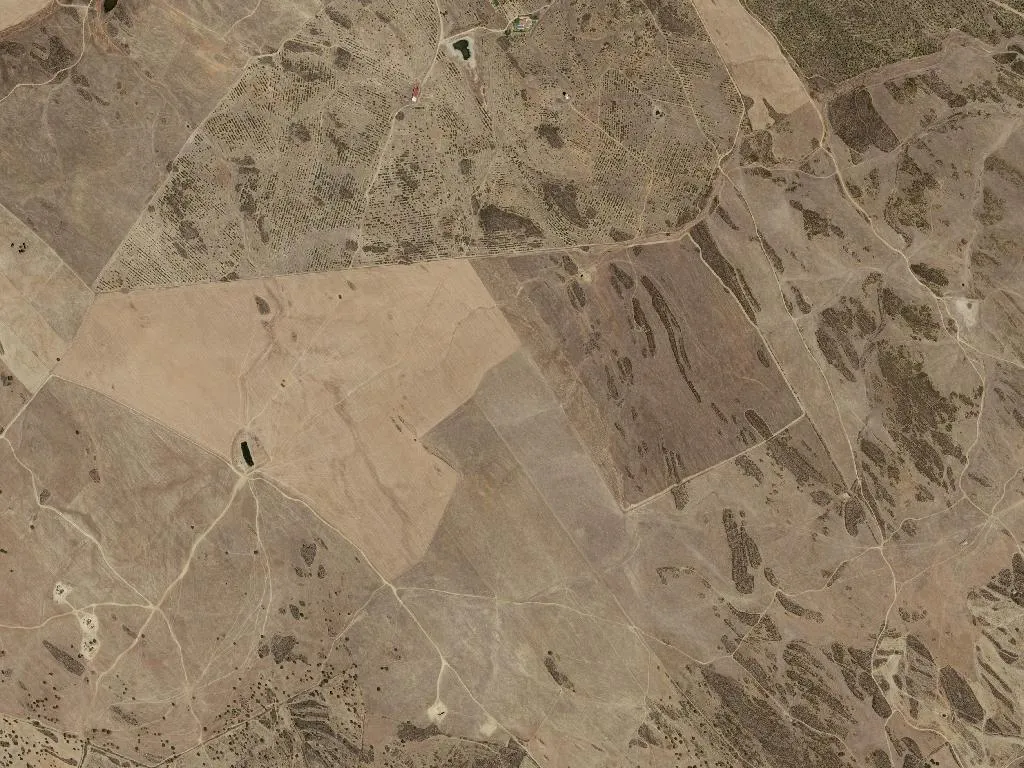
The Alentejo plain rolls southwards until the eye gives up, stubbled with cork and holm oaks that look self-seeded by the wind. Silence hangs like heat-haze, broken only by a skylark drilling the sky or the snap of dead grass when the breeze brings the smell of warm earth and fresh cork sap. Out of this nowhere rises Santa Bárbara de Padrões, a tight clutch of whitewashed houses where 731 souls still greet strangers with a sun-cracked “bom dia”.
Geometry of staying alive
Eleven people to the square kilometre. Do the arithmetic: 6,631 hectares for eyes to wander across and almost no one to meet. The primary school shut years ago; the remaining 49 children catch the 6.40 a.m. bus to Castro Verde, wrapped in travelling rugs while the diesel warms. Of the 285 residents over retirement age, everyone knows everyone by nickname. After the April rains they pull cane chairs onto the threshold, trading stories of who has settled in the Algarve or never came back from a Lisbon construction site.
This is not a postcard landscape – it is something rawer. It is the clench behind the ribs when a green tide of wheat shivers like the sea, or the August day after the combine when the soil is flayed red and burning under bare feet. The cork montados are not scenery; they are spreadsheets in tree form. One trunk equals a winter heating bill; a black pig that vanishes among them is a term of university fees.
Tastes that refuse to leave
Lamb that never saw a feedlot, born among cistus and lavender-scented maquis. On Sundays Aunt Emília douses it with rough white wine and shoves it into her wood oven until the whole house smells like a Roman banquet. Queijo Serpa is not a gift-shop wedge; it is cut with a jet-handled pocket knife, smeared on crusty loaves that José the café-owner still bakes in the communal oven, the crust cracking like thin ice.
Inside kitchens where the stove still guzzles holm-oak logs, iron pots pre-date the 1974 revolution. Migas are tossed in pork dripping; açorda is thickened with backyard coriander; visitors are served from a dowry earthenware bowl. October brings Padrela chestnuts in a string bag, toasted on the hob until they pop, eaten standing up, tongue scorched, salt on fingertips.
Living the stripped-back life
Seven houses offer beds to strangers. None has air-conditioning; all have feather pillows and windows that open onto the same constellations the Romans sailed by. The Cork Route footpath brushes the village boundary – wear proper boots, carry a paper bag of roasted peanuts for energy. When the sun drops behind the Serra de Caldeirão the wheat stubble turns molten and dogs debate across the lanes.
Night is so dark you can clock satellites. January frost rims the well water; line-dried sheets smell of frozen clay. August midday is a kiln – shops shut, cicadas fry, children freewheel brake-less bikes. Long after the plain has dissolved into black, the tang of burnt rock-rose lingers, a single tractor coughs in neutral, and you realise that somewhere beneath this oversized sky, people still call the red earth home.