Full article about São Marcos da Ataboeira
Wheat-gold plateau, echoing bell, al-ta‘bayra ponds and Quitéria’s loom—Castro Verde’s quiet hamlet
Hide article Read full article
The bell that measures the day
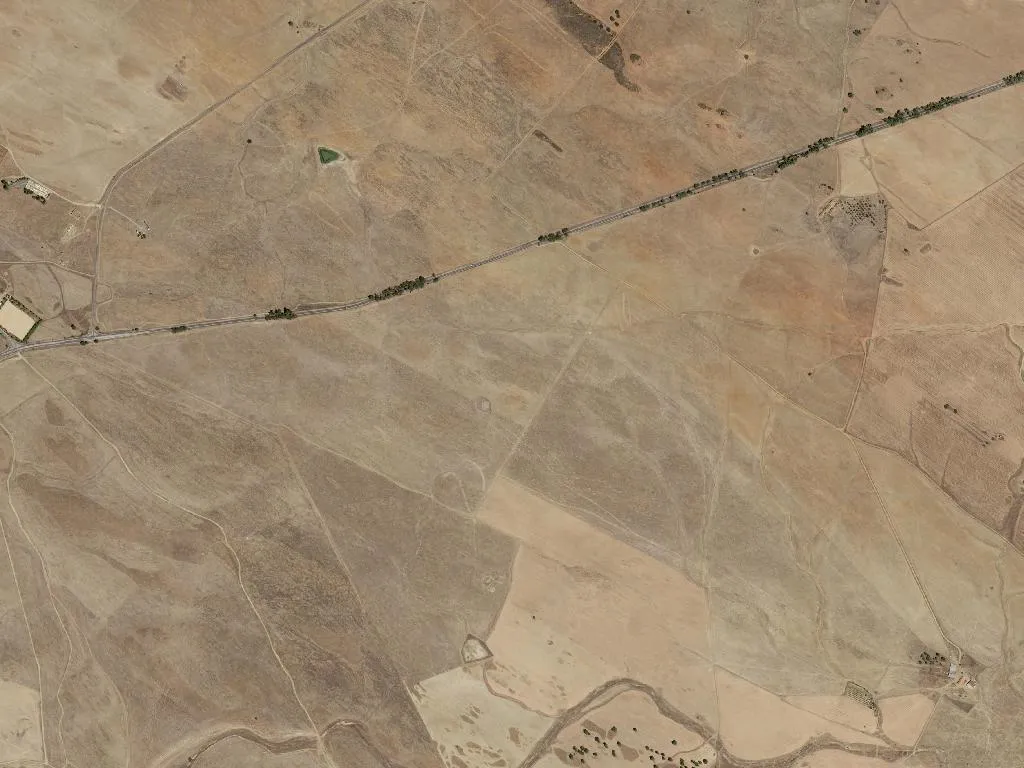
The bell in the tower of São Marcos strikes three times at noon and the note slides downhill across the wheat-blond plateau, grazes schist walls and expires under the holm oaks. The merino sheep do not even look up: lunch is served when the sound stops. In Campo Branco – the “White Field” – silence arrives in short measures, like the draught beer Zé Manel pulls at the only café: apparently meagre, yet enough to last the afternoon. Between the creak of ancient olive trunks and the fluting of cattle egrets you can still pick out Joaquim’s tractor raising clouds of talc-fine dust – a spaghetti-western special effect, except the reel is home-grown.
The pond that baptised the village
Ataboeira, the hamlet’s older half, takes its name from the Arabic al-ta‘bayra, “the watering hole”. Local octogenarians insist that if you linger long enough by the winter streams you will find French boots still planted in the mud – remnants of Wellington’s blue-coats who mistook flooded cork-ruts for shallow puddles and drowned in promises of liberation. Today the only foreign foot soldiers are spoonbills dropping in on cold January mornings and village children who cannon-ball into rain ponds as if they were private lidos. The 18th-century church keeps watch: a single nave, blue-and-white azulejos narrating the gory career of St Mark the Evangelist, and a stone pillory repositioned last year beside the door – the parish council’s wry reminder that the days of public flogging are, officially, behind us.
The mill and the memory of hands
Up the lane the windmill has been re-christened a museum – read one room, two chipped porcelain cups and an olive press everyone is too superstitious to touch. Arrange a visit with Dona Idalina and she will unwrap her grandmother Quitéria’s loom, warped and still smelling of raw wool. Quitéria wove until ninety, closed her accounts with the words: “I died as I lived, thread in hand.” On demonstration days her grand-daughters replicate the rhythm, admitting that the real trick was a mid-afternoon glass of aguardente – “to stop the warp from shredding the nails”. Outside, the mill-sails groan like Manuel the blacksmith’s knees; Manuel claimed the wind itself tutored him: “Go slow, haste is for fools.”
Roast lamb and fire-water
On 25 April – Dia de São Marcos and, less formally, Freedom Day – the air is thick with scorched lamb and unfinished political argument. The cooperative bakery fills with trays of shoulder and leg, basted with António’s garage-fermented white: he calls it off-dry, drinkers say it simply lacks sugar. At long tables Serpa DOP cheese arrives with prickly-pear jam that Dona Lurdes monitors through spectacles balanced on the very tip of her nose; the toucinho-do-céu – an almond-and-egg-yolk slab so sweet it could coax a confession from a stone – even earns absolution for Saturday night’s sins. At dusk the parish president hands out bottles of medronho, each with a single coffee bean bobbing inside: “gives colour and an excuse for another glass,” he winks.
The holm-oak route and dusk on the White Field
The Rota da Azinheira is an 8 km loop that begins at the church gate, climbs through cork and holm oak, and ends on a concrete bench Zé dos Altos cast in 1997 expressly for sunset. From there the Guadiana becomes a lost ribbon and Campo Branco unrolls like a cork carpet someone forgot to sweep up. In autumn the path is ball-bearing slick with acorns; the smell of wet schist recalls the sour-dough loaves grandmothers once slapped against hearth embers. When the sun drops, the silence is so dense you can hear your own stomach remind you that lunch was hours ago.
Night brings the communal threshing-floor, its granite silhouette trying, and failing, to hug the entire square. Inside, maize cobs have waited since 1950 – useless, but no one dares evict them. Tradition works the same way: serves no obvious purpose, yet occupies exactly the right spot. The air still carries the ghost of wood-smoke and, drifting up from Aníbal’s cellar, the head-spinning scent of illegally distilled aguardente – “a business for lunatics,” his wife mutters, though the entire village buys its Christmas quota from him.