Full article about Alfundão: where red earth meets white wall
Silent Alentejo village breathes under fig shade, its lanes scented with lamb and olive oil
Hide article Read full article
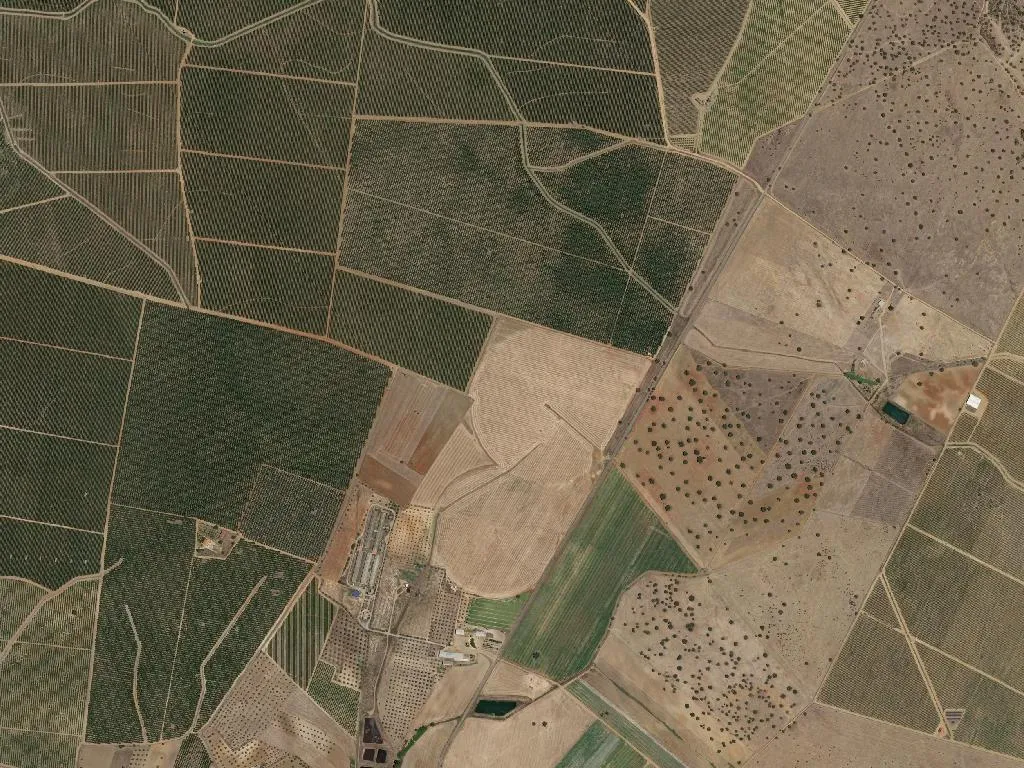
The tarmac stops where the oxides bleed. Alfundão begins at that precise moment: 644 people scattered across 52 km² of rolling Alentejo plain, elevation 120 m, district of Beja. Holm oaks stand alone like sentinels; whitewashed walls box in vegetable plots. Sound here has weight – a distant dog, the metallic yawn of a gate someone shuts at three in the afternoon because no one is in a hurry.
Red Earth, White Wall
The name is a contraction of the Latin alvum, a small valley, and the village does indeed shelve gently downhill in shallow terraces. Single-storey houses huddle along lanes barely a car’s width; at noon the limewash flings the light back with almost hostile force. There are no baroque façades, no selfie-blue plaques. Alfundão is Alentejo with the stage dressing removed: just clay, lime and the shade of a fig tree.
Bronze Fragments, Paper Charter
Human fingerprints appear in the Bronze Age – potsherds now pressed into private sideboards or boxed in Lisbon museums. A royal charter arrived in 1309 from Dom Dinis, yet an earlier deed from 1283 already lists “three houses in Alfundão” given by the knight Martim Anes to his daughter. What survives is geography rather than architecture: thin topsoil, scarce water, dry-land cropping of wheat and olives. The same calendar still governs: hoeing in April, harvest in June, hand-picking olives after the first frost.
Demographics read like slow haemorrhage: 14.6 inhabitants per km², 160 over the age of 65, only 63 under 14. The primary school closed in 2015; the nursery had already given up in 2010. Café “O Pátio” unlocks only at weekends. Retraction, not collapse – the place is learning to breathe with fewer lungs.
Oil, Lamb, Curd
DOP Moura olive oil – 18 km away but pressed from the same grove of century-old trees – is poured thick and grass-green over toast rubbed with garlic. IGP Baixo Alentejo lamb is lowered into clay ovens; two hours later it emerges as threads that surrender to the fork, scented only with coarse salt and dried oreganos. Serpa DOP cheese, custard-yellow and pungent, finishes the meal. There are no restaurants; you eat in kitchens where recipes are inherited like heirlooms – lamb stew with dried peas and mint, garlic bread soup with coriander and a poached egg, egg-yolk sweets stirred in copper pans that pre-date the dictatorship. Dona Idalina still stirs her tomato rice for the full two hours with the same wooden spoon her mother used in 1958.
Logistics of Emptiness
A single rental house is registered with Turismo de Portugal. No hotel, no interpretative centre, no signed trail. The village grocery shut in 2018; for bread you drive 12 km to Ferreira do Alentejo. The pay-off for the inconvenience is immediacy: your footfall echoes down lanes no guidebook has bothered to map, and the winter dusk smells of damp clay before you see it. Walk south and the plain opens into a chessboard of abandoned smallholdings – Herdade das Amendoeiras empty since the 1974 revolution, a dry well, a rusted harrow left exactly where the oxen unhitched it.
Beauty here is horizontal. No belvederes, no postcard peaks – just the grey-green shimmer of olive canopies, the ochrish burn of summer stubble, the retina-searing white of walls when the sun climbs behind a cloudless sky.
Where the Horizon is a Ruler
Alfundão yields itself reluctantly. Stay overnight and the place begins to leak detail: the neighbour who pegs laundry on wire stretched between two sour-orange trees; the scent of arbutus wood slipping from Sr Carlos’s chimney at 19:30; the metallic taste of the spring at São Sebastião where women scrubbed sheets until the mid-1980s. Memory collected here is textural – the rasp of old lime under a trailing hand, the sudden hush when the wind idles, the low December sun skating across a plain that, in 1965, saw the first crop-dusting plane in the region swoop down to dust the wheat with a sulphur cloud.
Leave before dusk and the village appears to fold back into the land, as if the clay itself had momentarily assumed the shape of roofs and walls, then thought better of it.