Full article about Espírito Santo: silence, thyme-laced lamb & eagle skies
In Mértola’s empty parish, white cubes dot ochre ridges, sheep trails perfume the air and the Guadia
Hide article Read full article
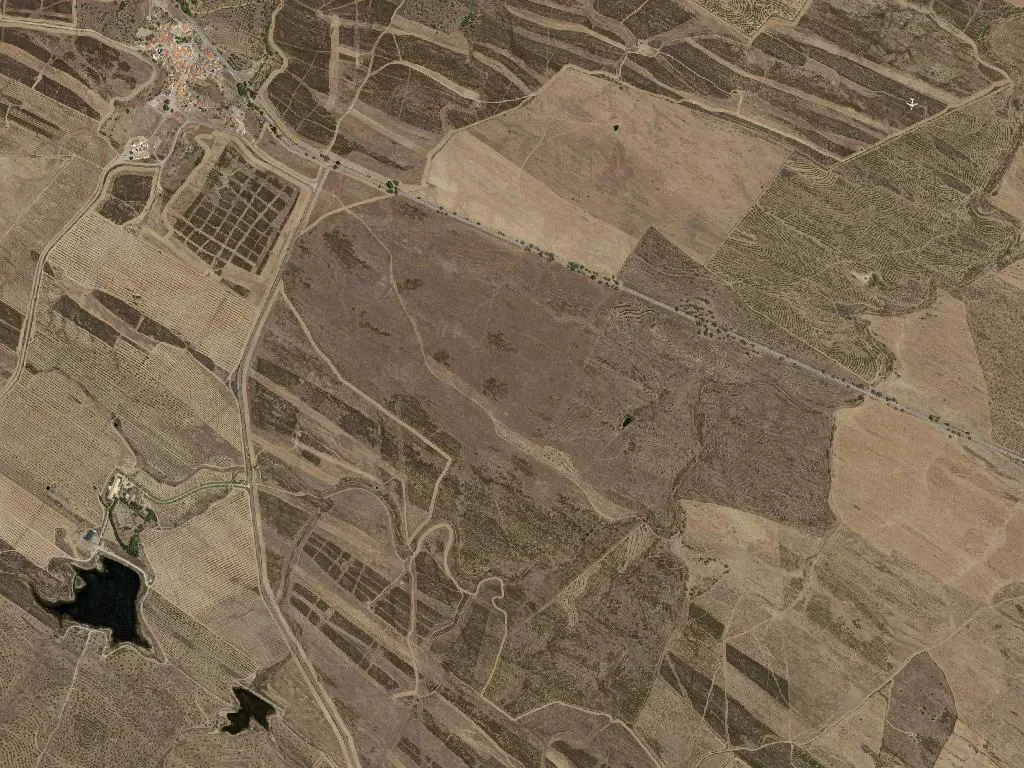
The sun slams into the folds of ochre hills that roll away unbroken, no cork oaks to soften the blow. Heat radiates back from the soil; the only soundtrack is the dental-drill buzz of cicadas and, occasionally, a dog barking half a mile off. Espírito Santo, deep inside Mértola’s municipality, is a parish of 135 km² and barely 330 souls—2.42 people per km², a statistic you feel in your bones when you stand on the 187-metre ridge and realise the loudest presence is the sky.
Ageing is the local demographic sport: almost half the residents are over 65. Houses sit low and white, scattered like dice across the plateau; six self-catering villas are the entire accommodation stock. No tour coaches, no queue for selfies—just space calibrated to the Alentejo clock, which runs demonstrably slower than GMT.
Cheese, lamb and the taste of sun
Pastoralism is not folklore here, it is Monday morning. Sheep trails score the hills, and the milk that becomes Queijo Serpa DOP travels barely five kilometres from udder to basket-form. The same pastures fatten Borrego do Baixo Alentejo IGP, a seasonal lamb whose flavour arrives pre-marinated by wild thyme and rosemary. Finish the plate with a thread of inland Alentejo olive oil—Azeite do Alentejo Interior DOP—and you have a edible map of the view outside the window.
The river you cannot see
Although the Guadiana itself skirts the parish boundary, its influence seeps inland. Since 1995 Espírito Santo has lain within the Vale do Guadiana Natural Park, and the river’s micro-climate allows Holm and cork oak to mingle with dwarf scrub and outcrops of grey schist. Golden eagles ride the thermals; after rain the schist turns graphite-black and smells of struck flint. Walk slowly: the landscape reveals itself at boot-level, not screen-level.
Arrive easily, stay deliberately
The EN122 delivers you from Mértola’s castle-crowned bluff in fifteen minutes; phone signal evaporates soon after. There is no checklist—no Roman bridge, no souvenir stall—only the invitation to recalibrate. Families spread picnics on abandoned threshing floors; solo travellers discover that horizon-based meditation requires no app. At dusk the soil exhales dry warmth, woodsmoke drifts from a chimney you cannot see, and a distant bell tolls a time that has no intention of catching the last train.